Tag: writing

  • Bittersweet Returns

    Bittersweet Returns

    I don’t think I’ve experienced anything quite as bittersweet as my journey back to New York from Seville. I was eager to go home—especially to see Donald and Leo—but as I walked through Seville’s streets at 6:30 a.m., searching for a spot accessible by cab, my oversized suitcase echoing across the cobblestones, I found myself taking in every view one last time.

    The return leg of a trip is never as energizing as the departure. On my way to Seville—on New Year’s Day—I’d enjoyed half-empty planes and plenty of room to stretch out. On the way back, a man-spreader claimed the seat beside me. A woman eager to deplane dropped her luggage on my head.

    After landing in Newark and taking an Uber ride home to Brooklyn, I was deposited on the far side of a massive snowbank separating me from my apartment. I heaved my suitcase over it, went inside, and was immediately greeted by Leo’s uncontained enthusiasm. After a month away, I’d half wondered whether he’d remember me.

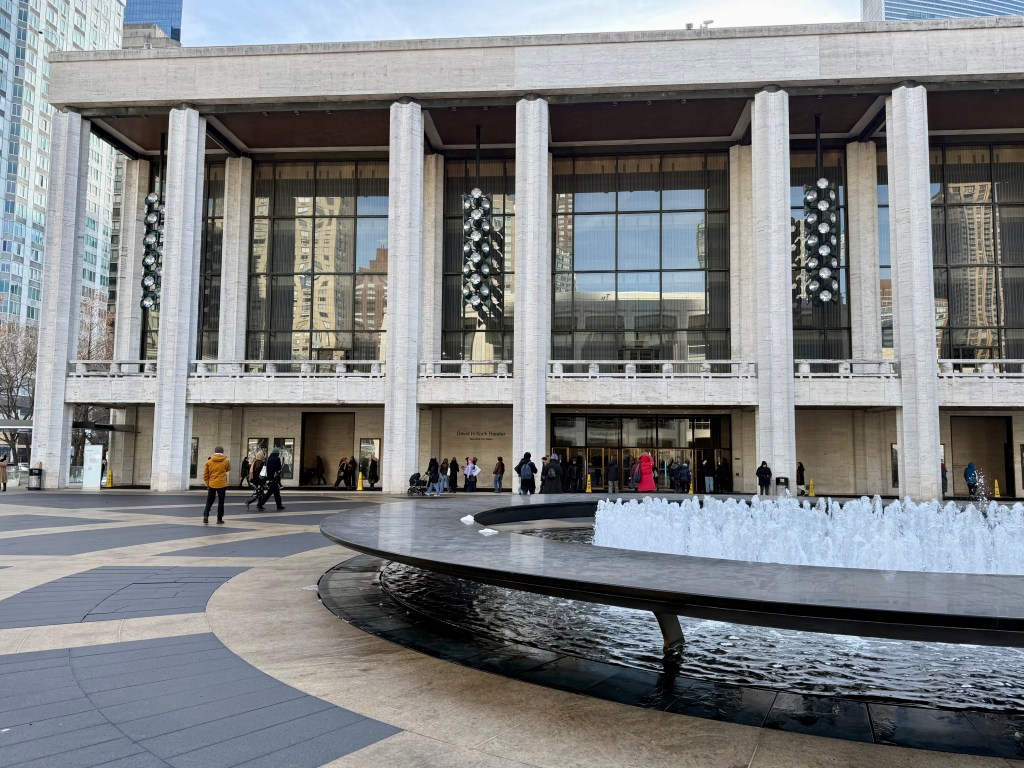
    Still running on adrenaline, I ordered the thing I’d been craving most in Seville: Thai food. I hadn’t finished half of my turmeric beef curry and crab fried rice before I collapsed on the couch, cuddling with Leo. Jet lag woke me at 5:00 a.m., and I booked same-day tickets to New York City Ballet. Donald obliged, and we enjoyed a wonderful matinee featuring Balanchine and Ratmansky.

    My time off was both restorative and instructive. There are things I love about being in New York—the diversity of people, food, and the arts—and things I love about being in Europe: a slower pace of life, lower costs, and not hearing quite so much about Trump and his administration’s latest idiocies.

    One thing I’m determined not to lose is speaking Spanish. Feeling more comfortable using it was one of the most tangible takeaways from my time in Seville, and I’ve already booked a private tutoring session next week through Preply, a language-learning platform that, unlike Duolingo, pairs you with a tutor for real conversation. A placement test put me at the “Upper Intermediate” level—strong grammatical control with occasional errors, a growing range of concrete and abstract vocabulary, and the ability to express myself with increasing precision.

    For now, that feels like enough: a language I want to keep practicing, a city I’m glad to be back in, and another one I already miss.
  • Stumbling Back into Spanish

    Stumbling Back into Spanish

    Seville has been rainy these past few days. I’ve taken it as an excuse to slow down even further—staying in, reading, and catching up on a few Oscar-nominated movies. As my sightseeing has paused, I’ve had more time for reflection.

    Lately, I’ve been thinking about how I used to speak Spanish well—or at least much better than I do now. In high school, it was my favorite class, alongside English. I had an excellent teacher, Señora Mary Ramirez, who made speaking Spanish feel less like a requirement and more like an invitation—rigorous, playful, and a little intimidating in the best way. With her support, I skipped a year of Spanish and took courses at the local St. Norbert College while still in high school.

    Señora Ramirez also suggested I take the AP Spanish exam. The class wasn’t offered in our district, so I took the test on my own. I still remember walking into an unfamiliar office building in Green Bay, Wisconsin, and realizing I’d be the only student there. The only part of the exam I remember clearly is the oral section. I was given a comic strip and asked to narrate it, in Spanish, while a tape recorder ran. Una chica está yendo de compras… Or no—no es chica… puede ser chico? I second-guessed everything. There was no rewinding, no starting over. When I left, I remember thinking, Well, at least I tried.

    When I later learned I’d received a top score, I was surprised. Señora Ramirez was not—and I owed much of my result to her.

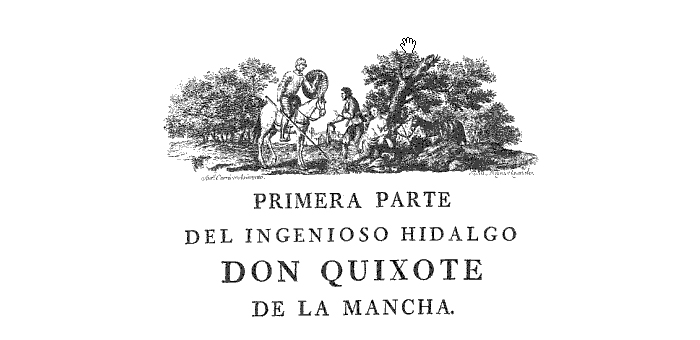
    Throughout college, I continued studying Spanish, eventually taking a course on Don Quixote that required reading and interpreting the original text. How I passed that course remains something of a mystery.

    Now, nearly two decades later, in Seville, I’ve found myself stumbling with Spanish—especially at the start of my stay. But by insisting that I speak it every day, I’ve grown more comfortable refusing English menus and, when well-meaning people try to accommodate me, gently insisting on Spanish.

    Apps like Duolingo have their benefits, for building vocabulary, but nothing replaces real conversation. I looked into Spanish classes before coming to Seville, but most cater to first-timers or twenty-somethings on their gap year—not for me.

    When I go back to New York, I’ll find a way to practice more regularly and tap into those latent skills—through private tutoring or appropriate classes. I don’t need to read Don Quixote again, but I’d love to be able to watch an Almodóvar film without relying quite so much on the subtitles.

  • The Value—and Difficulty—of Slowing Down

    The Value—and Difficulty—of Slowing Down

    I’m past the midpoint of my monthlong stay in Seville, and I’ve pushed myself to see (and eat!) a lot. That’s my default programming: when I travel outside the US, I try to take full advantage of every moment. As a kid, I wanted to “see the world,” poring over our printed encyclopedias and their pictures of faraway places.

    On more recent trips abroad with family—including to Taiwan and Italy—I’ve tried to absorb, or share, every detail. That impulse can be enriching, but also exhausting.

    And that isn’t really the point of the sabbatical I’m now taking advantage of. This time is meant for resting and recharging. To be fair, some of that replenishment has come through cultural immersion—taking in art and architecture, enjoying special meals. Still, over the last few days, I’ve begun to do a better job of slowing down—not perfectly and not all at once, but by gradually giving myself permission to do less.

    How I walk has become part of this shift. Like a New Yorker—and an anxious one at that—I tend to move fast. But in the narrow streets of Seville, you encounter couples of all ages strolling arm in arm, unhurried, simply enjoying the act of walking together. Rather than rush around them, as I would in New York, I’ve started to slow my steps.

    I still plan to visit a few more tourist sites and local restaurants, but I’ve seen most of them before. I have to remind myself that it’s okay not to visit yet another Baroque church if what I really want is to finish a novel. I don’t need to try another restaurant when I have groceries at home.

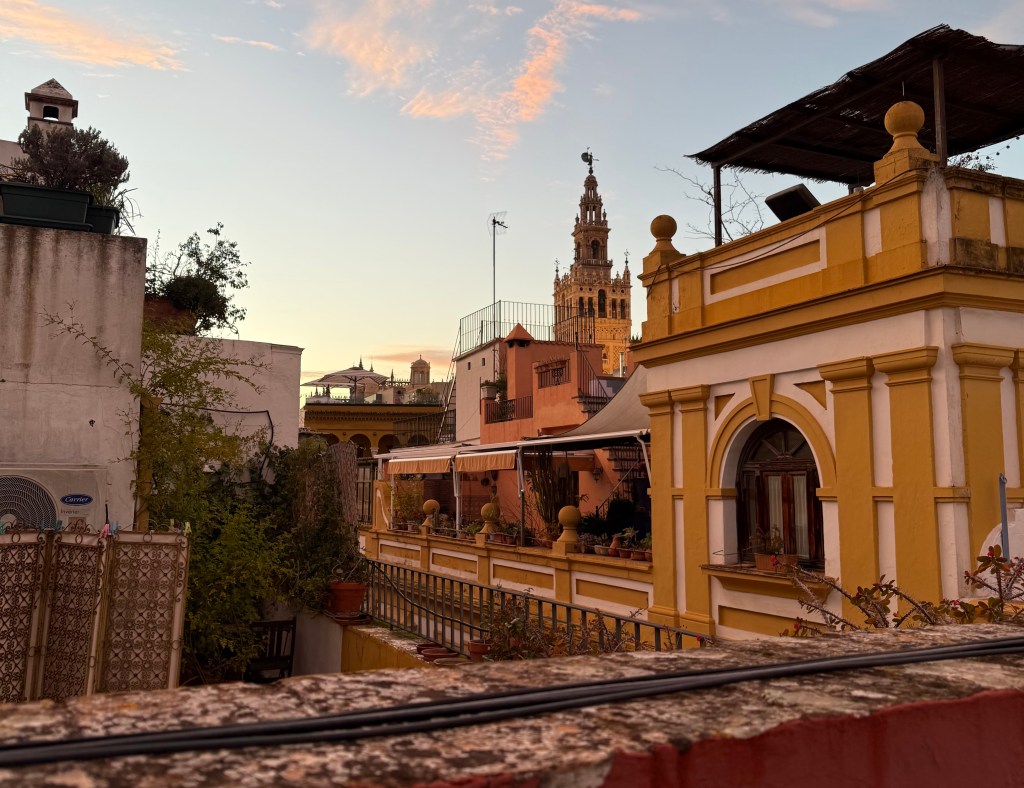
    The apartment I’ve rented has helped, too. It’s more spacious than I expected, and the terrace is an ideal place to sit still and take in the views. Immediately below are the sometimes noisy streets of Santa Cruz, Seville’s former Jewish quarter. In the distance, the Giralda rises into view. From here, I can enjoy the city’s beauty without going anywhere at all.

    I hope this growing comfort with slowing down—learning when experience replenishes me and when stillness does—is something I can carry back with me to New York.