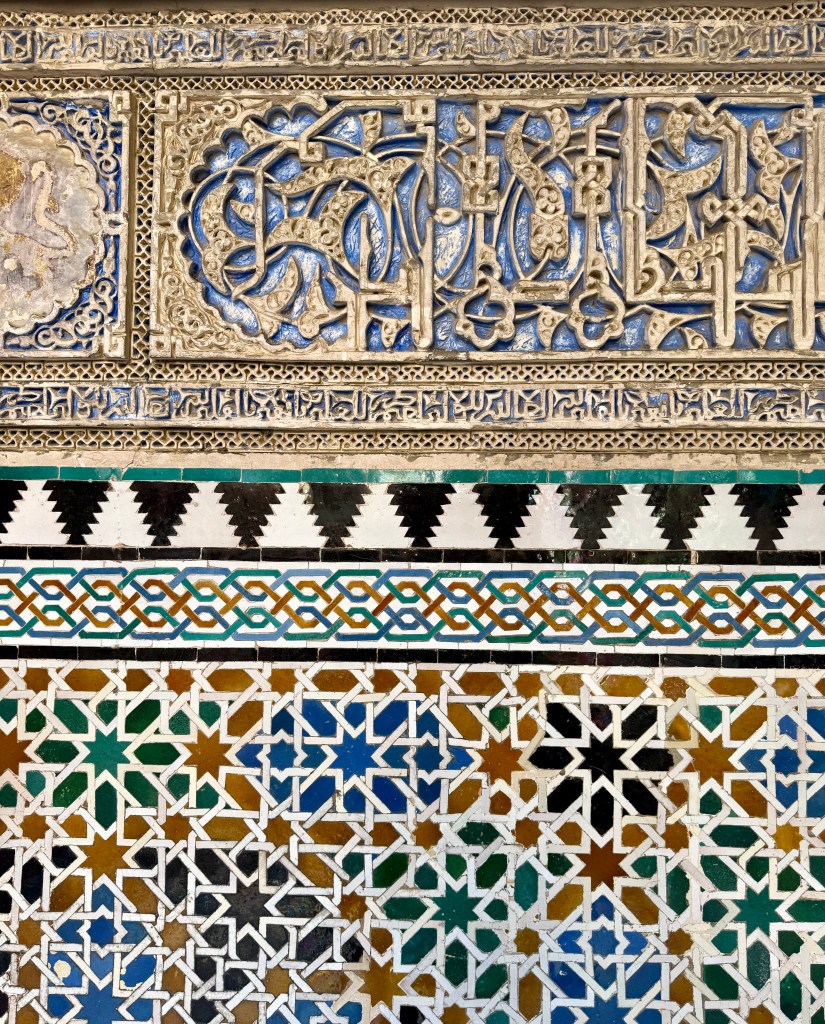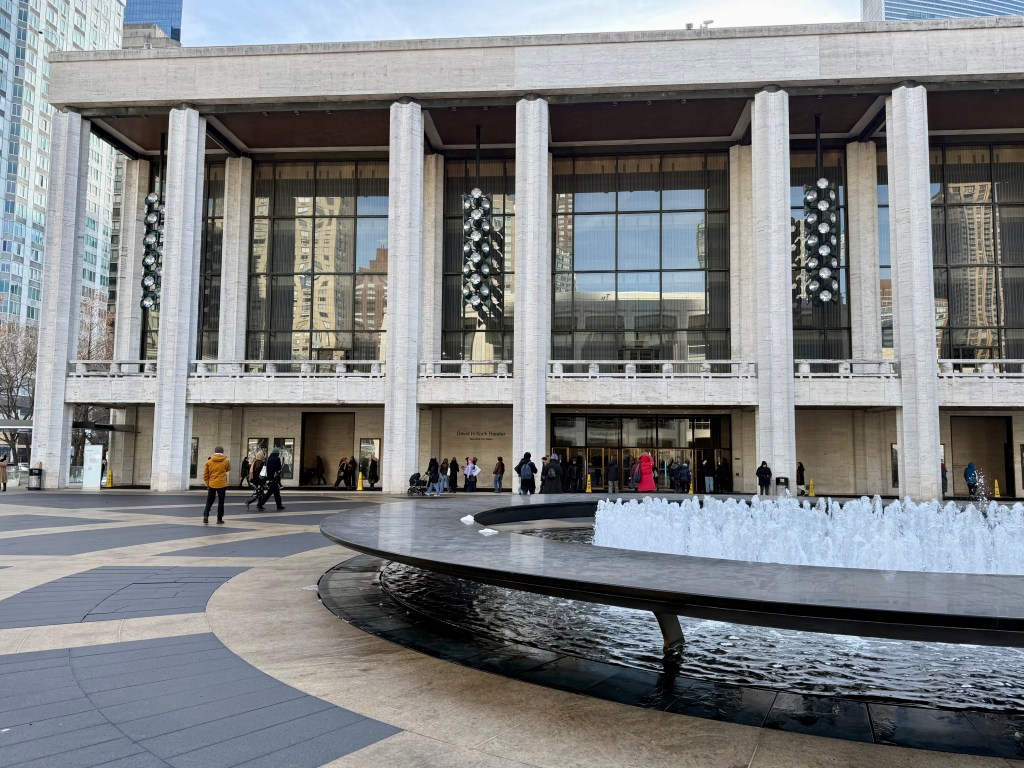
Tag: spain

  • Bittersweet Returns

    Bittersweet Returns

    I don’t think I’ve experienced anything quite as bittersweet as my journey back to New York from Seville. I was eager to go home—especially to see Donald and Leo—but as I walked through Seville’s streets at 6:30 a.m., searching for a spot accessible by cab, my oversized suitcase echoing across the cobblestones, I found myself taking in every view one last time.

    The return leg of a trip is never as energizing as the departure. On my way to Seville—on New Year’s Day—I’d enjoyed half-empty planes and plenty of room to stretch out. On the way back, a man-spreader claimed the seat beside me. A woman eager to deplane dropped her luggage on my head.

    After landing in Newark and taking an Uber ride home to Brooklyn, I was deposited on the far side of a massive snowbank separating me from my apartment. I heaved my suitcase over it, went inside, and was immediately greeted by Leo’s uncontained enthusiasm. After a month away, I’d half wondered whether he’d remember me.

    Still running on adrenaline, I ordered the thing I’d been craving most in Seville: Thai food. I hadn’t finished half of my turmeric beef curry and crab fried rice before I collapsed on the couch, cuddling with Leo. Jet lag woke me at 5:00 a.m., and I booked same-day tickets to New York City Ballet. Donald obliged, and we enjoyed a wonderful matinee featuring Balanchine and Ratmansky.

    My time off was both restorative and instructive. There are things I love about being in New York—the diversity of people, food, and the arts—and things I love about being in Europe: a slower pace of life, lower costs, and not hearing quite so much about Trump and his administration’s latest idiocies.

    One thing I’m determined not to lose is speaking Spanish. Feeling more comfortable using it was one of the most tangible takeaways from my time in Seville, and I’ve already booked a private tutoring session next week through Preply, a language-learning platform that, unlike Duolingo, pairs you with a tutor for real conversation. A placement test put me at the “Upper Intermediate” level—strong grammatical control with occasional errors, a growing range of concrete and abstract vocabulary, and the ability to express myself with increasing precision.

    For now, that feels like enough: a language I want to keep practicing, a city I’m glad to be back in, and another one I already miss.
  • Doors Opened Late

    Doors Opened Late

    While in Seville, I’d planned to take a day trip to Córdoba—to visit the Mezquita, a stunning monument from Spain’s Islamic past, and to do some shopping. I postponed the visit after a tragic train accident in Córdoba province on January 18 claimed more than forty lives. After that, I kept delaying the trip, until it drifted into the final week of my sabbatical—the rainiest one—and then, improbably, into the very last day.

    In the end, I didn’t go to Córdoba. I forfeited my train fare and my Mezquita ticket. I told myself it was because of the chance of rain, but honestly, I wanted one last, relatively unhurried day in Seville. I’d been to Córdoba before, after all.

    I wrote earlier about the strange rhythm of my monthlong stay in Seville. I arrived with a tourist’s urgency—rushing to see favorite landmarks and a few new ones, eating the best local food, trying to make every moment count. After roughly two weeks, I finally gave myself permission to be lazy: to enjoy my time off, watch movies I’d never made time for, read two Toni Morrison novels (Jazz and Sula), with just enough brief sightseeing—and long walks—peppered into my days.

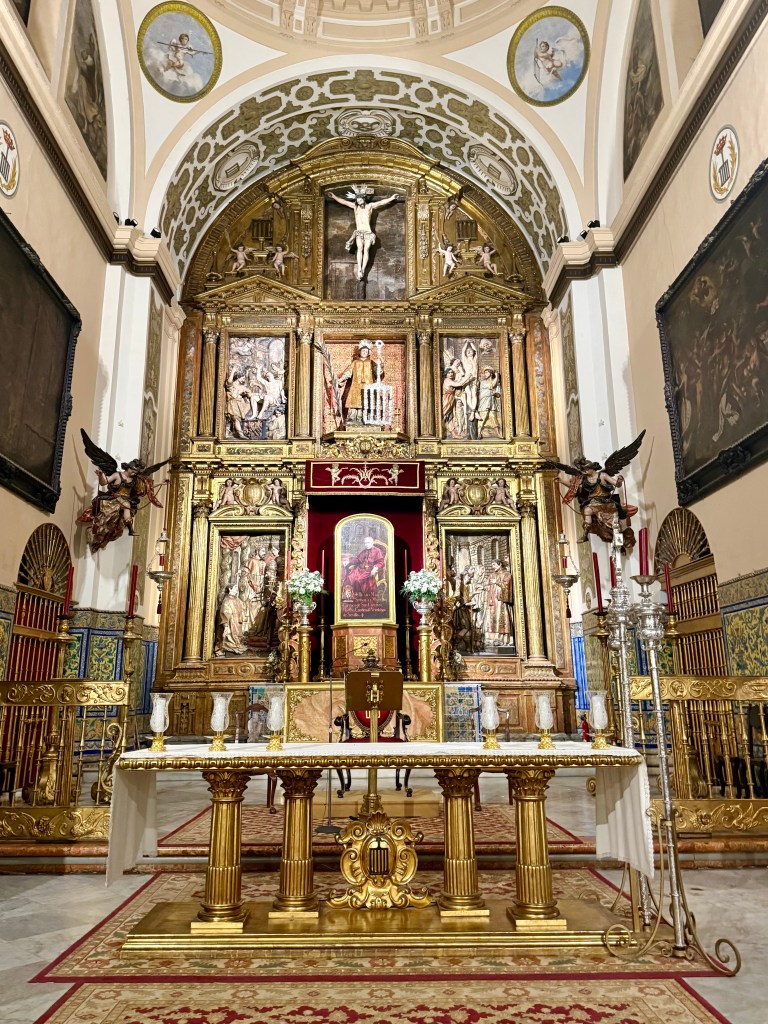
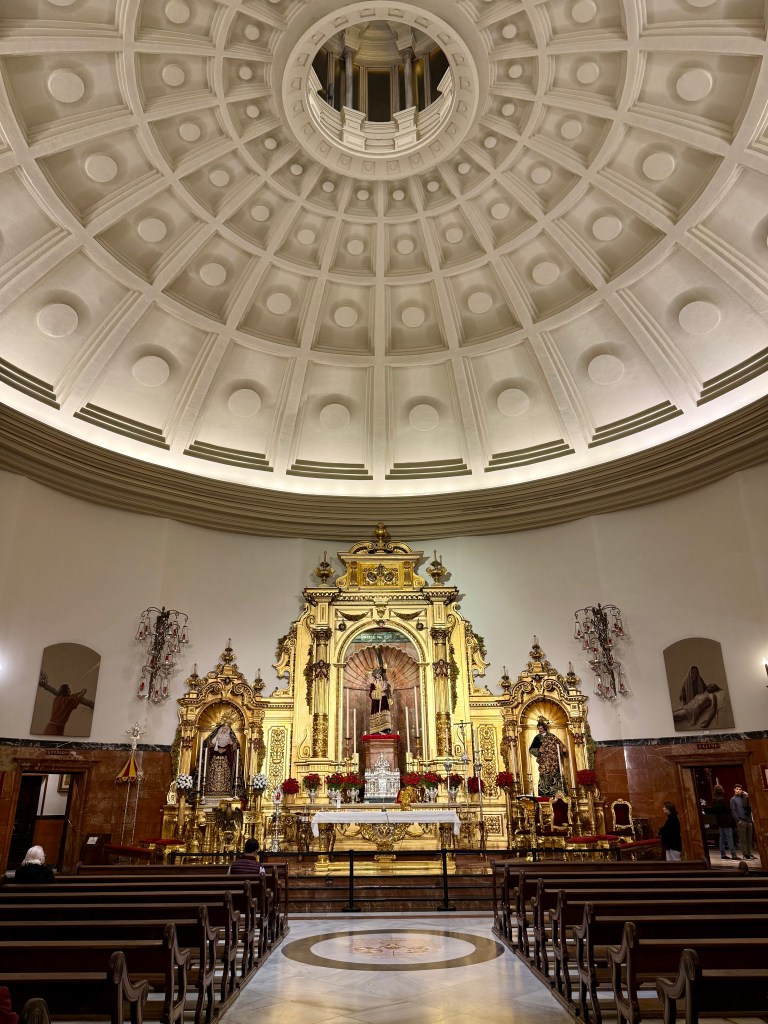
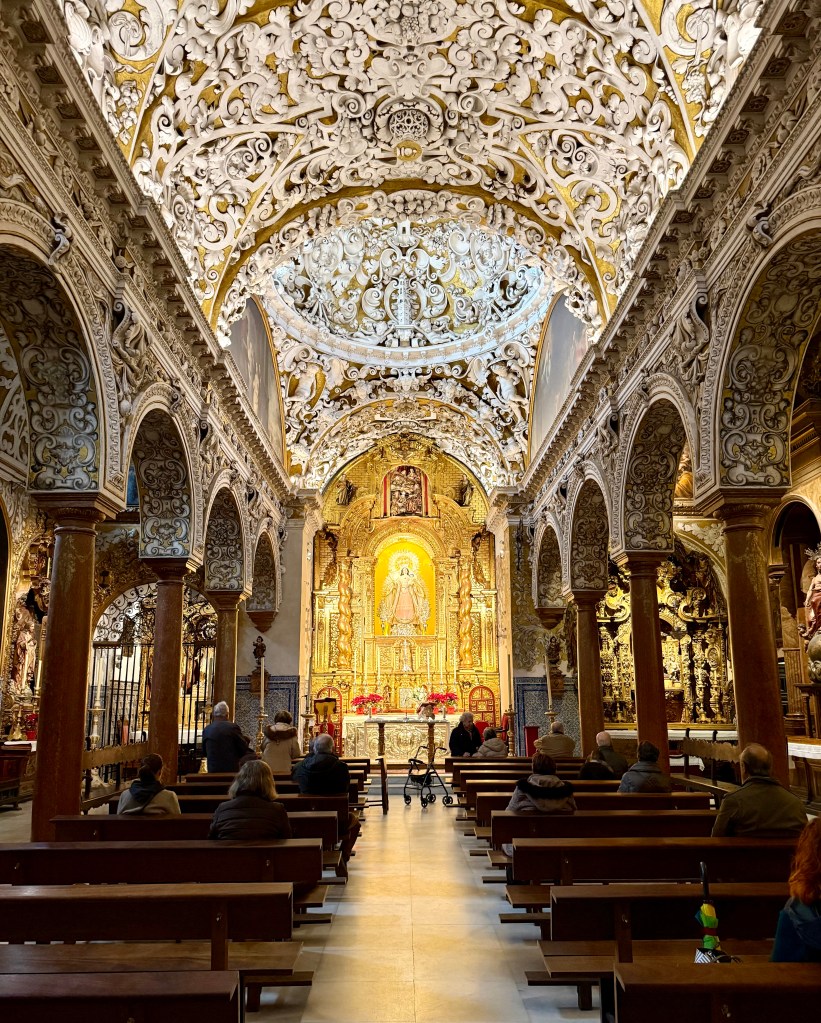
    On the short walk from my apartment in the labyrinthine Santa Cruz neighborhood to my favorite coffee shop, I passed a church: Santa María la Blanca. Until that final day, I’d never walked by when its large wooden doors were open to visitors. This time, they were. I stepped inside and marveled at the carved ceiling of the nave and the elegant arches framing it. Then I noticed the pews beginning to fill. A priest and his attendants entered to begin Mass. So much for visiting hours.
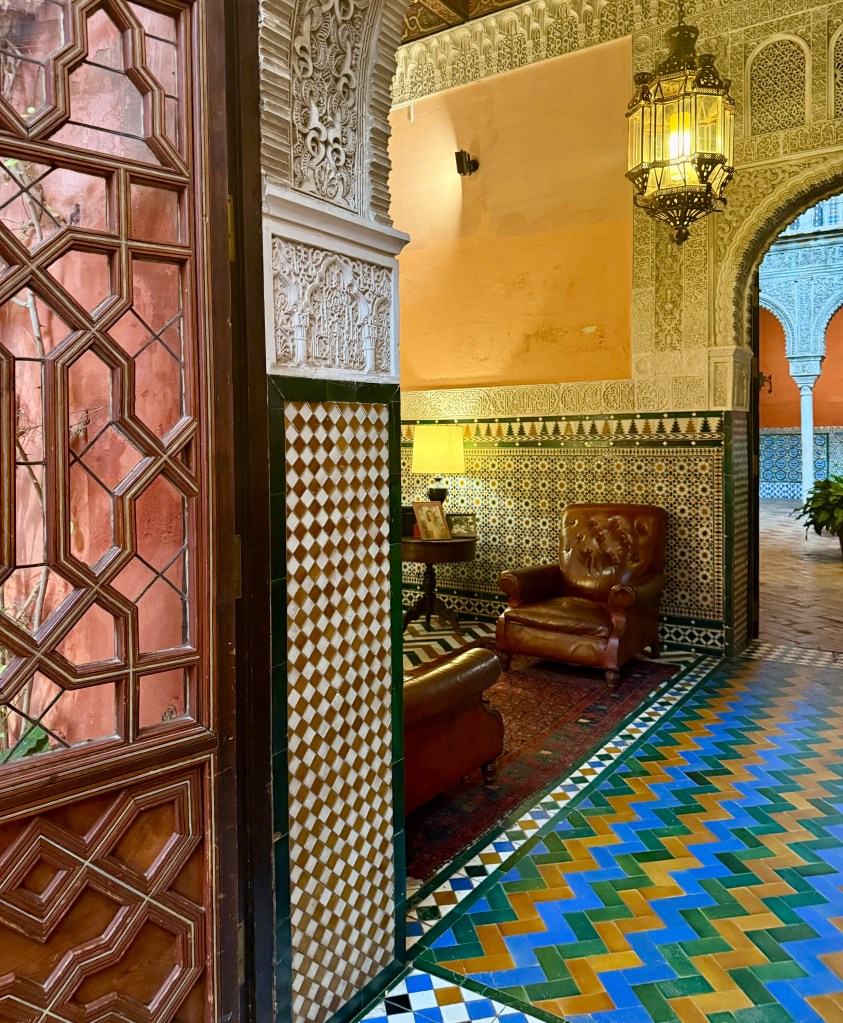
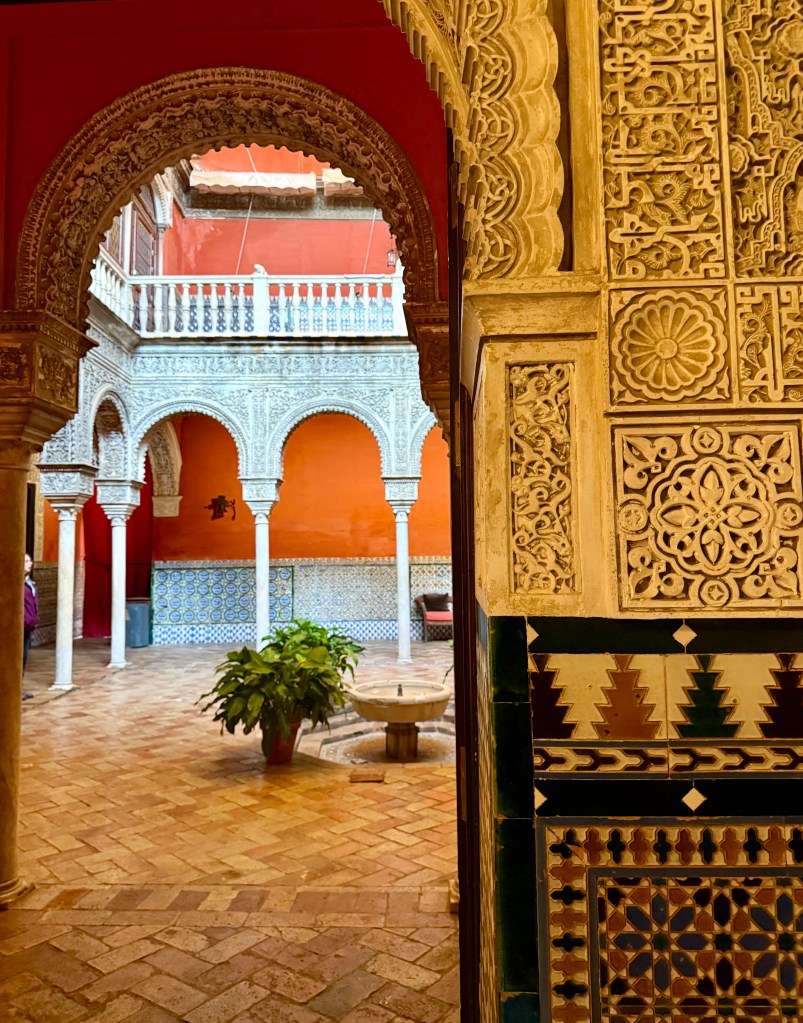
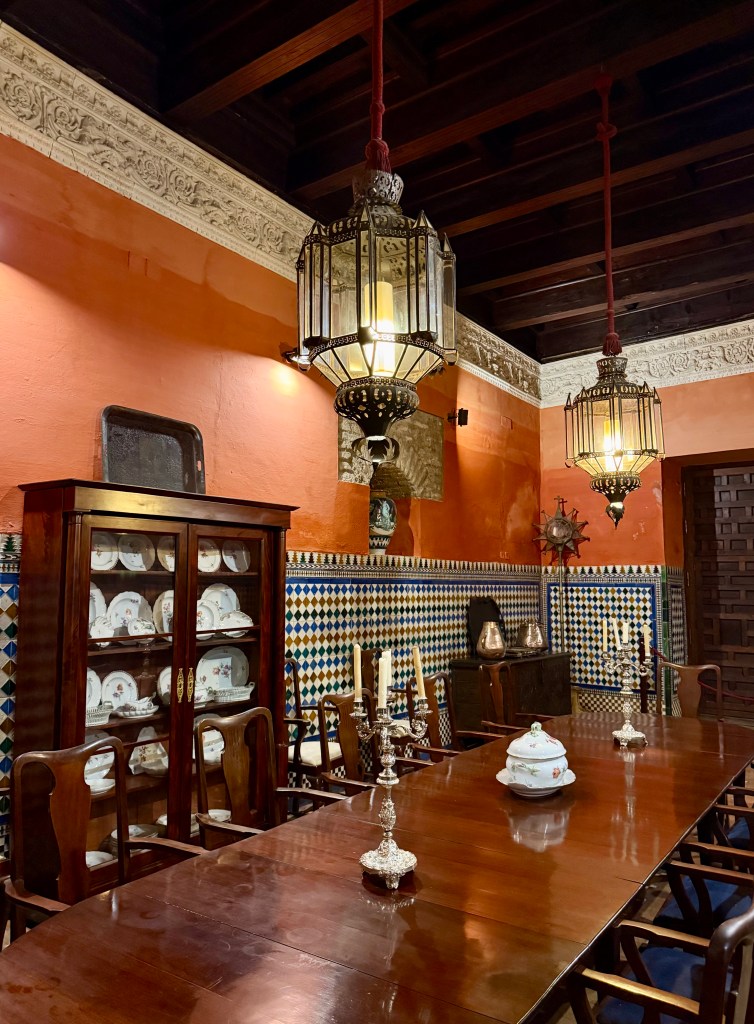
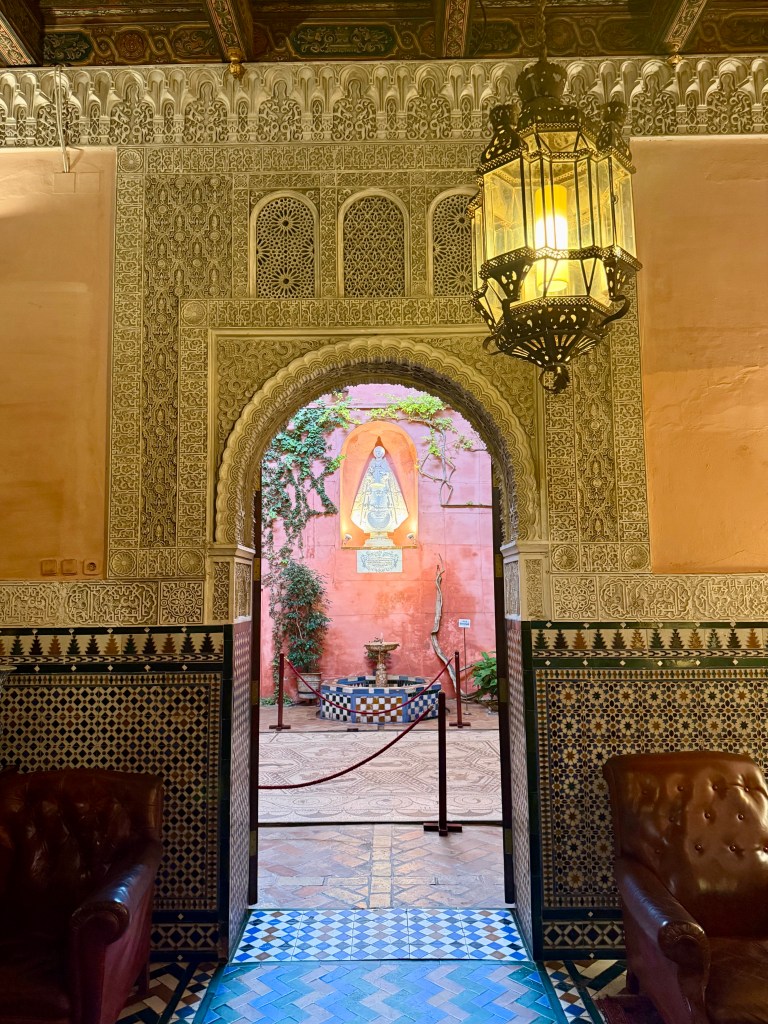
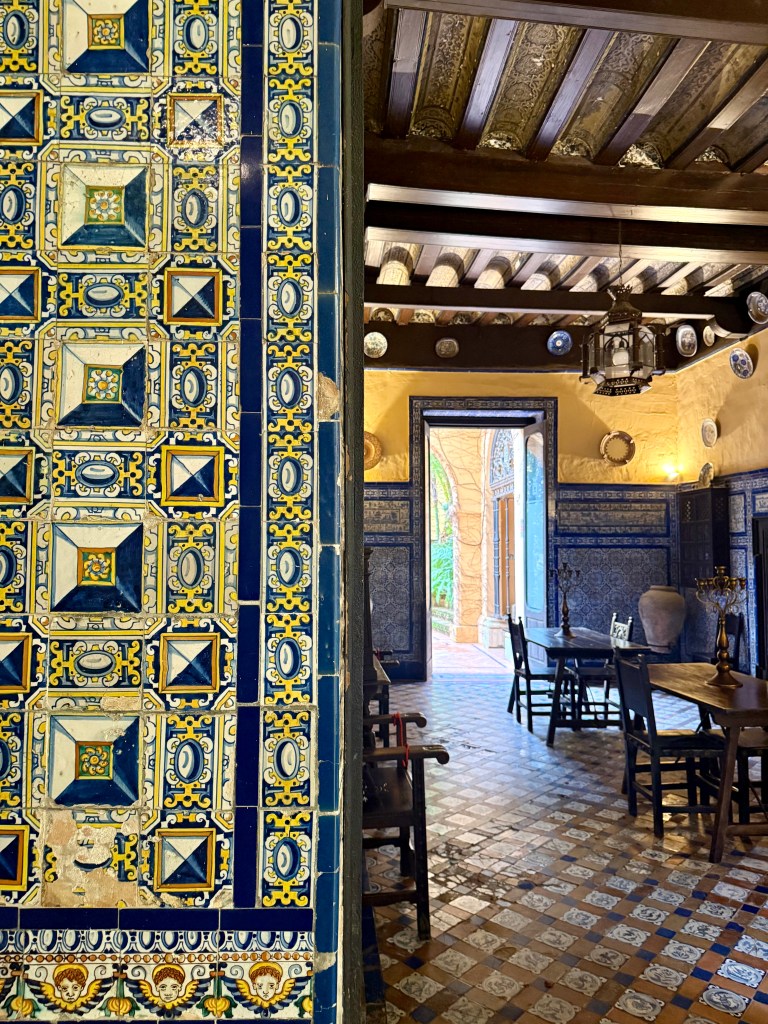
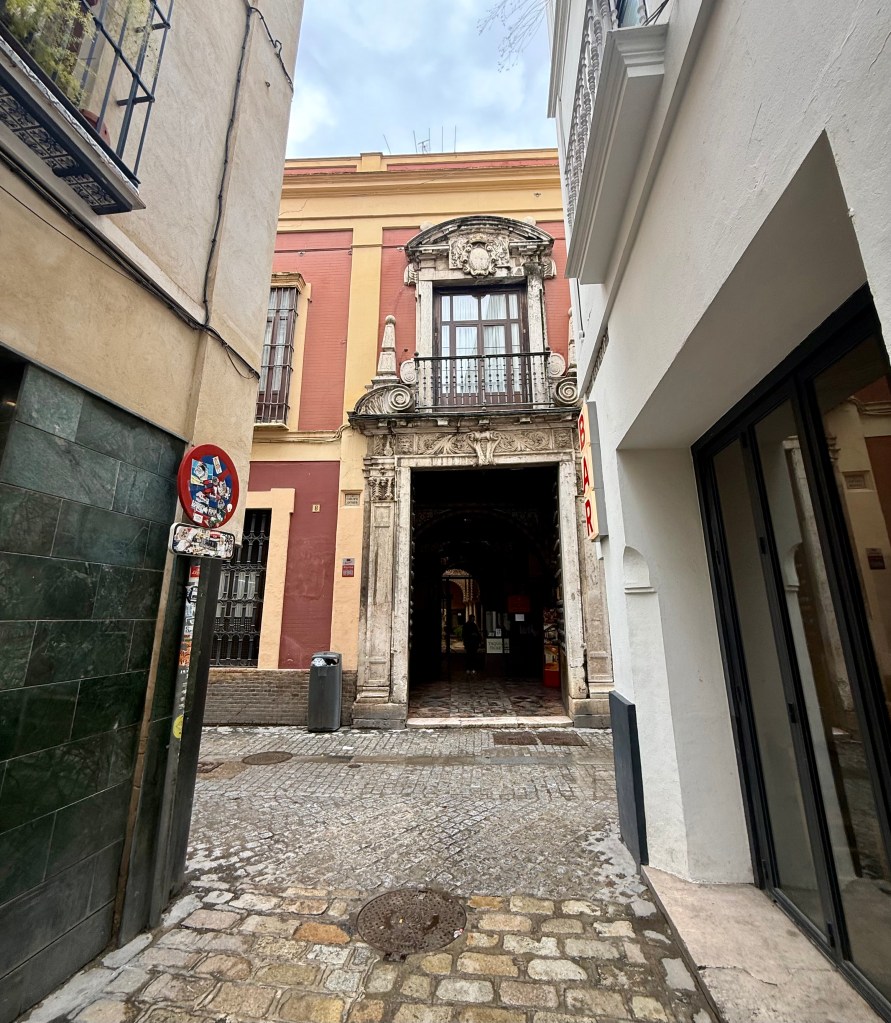
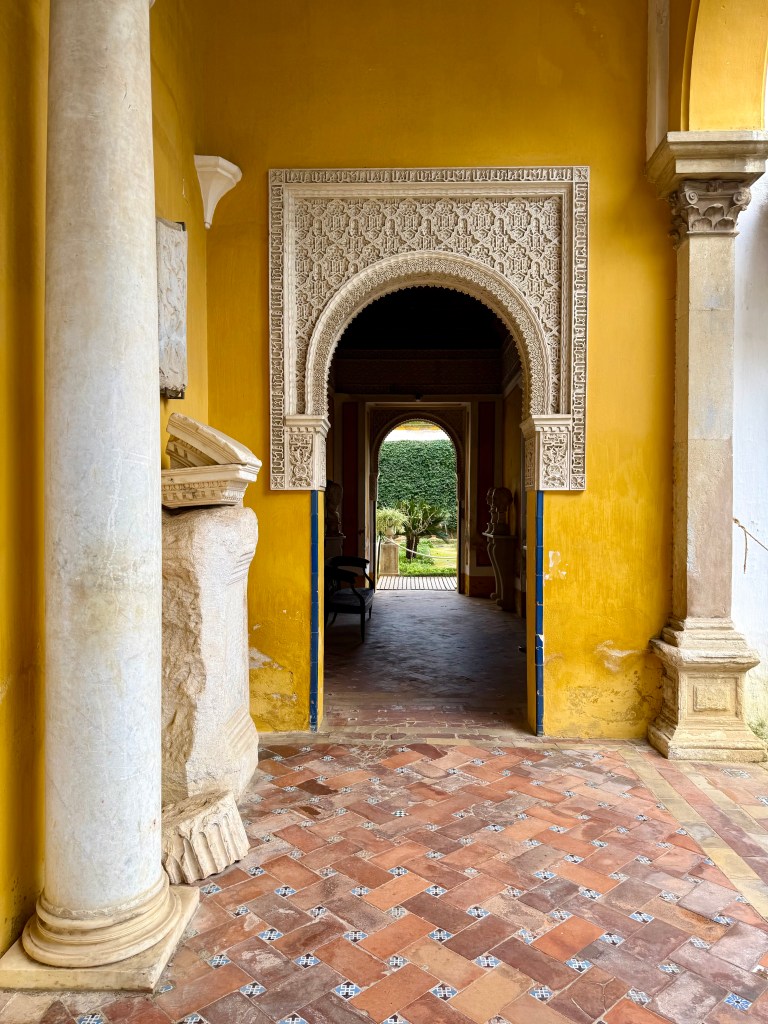
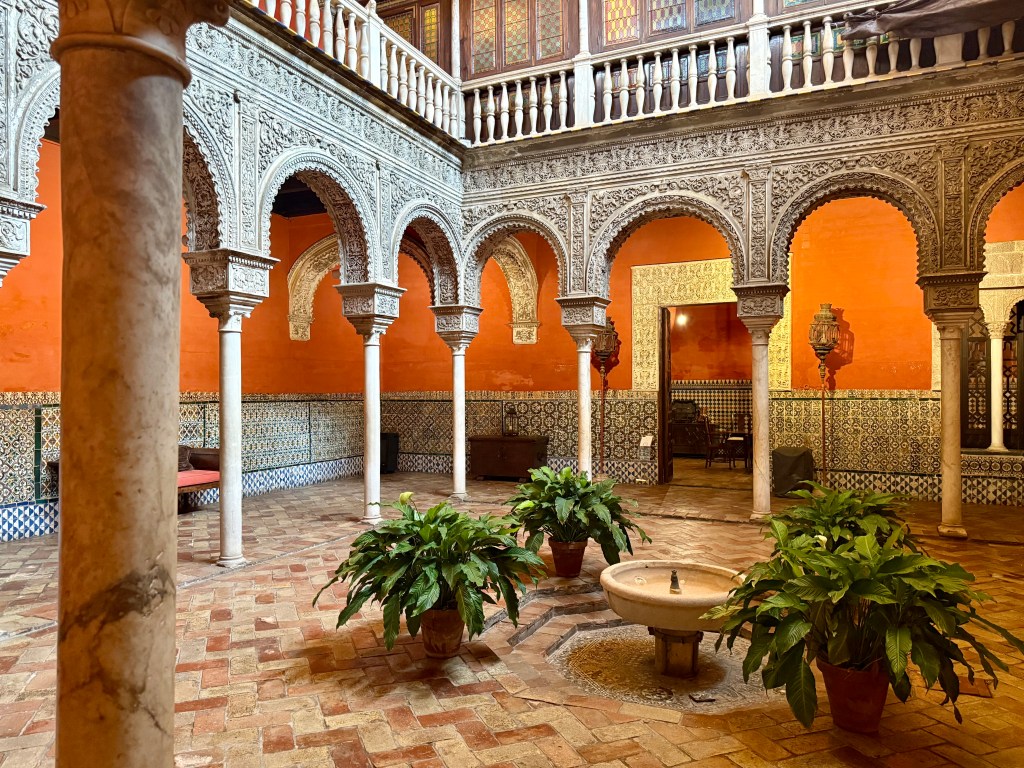
    I’ve also mentioned that Seville’s treasures often lie behind the humblest of facades. I encountered one more on my last day in the city: Casa de Salinas, just a three-minute walk from my apartment. I passed it countless times without knowing what was inside. It felt brighter and more lived-in than some of the other casa palacios I’d seen. The walls were orange: Donald’s favorite color. They made me think of him, and how traveling really isn’t quite the same without him.
  • One More Meal at Eslava

    One More Meal at Eslava

    The rhythm of my month in Seville hasn’t been what I’d call consistent. During the first two weeks, I wanted to see and eat everything. In the third week, I settled into a more domestic routine, buying groceries and eating at home. Now, in this final stretch, I’m asking myself: Have I done enough? And what, from past trips, feels worth revisiting?

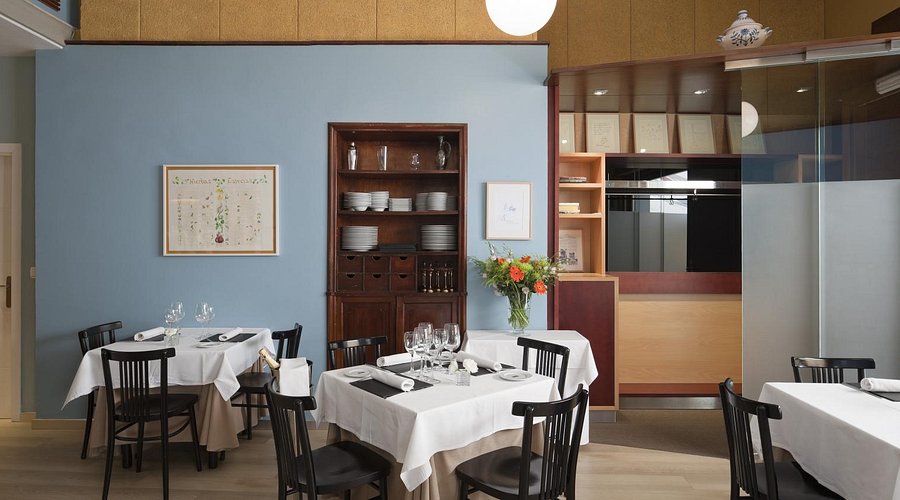
    That’s how I ended up dining last night at Espacio Eslava, one of Seville’s most celebrated restaurants. I’d been there before—in 2019, with my parents, on their first night in the city, just before my wedding. We did a tasting menu, as I recall. This time, the experience felt more casual; I ordered à la carte.

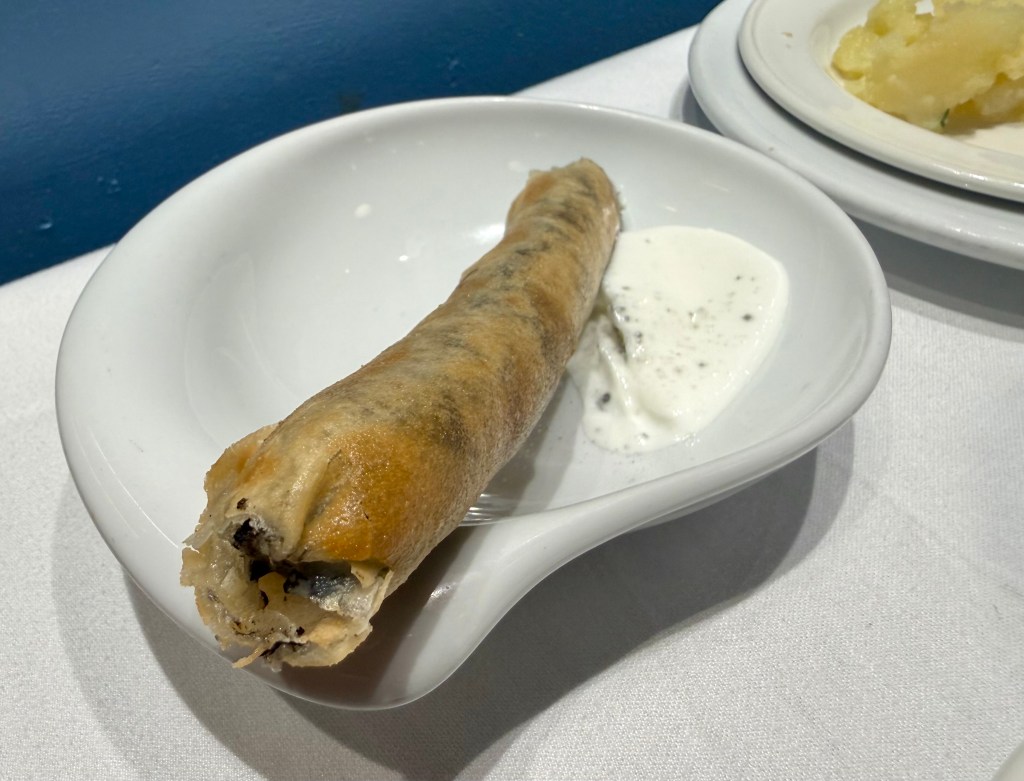
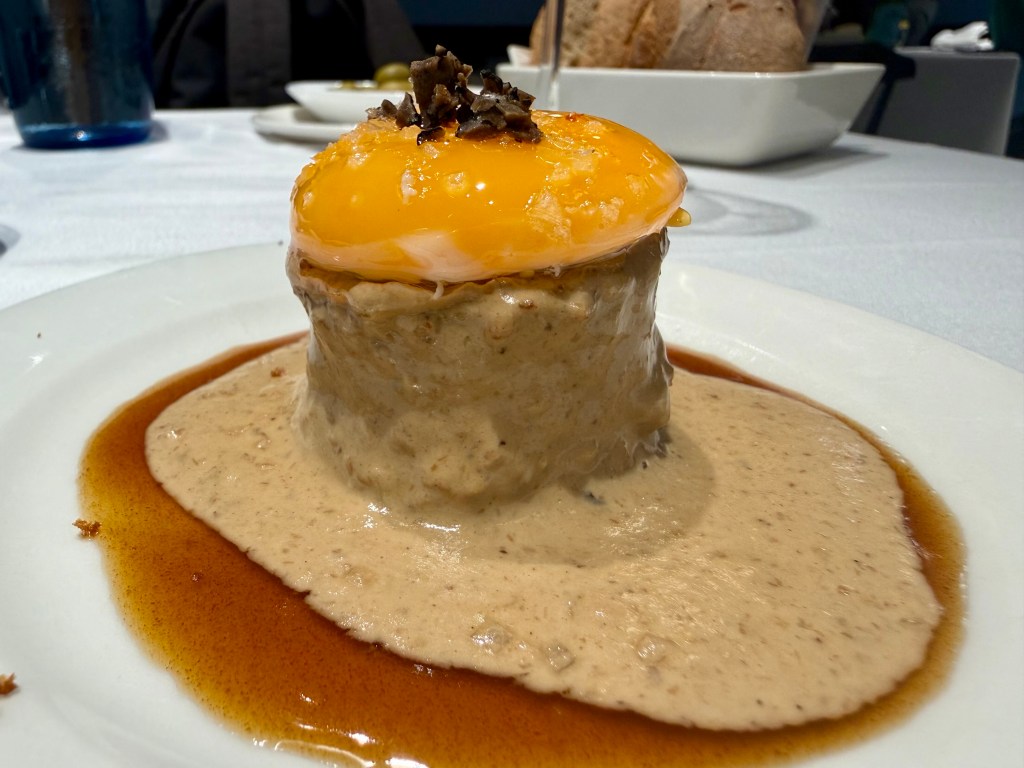
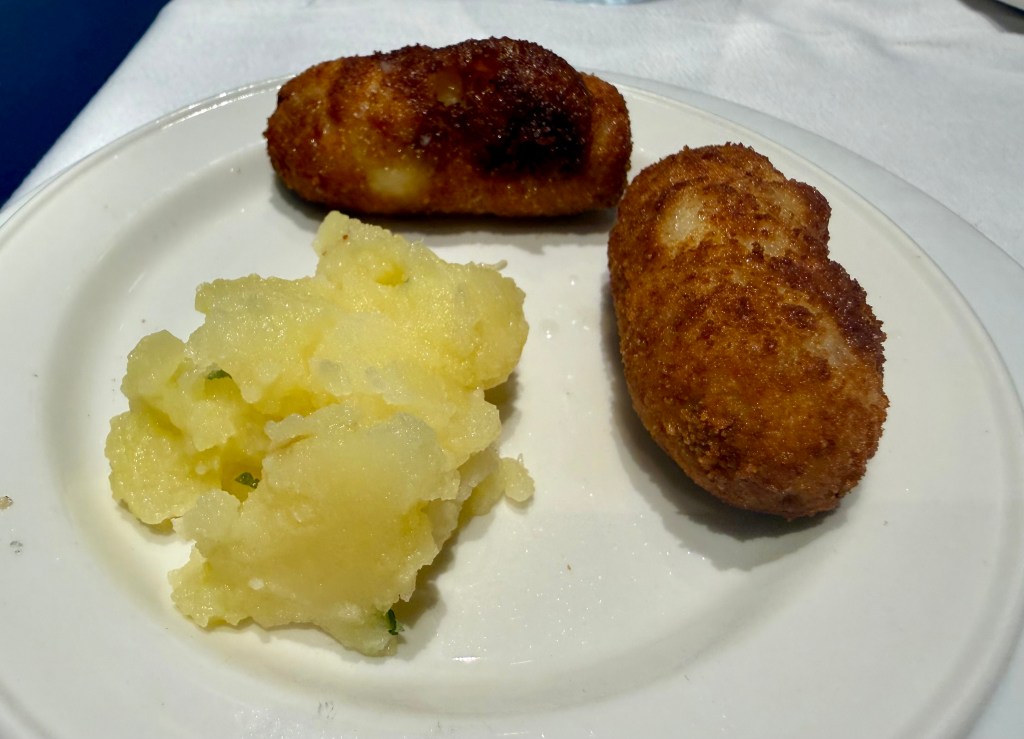
    Eslava helpfully features a “greatest hits” section on its menu, and I deferred to my waiter’s judgment—both in selecting the best dishes and in determining how much a solo diner should order. I started with the cigarro para Bécquer: a crispy brick pastry shell shaped like a cigar, filled with a savory mixture of cuttlefish, algae, and a creamy black squid-ink béchamel. Then came another of the restaurant’s classics, a slow-cooked egg yolk served atop a mushroom sponge cake. I’ve had croquetas before, but Eslava’s pork and beef versions are something special—perfectly breaded, with exceptionally rich, well-seasoned fillings. Eslava remains a place where both the food and the service stand out.

    I haven’t ordered dessert once while in Seville, unless you count the gelato cone I felt obligated to buy while escaping the rain. But at Eslava, I couldn’t resist the helado de queso viejo (aged cheese ice cream). It was rich and unmistakably cheesy, yet still sweet enough to qualify as dessert.

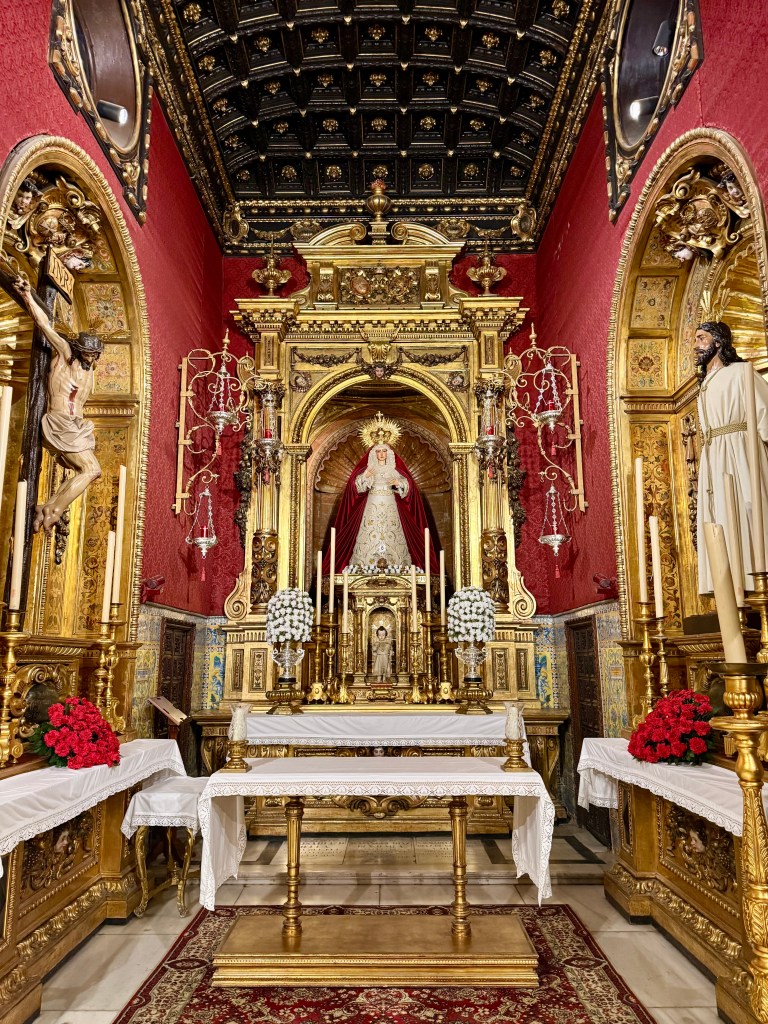
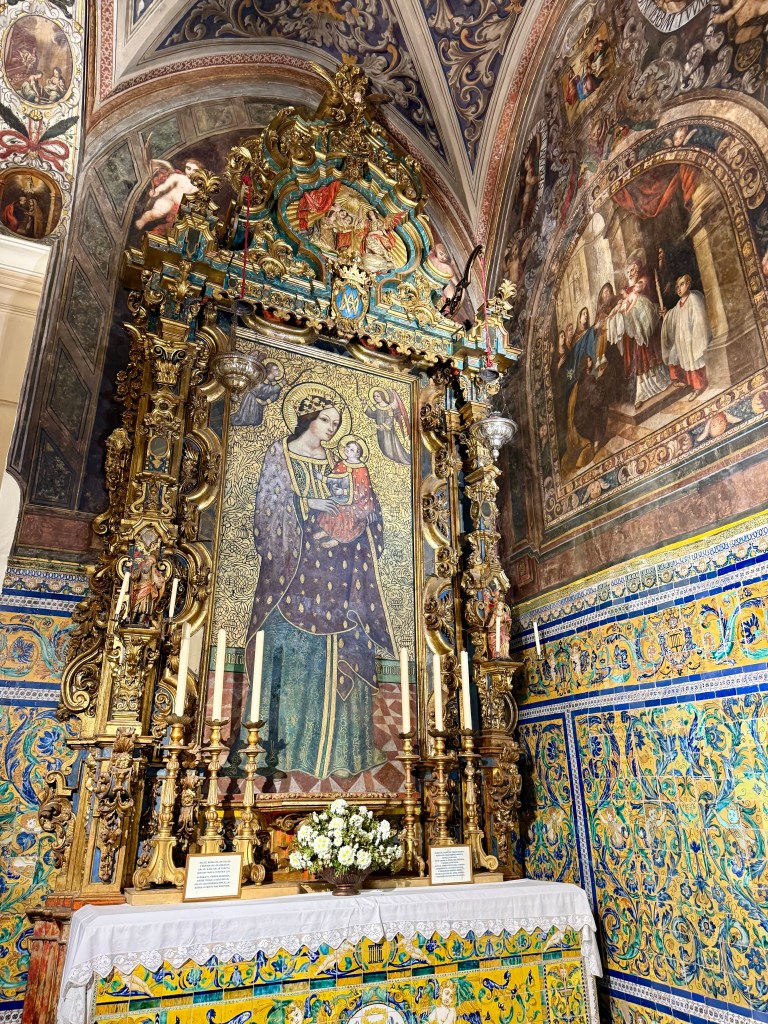
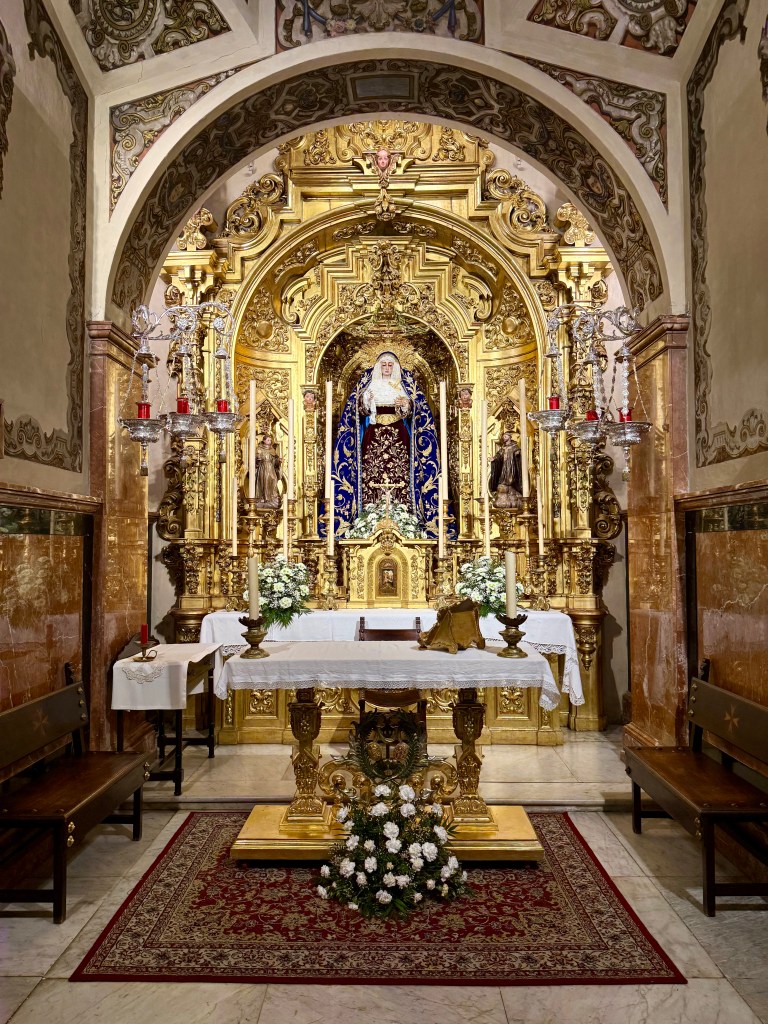
    Before dinner, I took a long walk, wanting to take in as much of Seville’s atmosphere as possible before heading back to New York on Saturday. Near the restaurant, I stopped into two holy places: the Church of San Lorenzo and the adjacent Basílica de Jesús del Gran Poder. The former houses stunning chapels maintained by Seville’s Catholic fraternities; the latter is home to a famous sculpture of Christ carrying the cross, created in 1620 by Juan de Mesa, an artist from Córdoba.

    A spacious plaza lies just outside the churches—a wonderful place to sit, watch passersby, and digest after a great meal.

  • Doña Regla’s House of Treasures

    Doña Regla’s House of Treasures

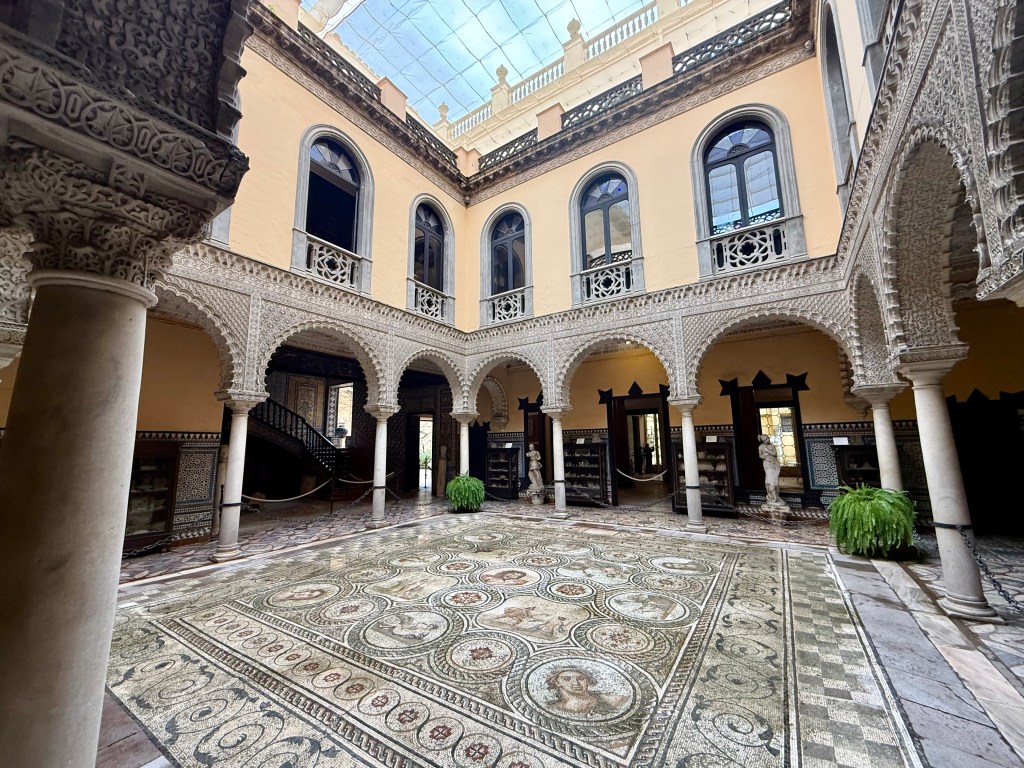
    With just days left in my monthlong sabbatical in Seville, I assumed I had seen pretty much everything I should. A few late-breaking surprises have proved me wrong. The most unexpected of these was the Palace of the Countess of Lebrija, another of the city’s celebrated casa palacios—grand private homes that blur the line between residence and museum.

    The original building dates to the sixteenth century, but the palace achieved both its fame and its name in the early twentieth century, when it was purchased by Doña Regla Manjón Mergelina, the Countess of Lebrija. Over the years, she bought up neighboring houses, dramatically expanding the property and renovating it to suit her ambitions.

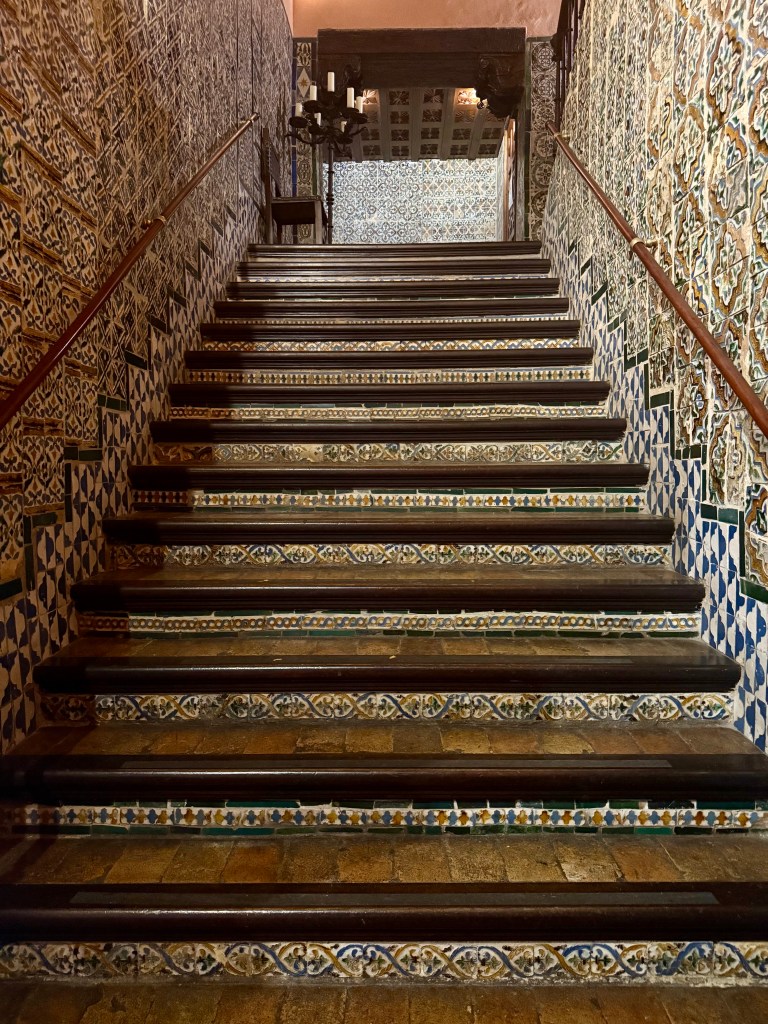
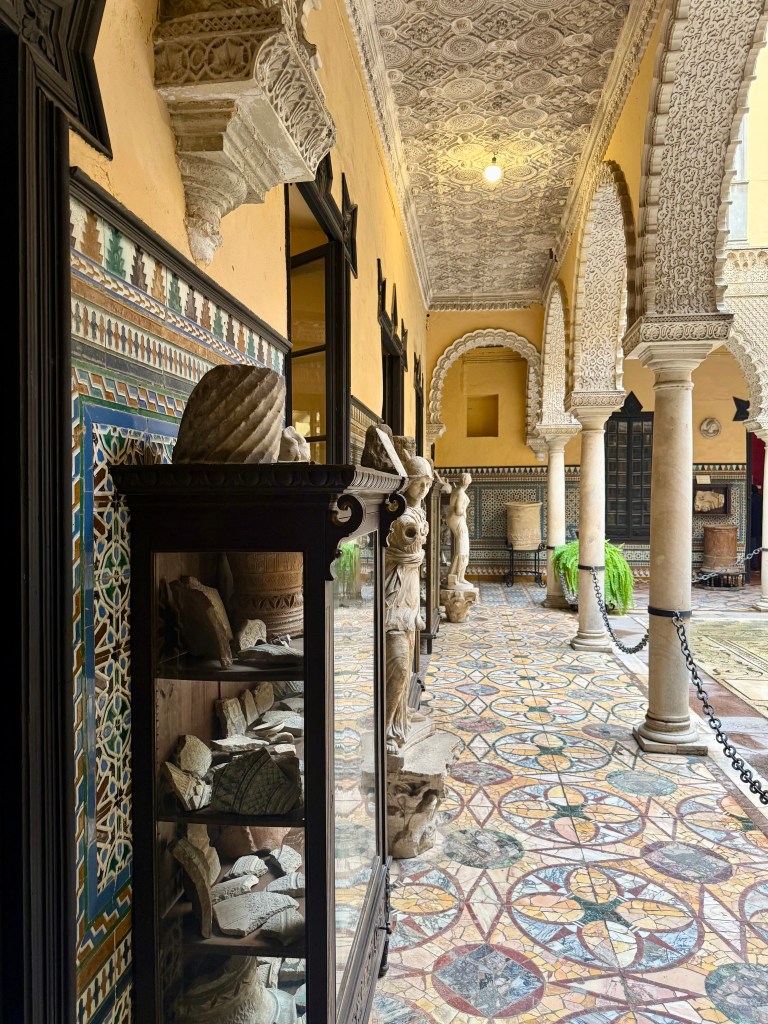
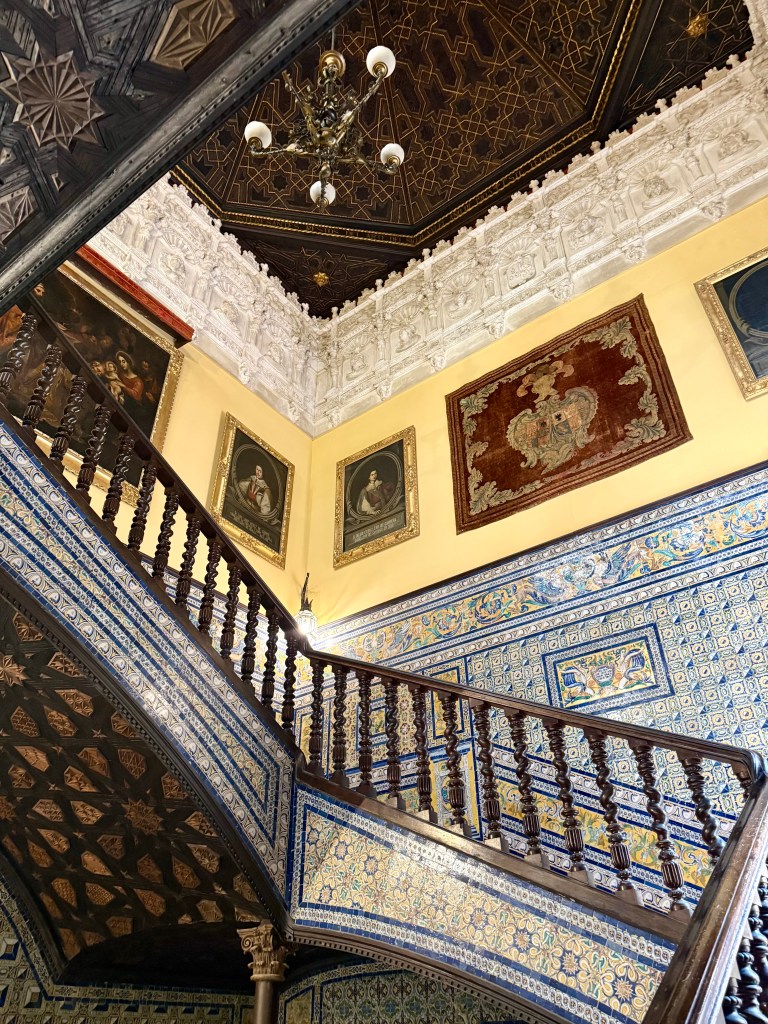
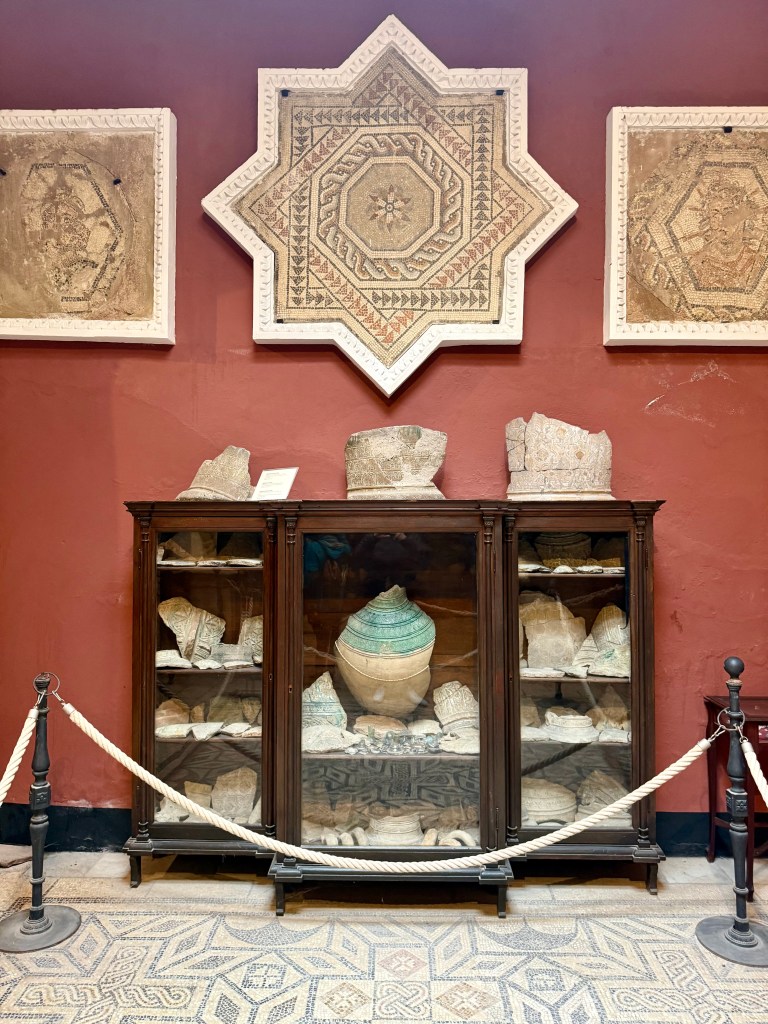
    The countess herself led a fascinating life. An avid collector of art and antiquities, she was also recognized as a genuine authority in the field, becoming the first woman admitted to Seville’s Royal Academy of Fine Arts. Something of a packrat, she was also a fervent preservationist. When a local monastery closed its doors, she purchased its sixteenth-century tiles and lined her staircase with them. From a defunct palace in a nearby town came the ornate wooden ceiling that now hangs above the same stairwell, an architectural transplant rescued from oblivion. Artworks and artifacts from across her collection are thoughtfully arranged in display cases throughout the building.

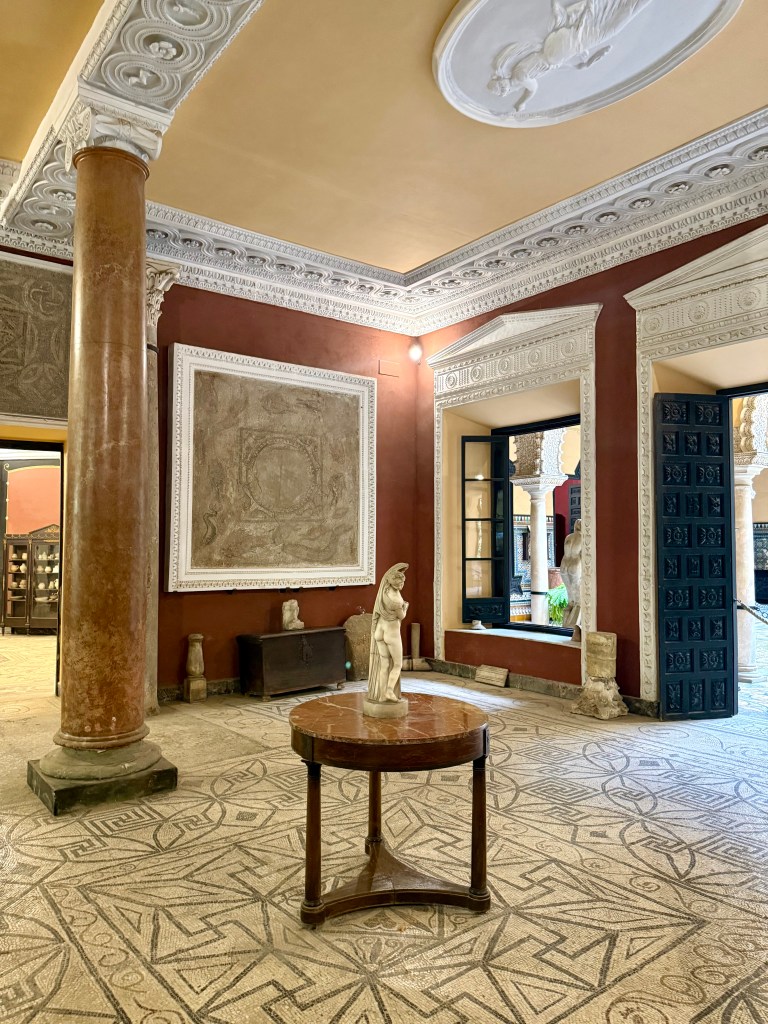
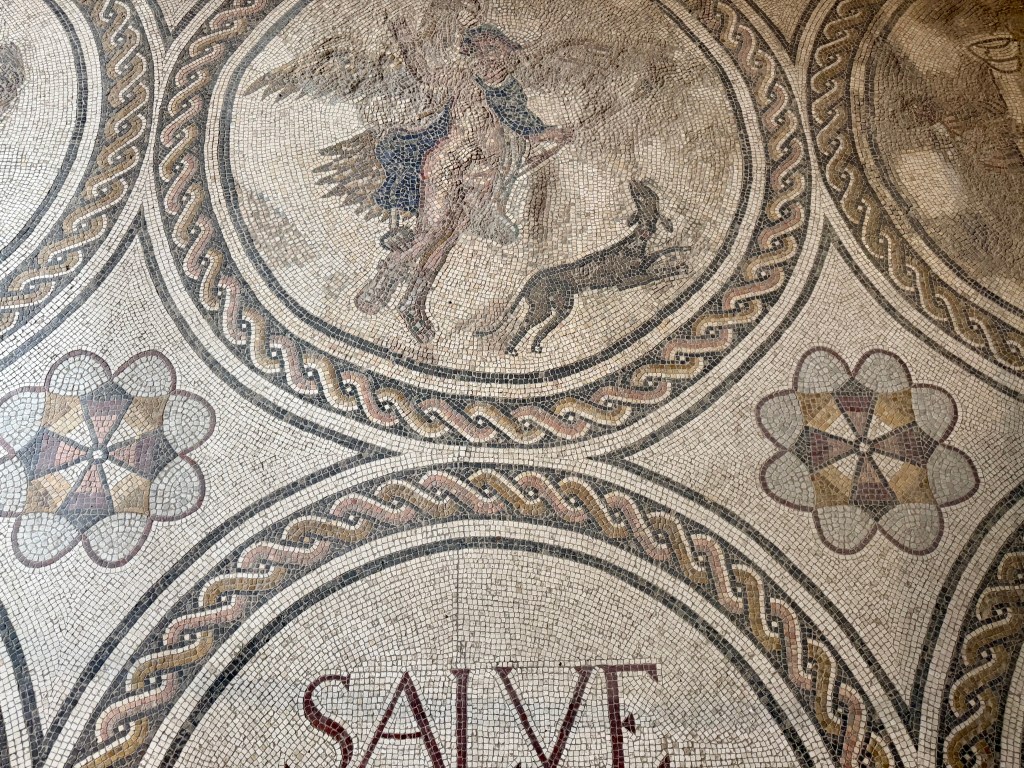
    Most astonishing are the mosaics that cover much of the palace’s ground floor. These were brought from the nearby ruins of Italica, the ancient Roman settlement just outside Seville. The countess didn’t merely acquire them; she actively participated in the excavation of the site itself. How they were transported, intact, and installed in the center of a modern city is something I still can’t quite fathom.

    I arrived just in time to join a tour of the upper rooms, which turned out to be every bit as lavish as the rest of the house—though, alas, photography wasn’t allowed. Traditional Spanish décor sits comfortably alongside Chinese porcelain, Florentine woodwork, and English china, somehow adding up to a coherent whole rather than chaos. Our guide mentioned that in most casa palacios, bathrooms were located outside the main building—something I was surprised I hadn’t noticed before—but the countess was ahead of her time, installing one conveniently adjacent to her bedroom.

    Given all this, it’s surprising that the Palace of the Countess of Lebrija is not better known, or at least not more firmly fixed on the standard Seville itinerary. That it took me four visits to the city to discover it says less about the palace than it does about Seville itself—a place that continues to reward curiosity long after the obvious highlights have been checked off.

  • An Early Arrival in Jerez

    An Early Arrival in Jerez

    Like a true Virgo, I tend to arrive early. So when traveling from Seville to Jerez to see the famous horse show, I left myself plenty of extra time.

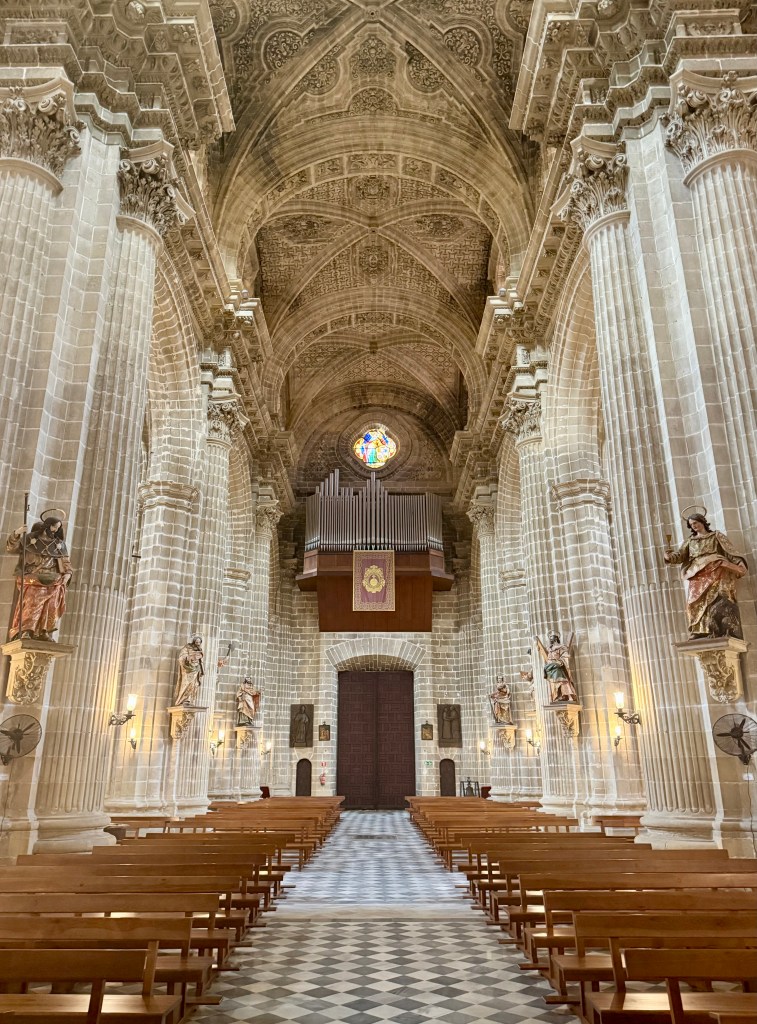
    On my way to the city center, I passed Jerez Cathedral. Checking my watch, I realized I had nearly two hours before the performance began, so I stepped inside and grabbed an audio guide.

    Officially the Cathedral of San Salvador, Jerez Cathedral stands on a site that has been sacred for centuries—once home to a mosque during Islamic rule and later a humble Christian church. Construction of the current building began in 1695 and continued well into the eighteenth century. It was elevated to cathedral status only in 1980, when Jerez became the seat of its own diocese—making it, by cathedral standards, relatively young.

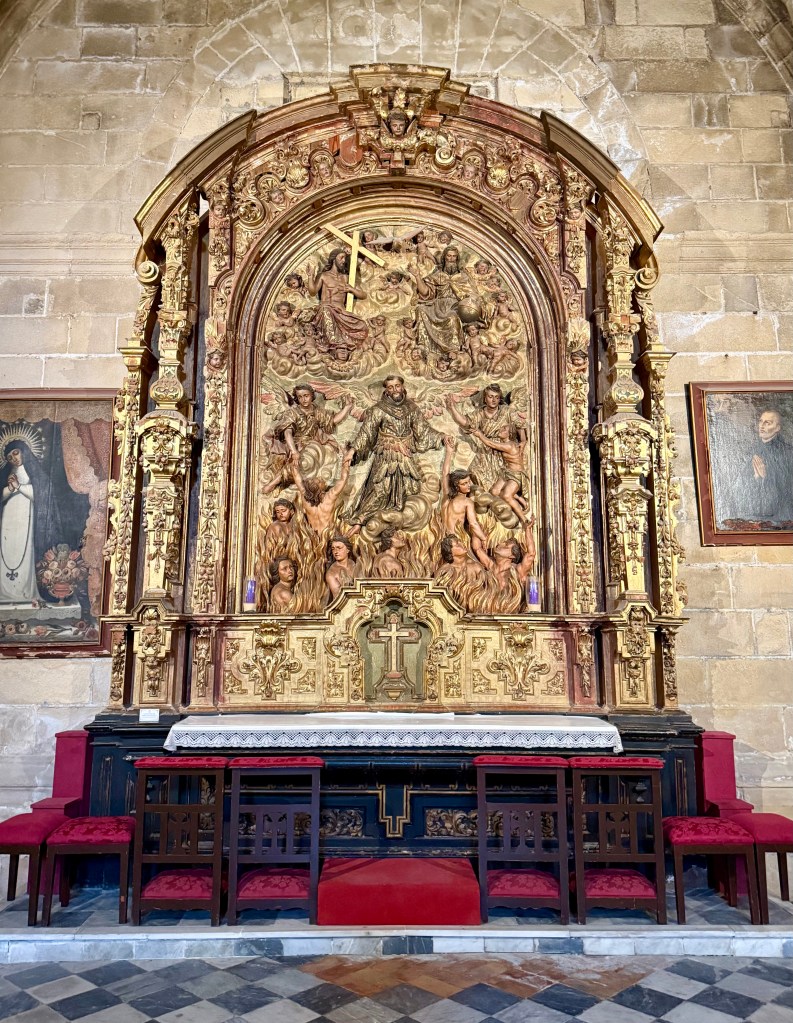
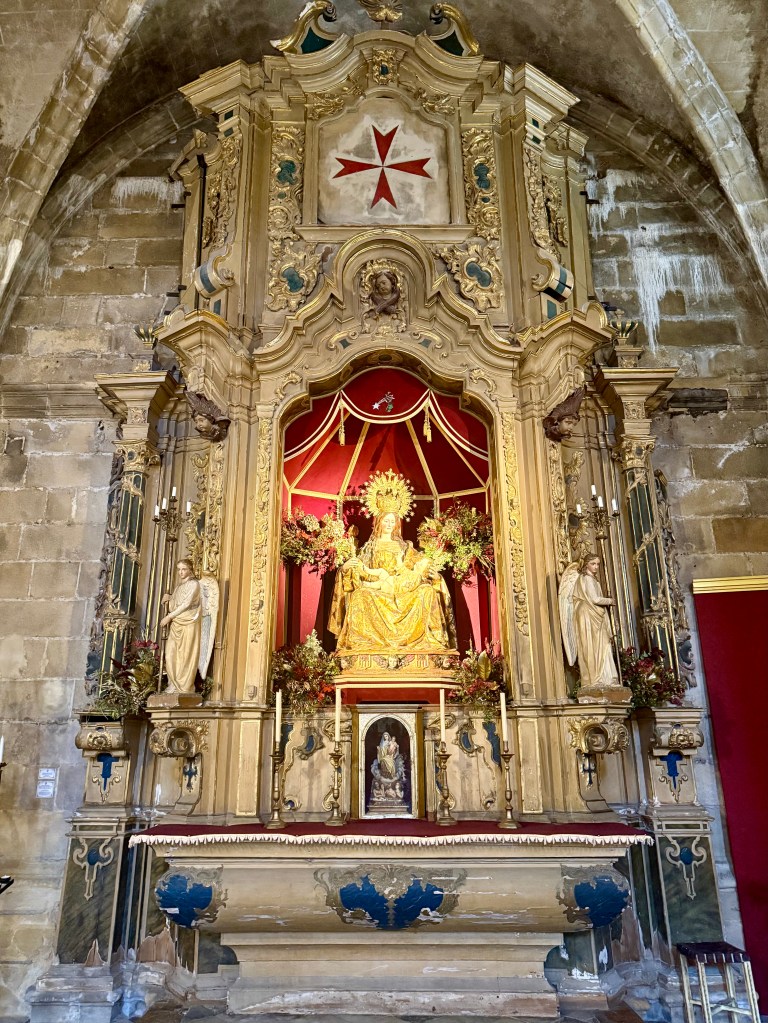
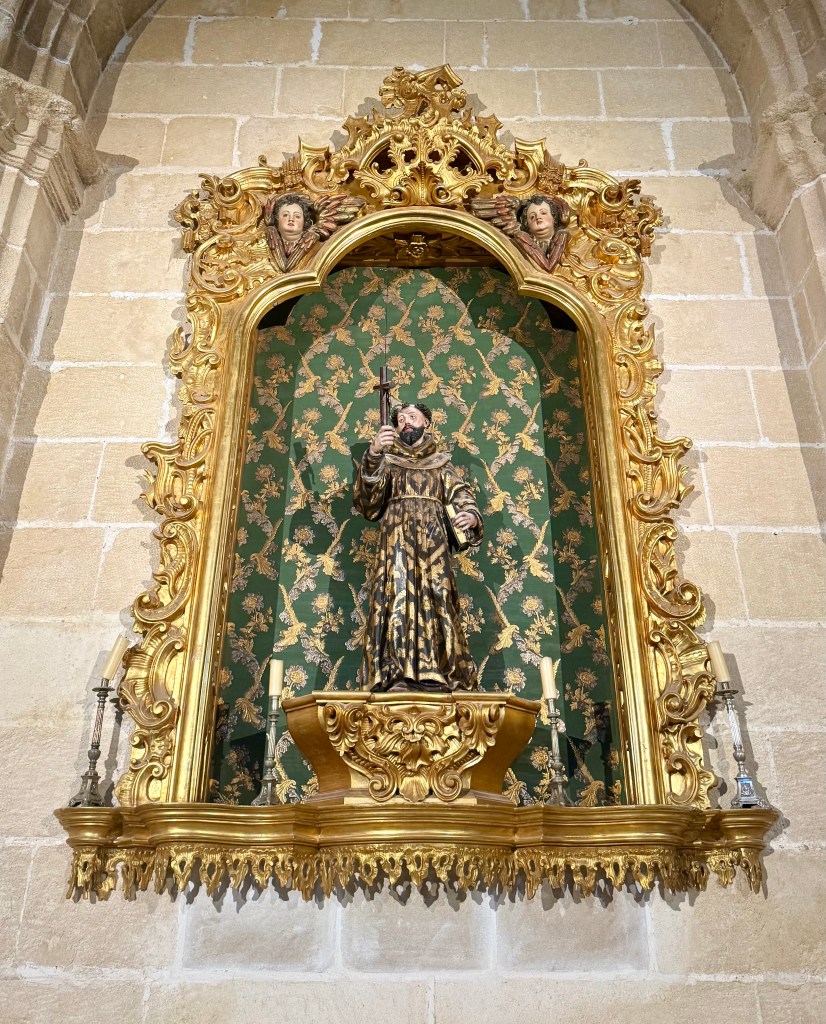
    Seville’s cathedral is massive; this one is more intimate—invitingly so. Rather than numerous built-in chapels, most of the devotional spaces here take the form of side altars, decorated with sculpture. The altarpiece that stayed with me most is Las Ánimas del Purgatorio (The Souls in Purgatory), in which anguished figures emerge from flame and shadow, reaching upward toward salvation.

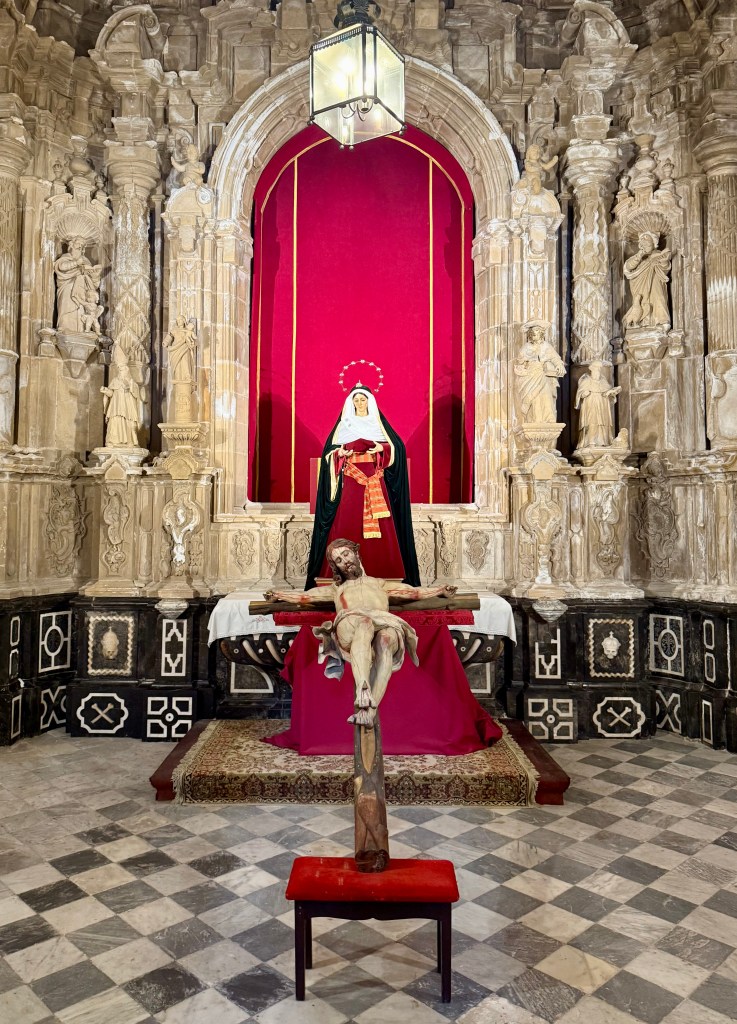
    Of the few true chapels, I lingered longest in the Chapel of Souls, where the Cristo de la Viga (Christ of the Beam)—a fifteenth-century Gothic wooden sculpture that predates the cathedral itself—is displayed before a figure of Mary as Nuestra Señora de los Dolores (Our Lady of Sorrows). I don’t consider myself Catholic—or even Christian—anymore, yet the passion behind much Spanish Catholic art remains hard to resist.

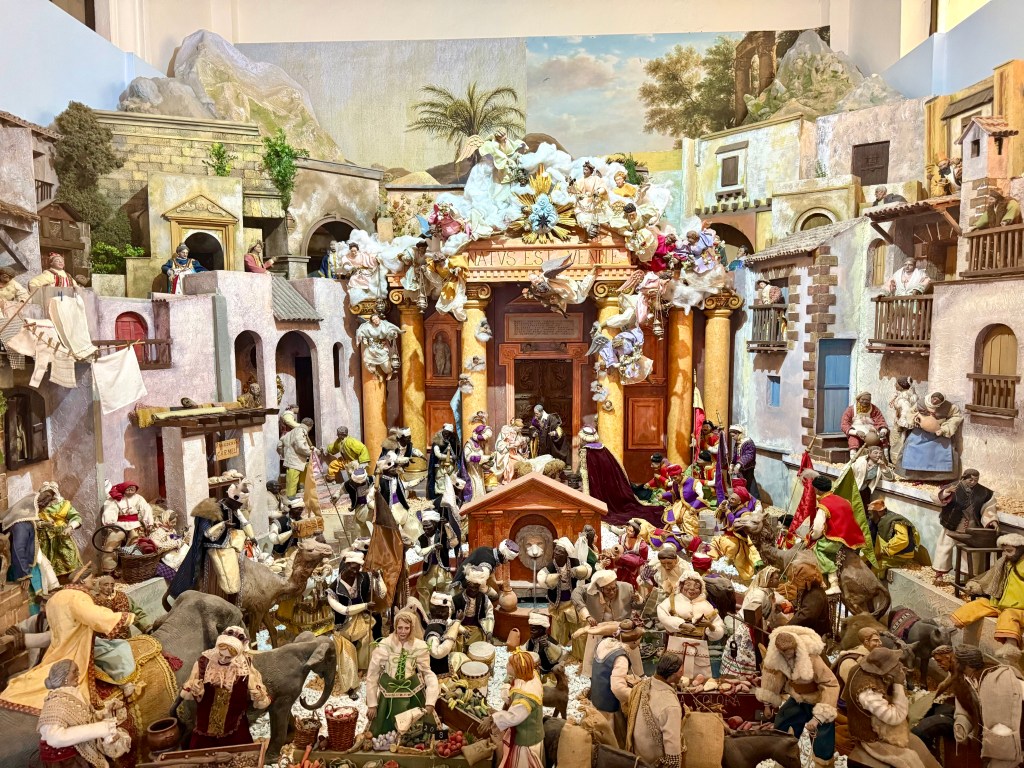
    The side rooms are intimate as well and worth visiting. In the sacristy, where photos aren’t allowed, hangs Zurbarán’s Virgin as a Child, a rare and restrained depiction of Mary absorbed in her book of psalms. An extraordinarily elaborate Neapolitan-style nativity scene sits in another side room.

    After visiting the cathedral, I wandered Jerez for a while. It has more grit than Seville and isn’t as colorful; historic buildings and ungainly modern ones sit side by side. The locals are kind. I stopped into a neighborhood café for a coffee and felt a bit out of place, but they seemed happy that I was willing to speak Spanish.

    I regret not having time to see Jerez’s Alcázar or the monastery on the city’s outskirts, which dates to 1475. Next time.

    Neapolitan-style nativity scene
  • Andalusian Horses and Afternoon Sherry in Jerez

    Andalusian Horses and Afternoon Sherry in Jerez

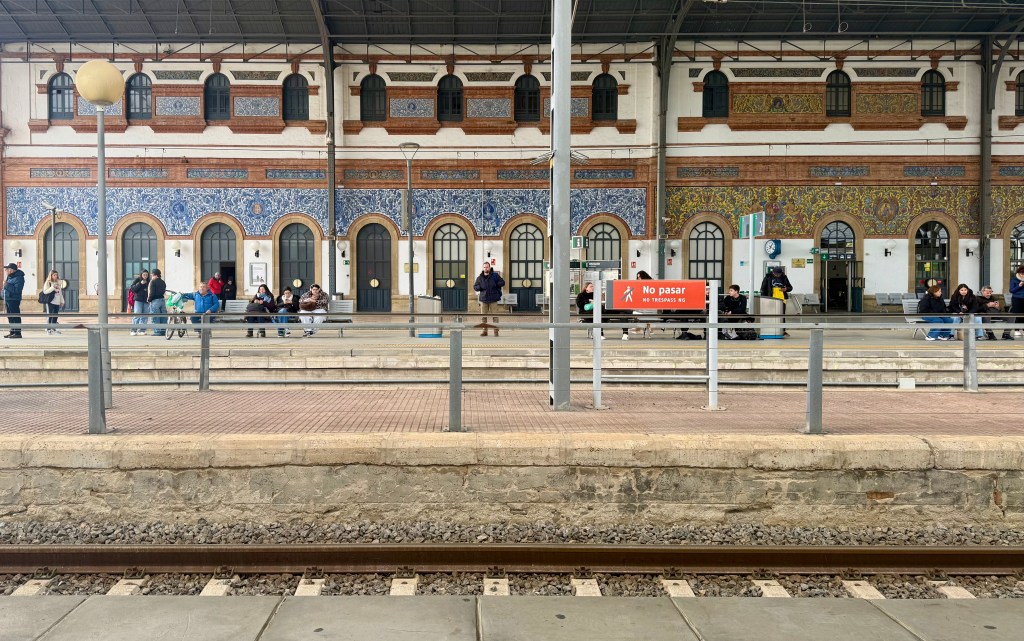
    This being my fourth trip to southern Spain, I’ve seen much of the region—Seville, Córdoba, Granada (still a favorite), and Ronda. This week, though, I added a new stop to the list: Jerez de la Frontera, the birthplace of sherry, just over an hour from Seville by train.

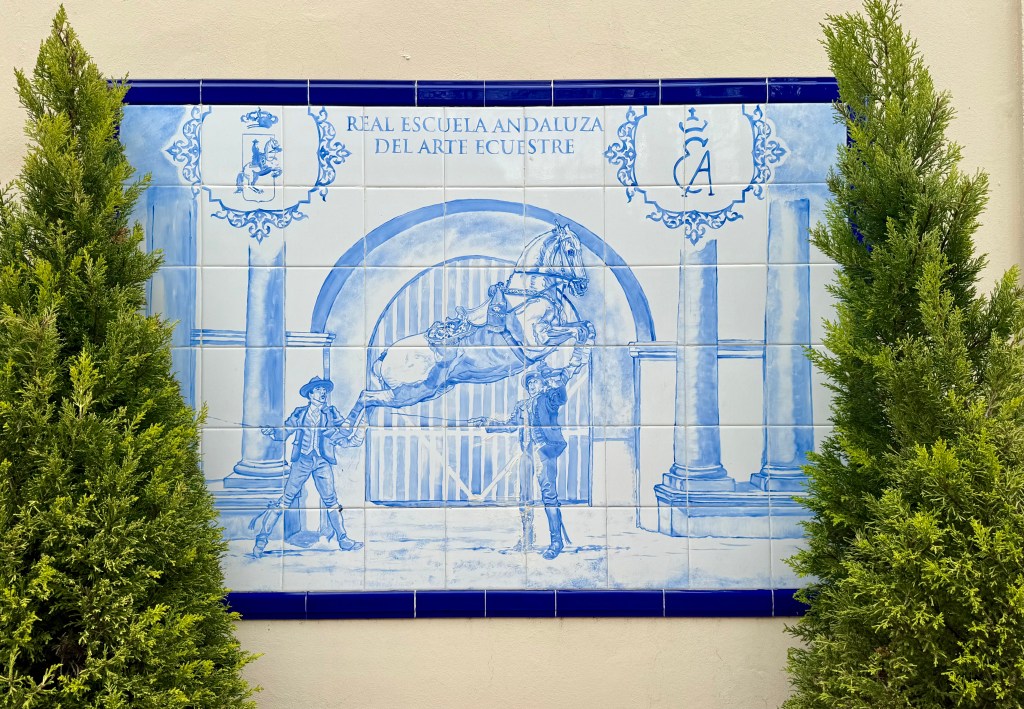
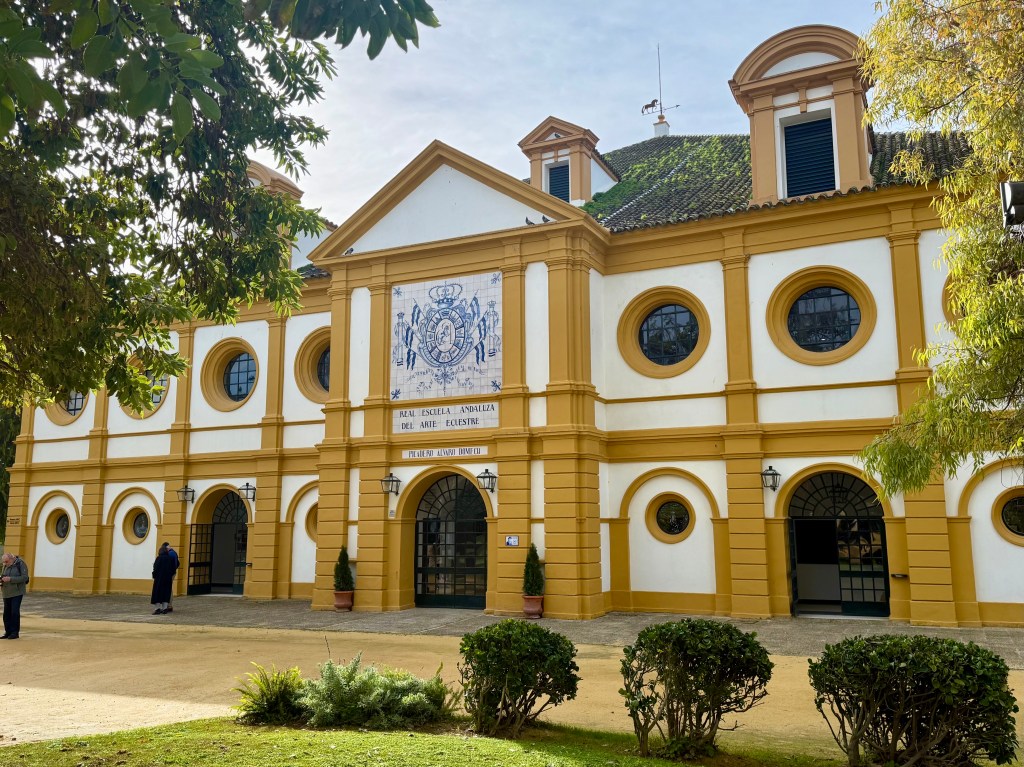
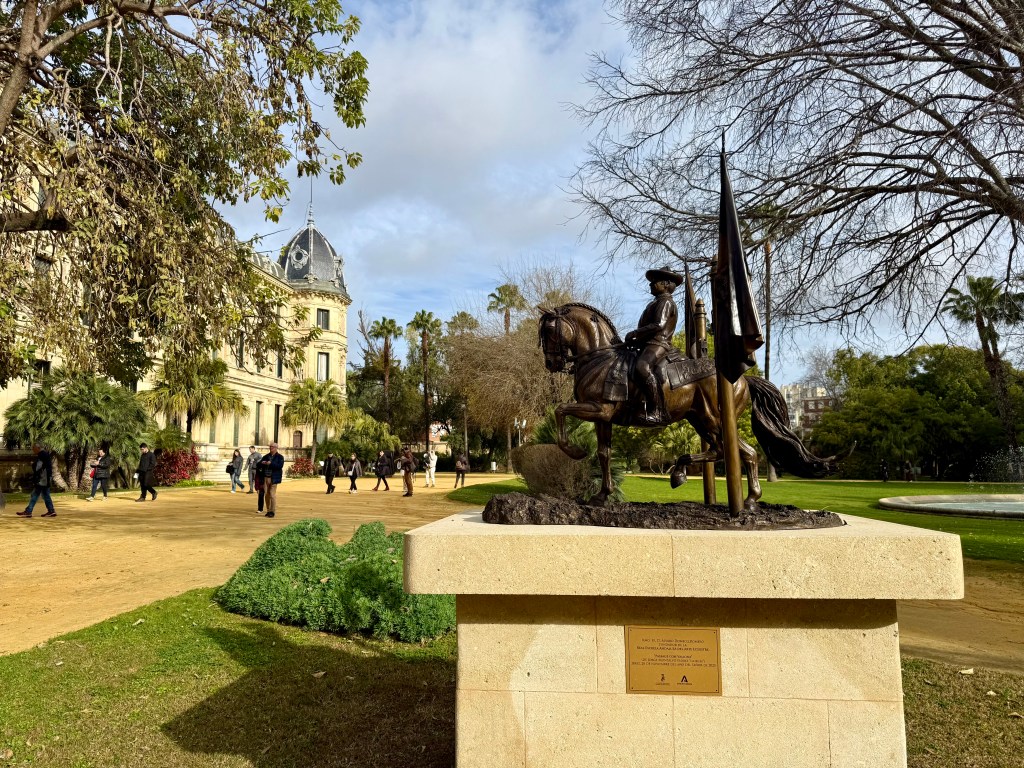
    I spent the morning wandering Jerez and visiting the cathedral—more on that in a later post—but it wasn’t sherry that ultimately brought me there. I came to visit the Royal Andalusian School of Equestrian Art, one of the most prestigious classical riding academies in the world. The grounds are immaculately maintained, and a museum highlights the importance of horses in military, cultural, and ceremonial life. Babieca, the horse belonging to El Cid—the famed Castilian knight of medieval Spain—was said to have carried his dead master into battle, terrifying his enemies even after his death.

    The main attraction, though, is the weekly performance on offer: Cómo bailan los caballos andaluces (“How the Andalusian Horses Dance”), a ninety-minute spectacle of precision riding. The riders were dressed impeccably in traditional, tailored Andalusian attire. As a devotee of New York City Ballet and the choreography of George Balanchine, I’ve seen ballerinas dance to the “Walpurgisnacht” music from Gounod’s Faust—but watching two horses move to the same music was something entirely new. The way the horses and their riders wove across the wide space, forming a variety of shapes, also reminded me of Paul Taylor’s Esplanade. (My dance-loving friends are about to murder me for this blasphemy.)

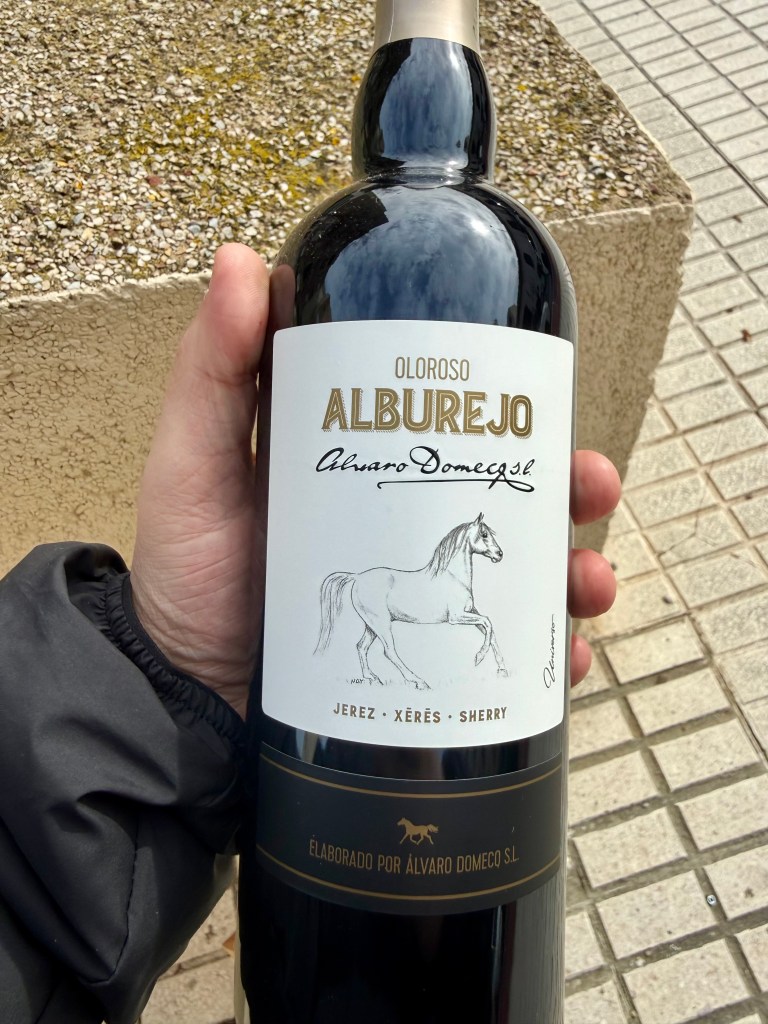
    After leaving the grounds, I meant to stop briefly for lunch nearby before heading back to the train station and returning to Seville. A wine shop along the way slowed me down. Why not pick up a bottle of sherry for me and Donald—and one for my parents—before lunch? I try not to drink during the day, but La Casa del Jerez generously insisted that I sample four (maybe five?) sherries before making my final purchases.

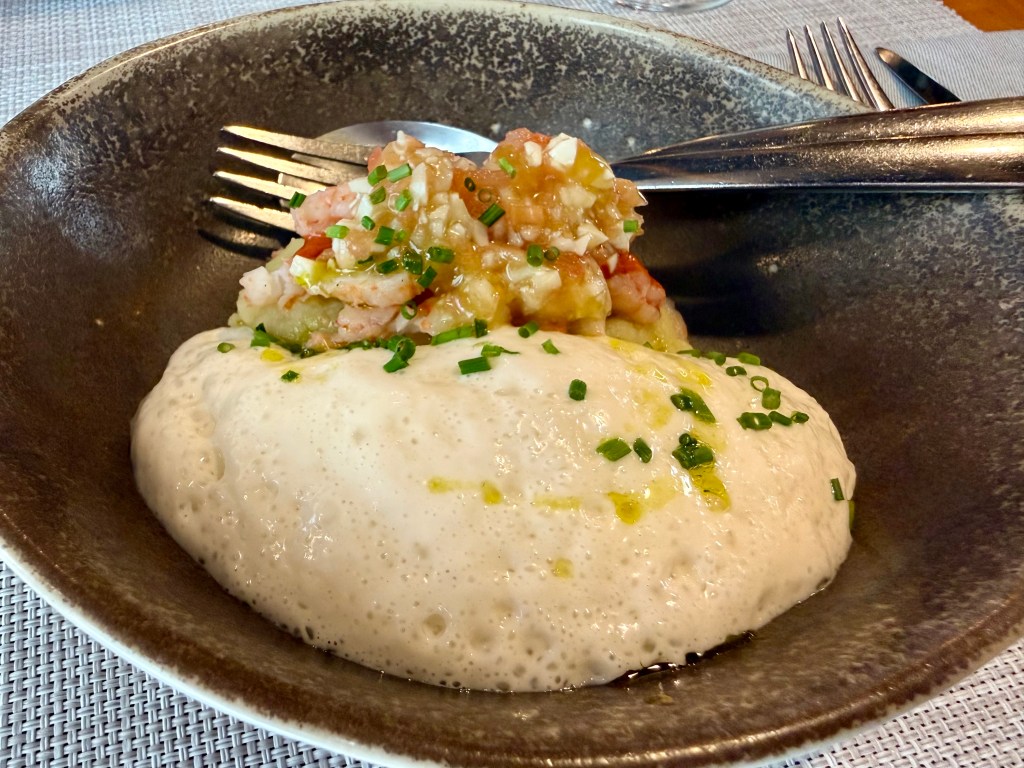
    Lunch at Restaurante Albalá, opened by Michelin-starred chef Israel Ramos, was fantastic. After a few samples of sherry across the street, my Spanish was flowing well. “Are you from here?” the waiter asked as I ordered, flattering me. The red shrimp salad with sherry vinegar and fino foam was one of the best dishes I’ve ever had in Spain.

    Horse training at the Royal Andalusian School of Equestrian Art

  • Painting Tiles in Triana

    Painting Tiles in Triana

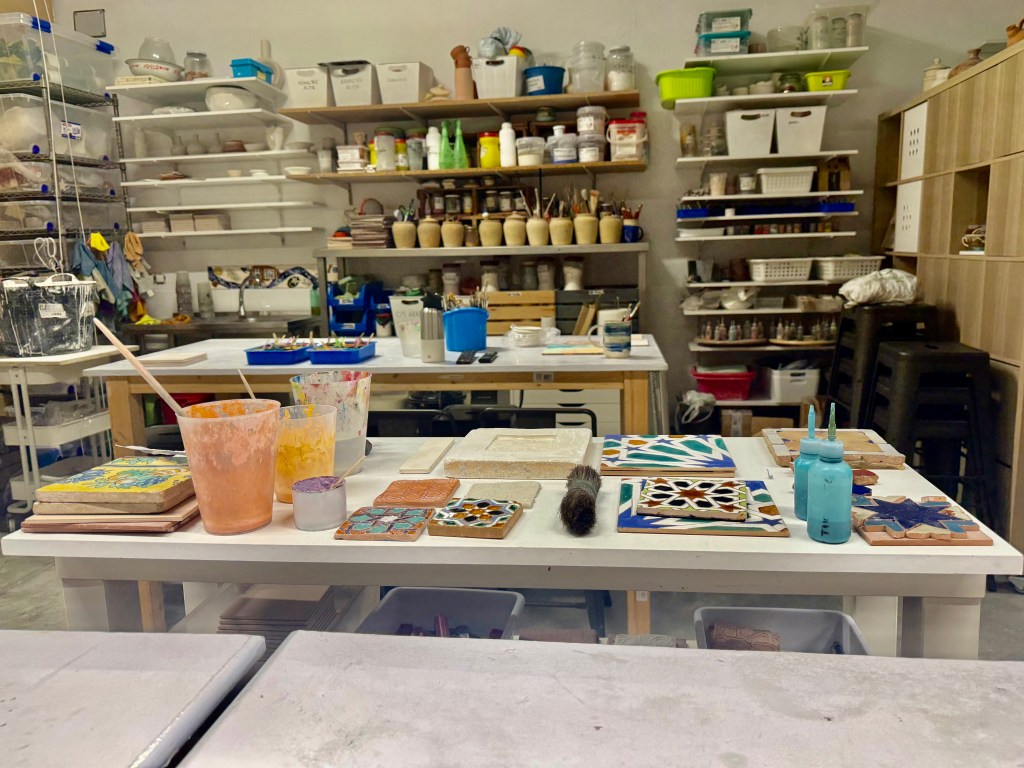
    This week, I broke my pattern of revisiting old favorites in Seville. I got my hands dirty at BarroAzul Cerámica, taking a workshop that was both informative and genuinely fun. BarroAzul is housed in Triana, in a space where ceramics have been made for more than two centuries, and the workshop focused on understanding the distinctive tiles that appear on so many of the city’s walls.

    Ceramics have shaped Seville’s visual identity since at least the Middle Ages, influenced by the city’s long Islamic past and later transformed under Christian rule. Triana, just across the Guadalquivir River, became the heart of ceramic production, renowned for its azulejos—glazed tiles that blend Moorish geometry with Christian imagery. With easy access to clay, river transport, and steady noble, royal, and ecclesiastical patronage, Sevillian ceramics once spread throughout Spain and beyond.

    Over time, artisans developed a range of techniques. In the workshop, we were introduced to several:

    • Cuerda seca (“dry rope”): A design is drawn on the tile using a greasy, manganese-based mixture, though a simple pencil can work. The oily line acts as a barrier, preventing glazes from bleeding into one another.
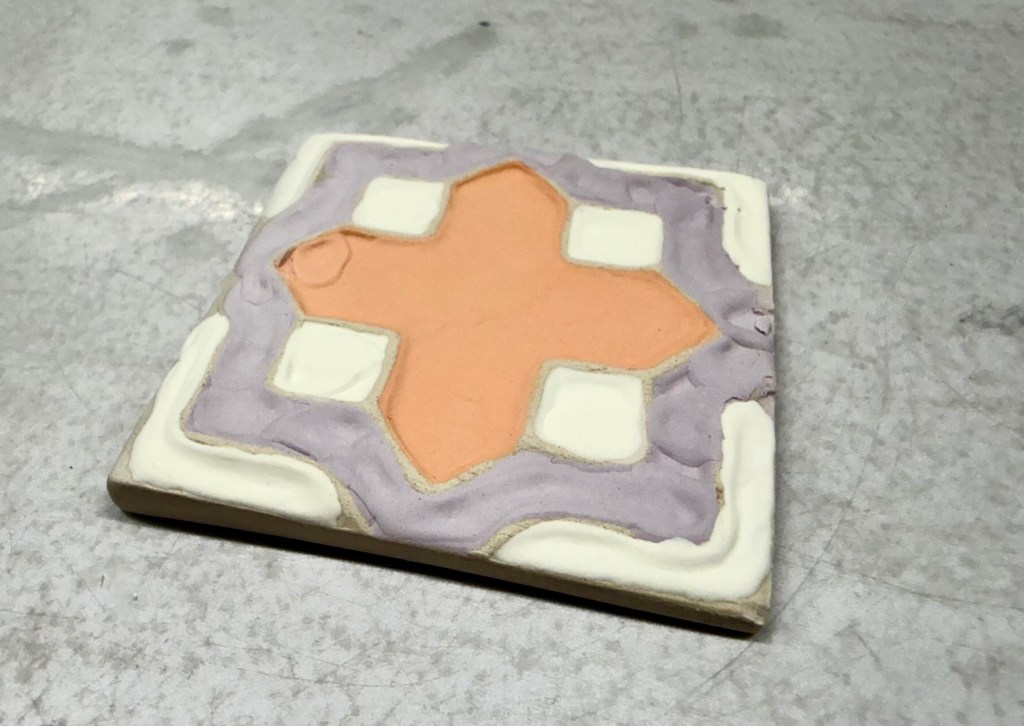
    • Relief: A mold creates raised outlines in the clay, forming borders that hold the glazes in place. In the kiln, everything melts into a smooth, unified surface.
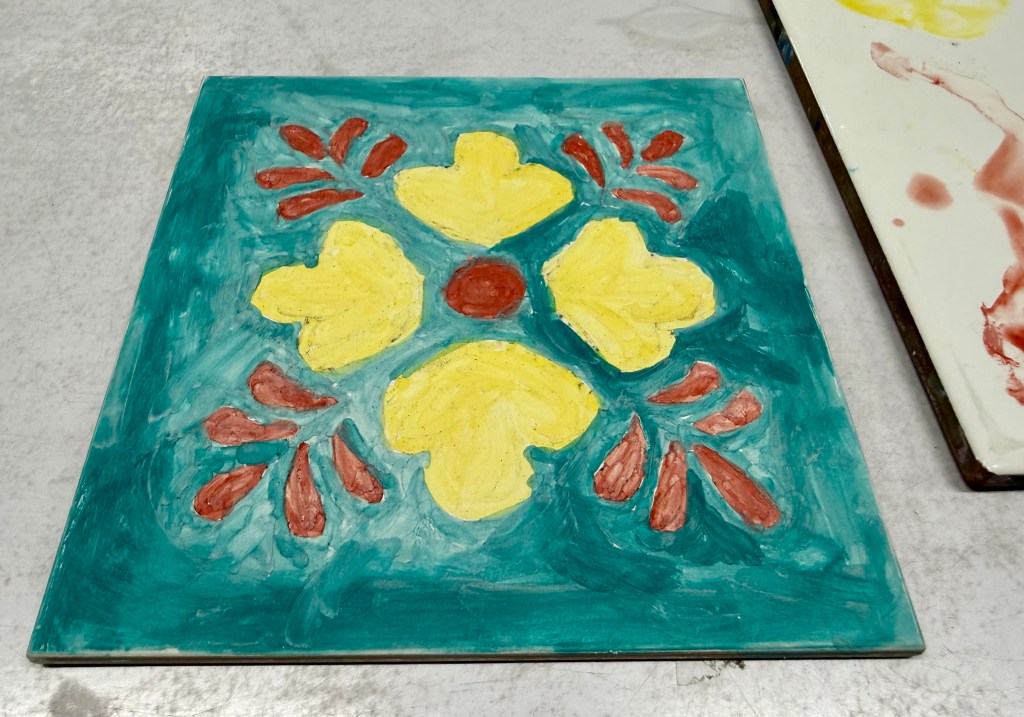
    • Pisano: Color is painted delicately onto an already glazed white tile using a watercolor-like technique before firing. Introduced to Seville by Francisco Niculoso Pisano in the late fifteenth century, it seems engineered to expose my shaky brush control.
    • Alicatado: The most demanding technique, this style involves glazing clay in different colors, cutting it into shapes—stars, diamonds, squares, and more—and assembling them by hand into geometric patterns. Clay is added to the back for reinforcement before a second firing.

    We practiced the Pisano and relief techniques. The other two participants produced elegant, delicate strokes on their Pisano tiles; mine leaned more toward “energetic” and “let’s get this done.” Watercolor skills, it turns out, do not materialize simply by being in Europe. Still, I had fun, thanks to Virginia, our patient and good-humored instructor.

    I’m more confident about my relief tile, where I kept the palette spare—blue, orange, and white—and let the raised lines do most of the work.

    I wish I had taken this workshop earlier, before visiting the Alcázar, the Casa de Pilatos, and the Palacio de las Dueñas, where some of the city’s most extraordinary tiles are on display. I loved looking at them before; I just didn’t understand the history behind them—or how much patience and technique they require.

    I pick up my two tiles tomorrow. We’ll see how they turn out.

    My “Pisano” (watercolor) tile. Hideous!
    My relief tile. The colors will change and the surfaces will smoothen. I have high hopes.

  • The Value—and Difficulty—of Slowing Down

    The Value—and Difficulty—of Slowing Down

    I’m past the midpoint of my monthlong stay in Seville, and I’ve pushed myself to see (and eat!) a lot. That’s my default programming: when I travel outside the US, I try to take full advantage of every moment. As a kid, I wanted to “see the world,” poring over our printed encyclopedias and their pictures of faraway places.

    On more recent trips abroad with family—including to Taiwan and Italy—I’ve tried to absorb, or share, every detail. That impulse can be enriching, but also exhausting.

    And that isn’t really the point of the sabbatical I’m now taking advantage of. This time is meant for resting and recharging. To be fair, some of that replenishment has come through cultural immersion—taking in art and architecture, enjoying special meals. Still, over the last few days, I’ve begun to do a better job of slowing down—not perfectly and not all at once, but by gradually giving myself permission to do less.

    How I walk has become part of this shift. Like a New Yorker—and an anxious one at that—I tend to move fast. But in the narrow streets of Seville, you encounter couples of all ages strolling arm in arm, unhurried, simply enjoying the act of walking together. Rather than rush around them, as I would in New York, I’ve started to slow my steps.

    I still plan to visit a few more tourist sites and local restaurants, but I’ve seen most of them before. I have to remind myself that it’s okay not to visit yet another Baroque church if what I really want is to finish a novel. I don’t need to try another restaurant when I have groceries at home.

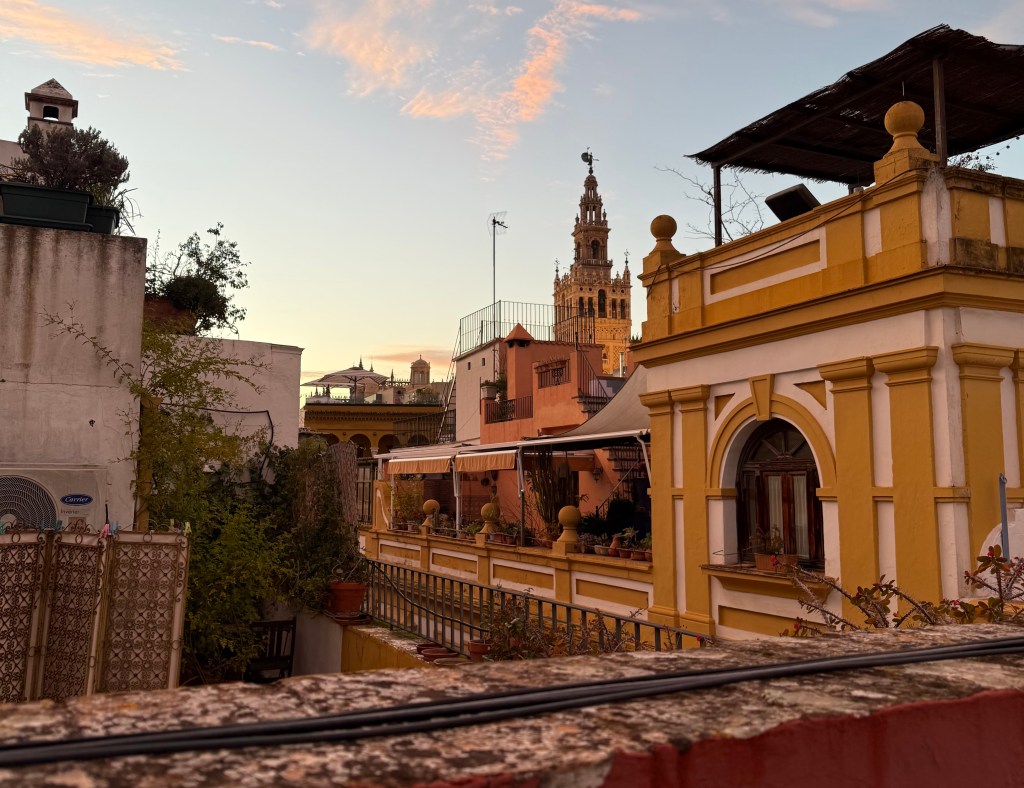
    The apartment I’ve rented has helped, too. It’s more spacious than I expected, and the terrace is an ideal place to sit still and take in the views. Immediately below are the sometimes noisy streets of Santa Cruz, Seville’s former Jewish quarter. In the distance, the Giralda rises into view. From here, I can enjoy the city’s beauty without going anywhere at all.

    I hope this growing comfort with slowing down—learning when experience replenishes me and when stillness does—is something I can carry back with me to New York.

  • Getting Lost in the Tiles at the Casa de Pilatos

    Getting Lost in the Tiles at the Casa de Pilatos

    Seville is home to a remarkable number of casa palacios—grand urban mansions built around traditional Andalusian elements like graceful arched courtyards.

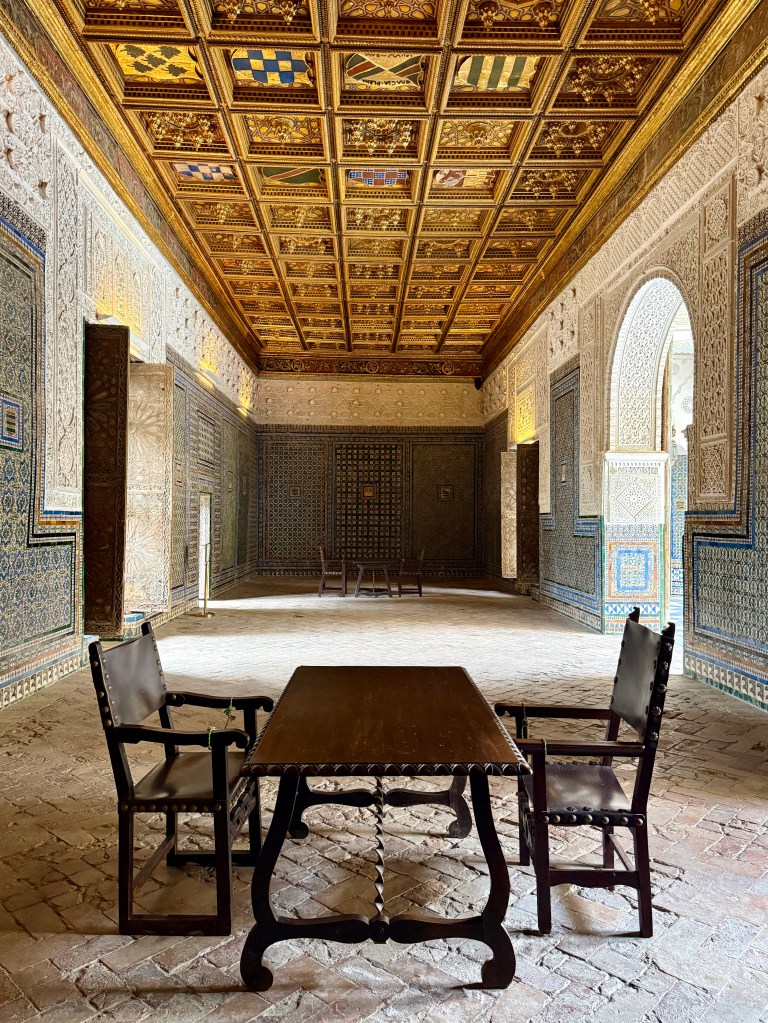
    The Casa de Pilatos, the historic residence of the Dukes of Medinaceli, is an old one. Construction began in 1483, during the transition from late Gothic to early Renaissance Spain, and the palace reflects that moment—a richly layered blend of styles augmented by centuries of additions and restorations.

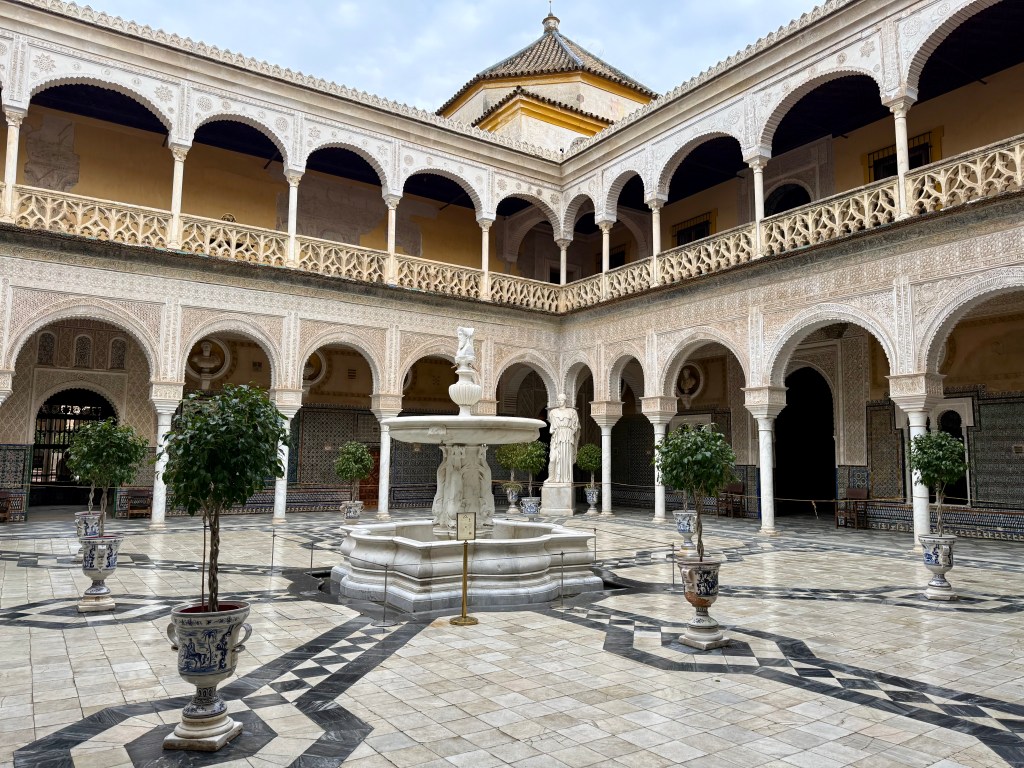
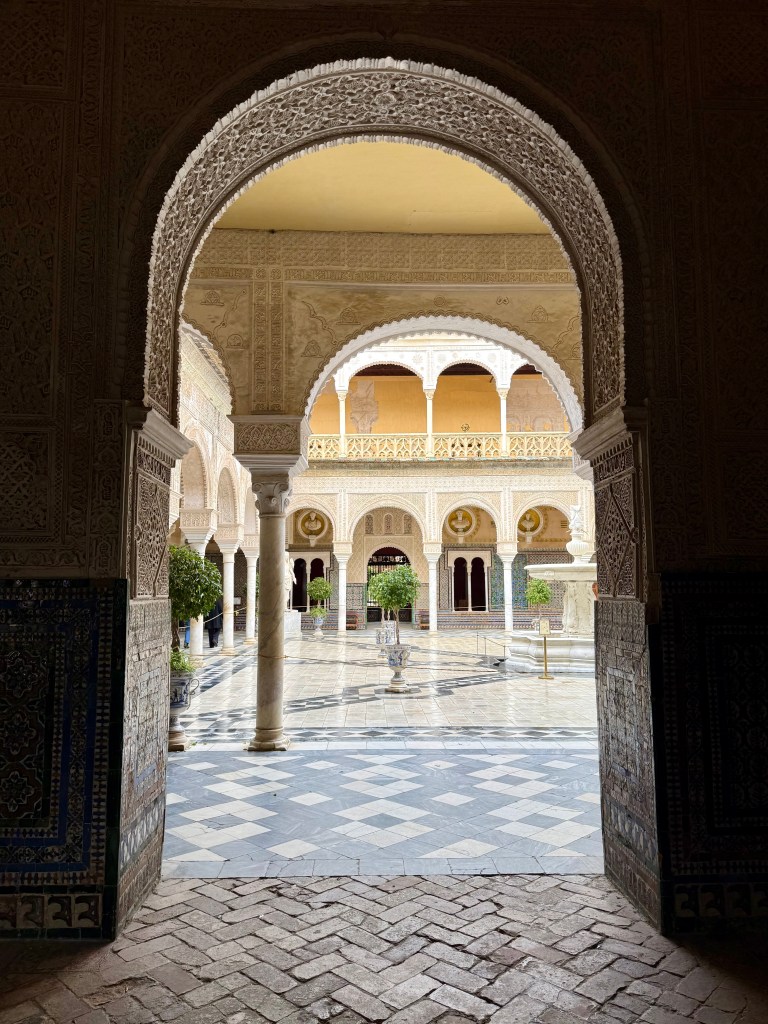
    The central courtyard is breathtaking. Four classical statues—Roman copies of Greek originals—stand at its corners, their pale stone figures poised amid a riot of tiles, arches, and light. Sunlight filters down into the space, catching on the statues and the fountain at its center.

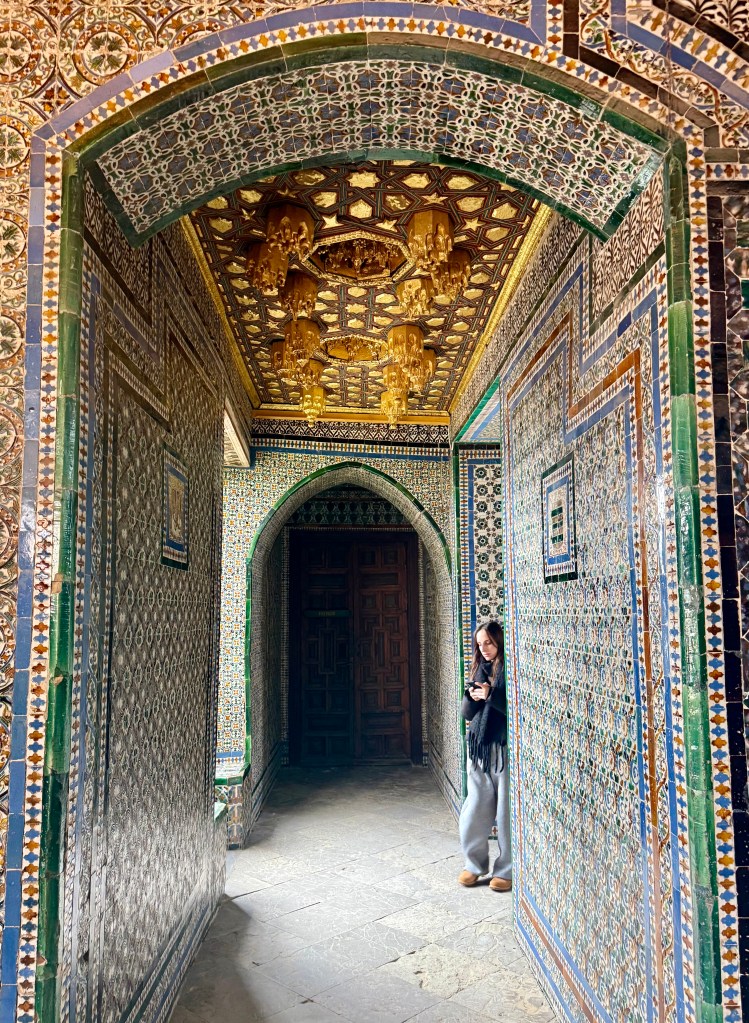
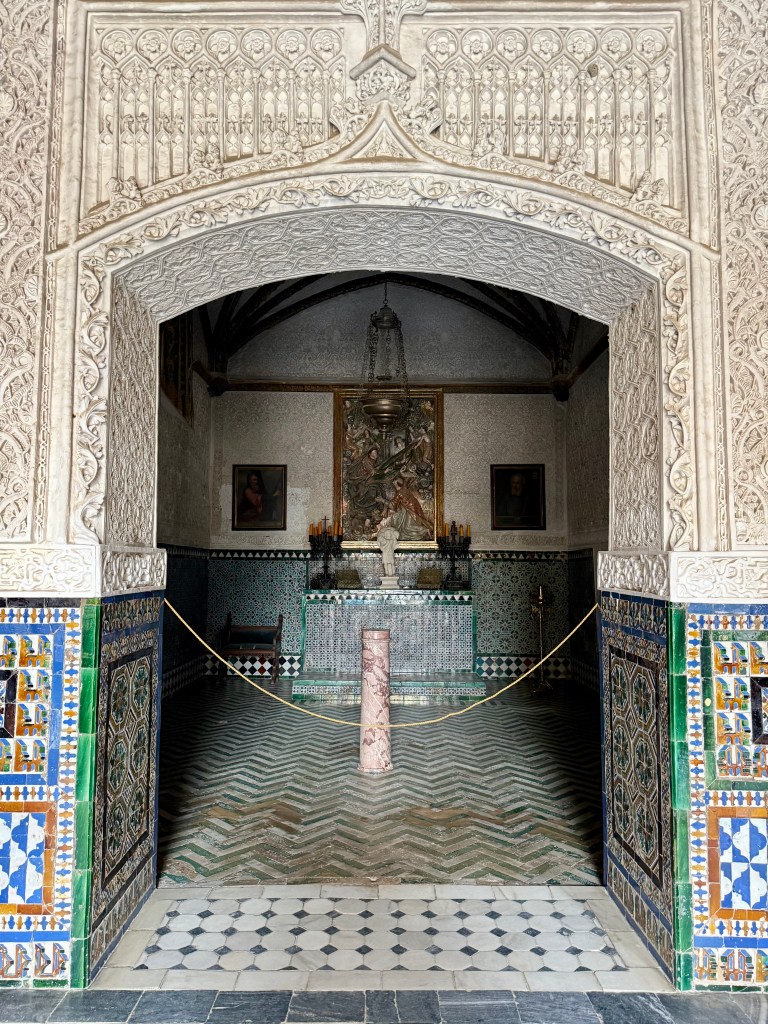
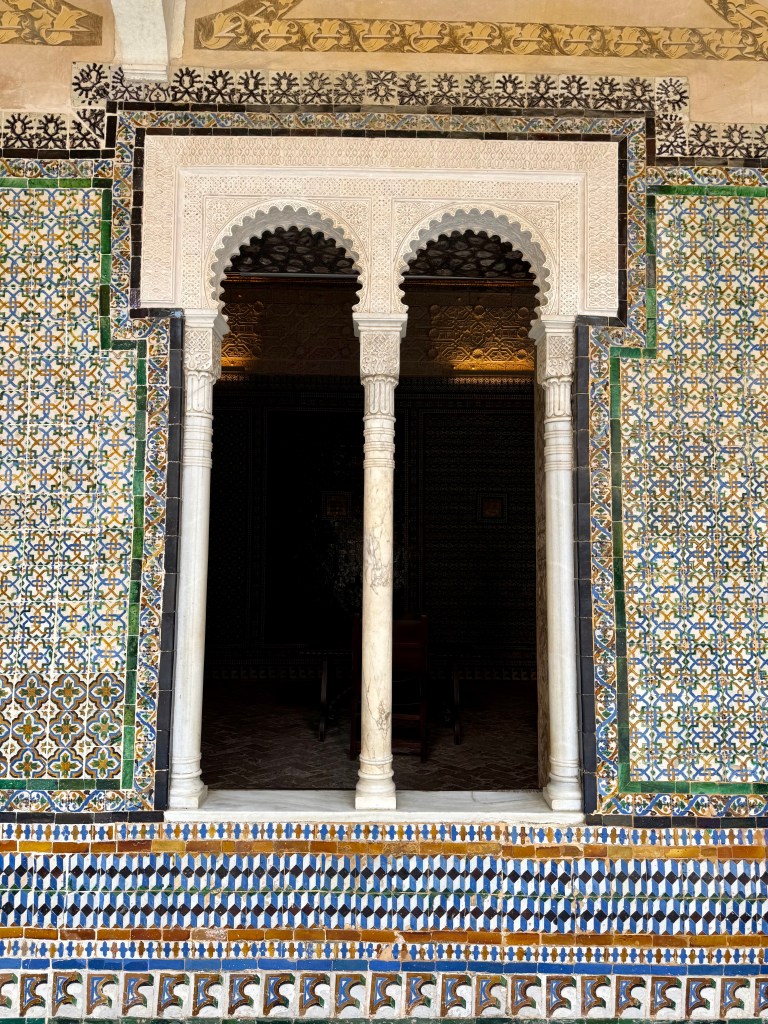
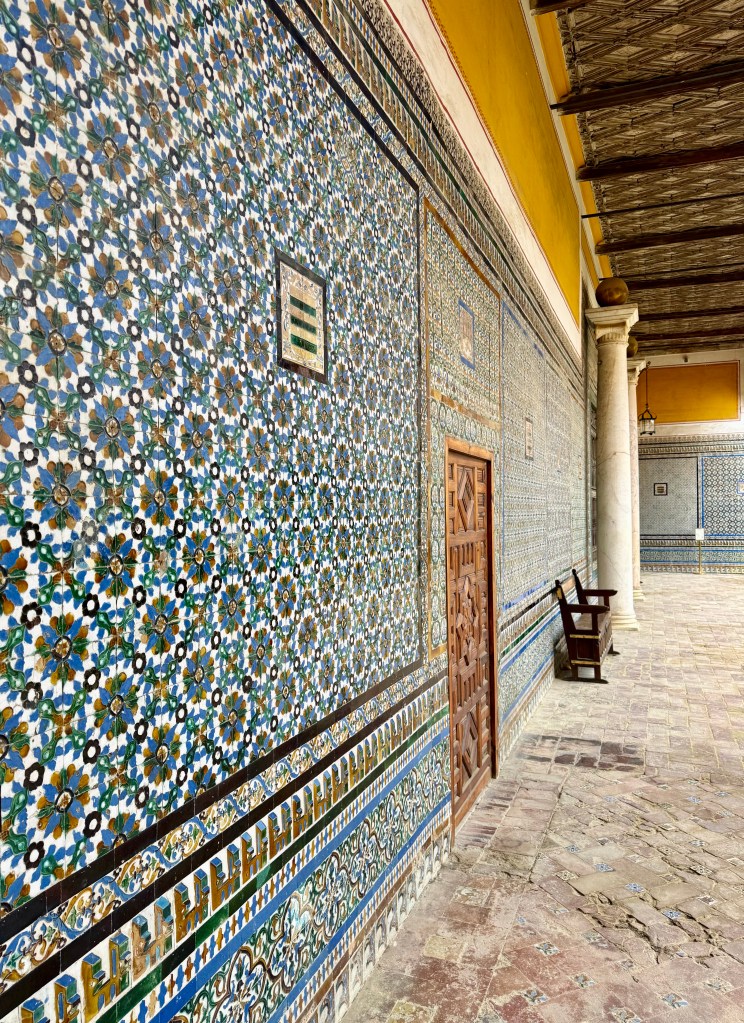
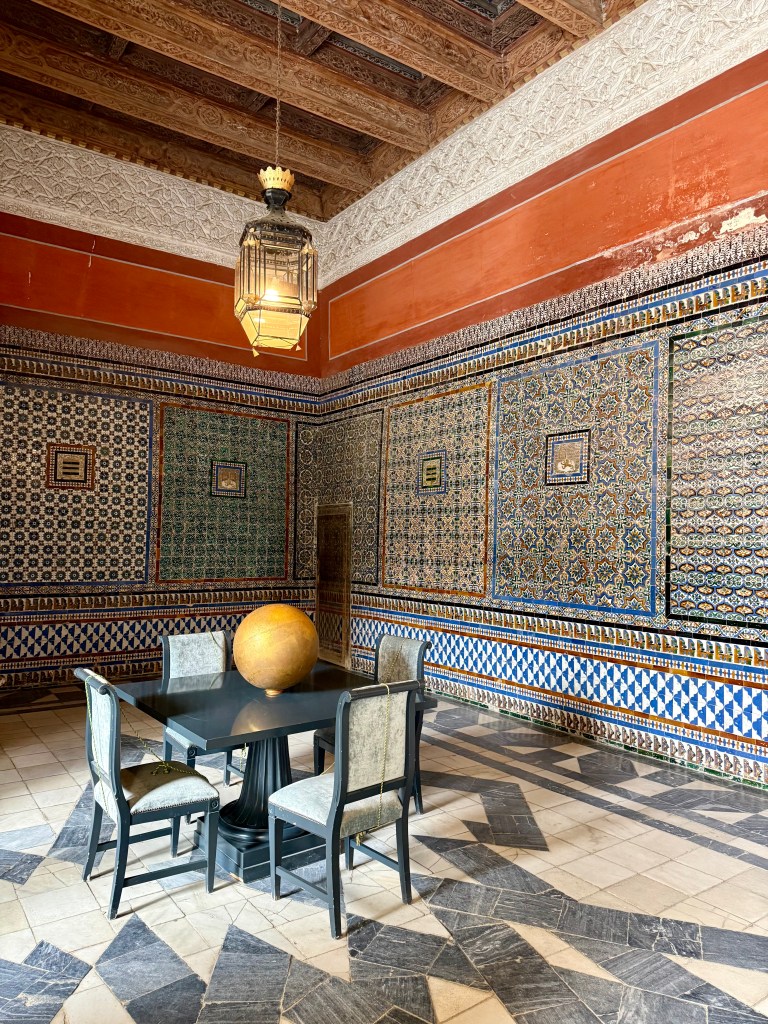
    The true highlight—for me, at least—is the intricate tilework (azulejos). Beyond their beauty, the tiles serve a practical purpose, helping to keep the spaces cool during Seville’s scorching summers, when average high temperatures hover around 100°F. The audio guide is exhaustive (and, at times, exhausting), offering a detailed history of each room, artwork, and renovation campaign. I mostly tuned it out, letting my attention drift instead to the tiles lining galleries, walls, and arches, where I got lost in the patterns.

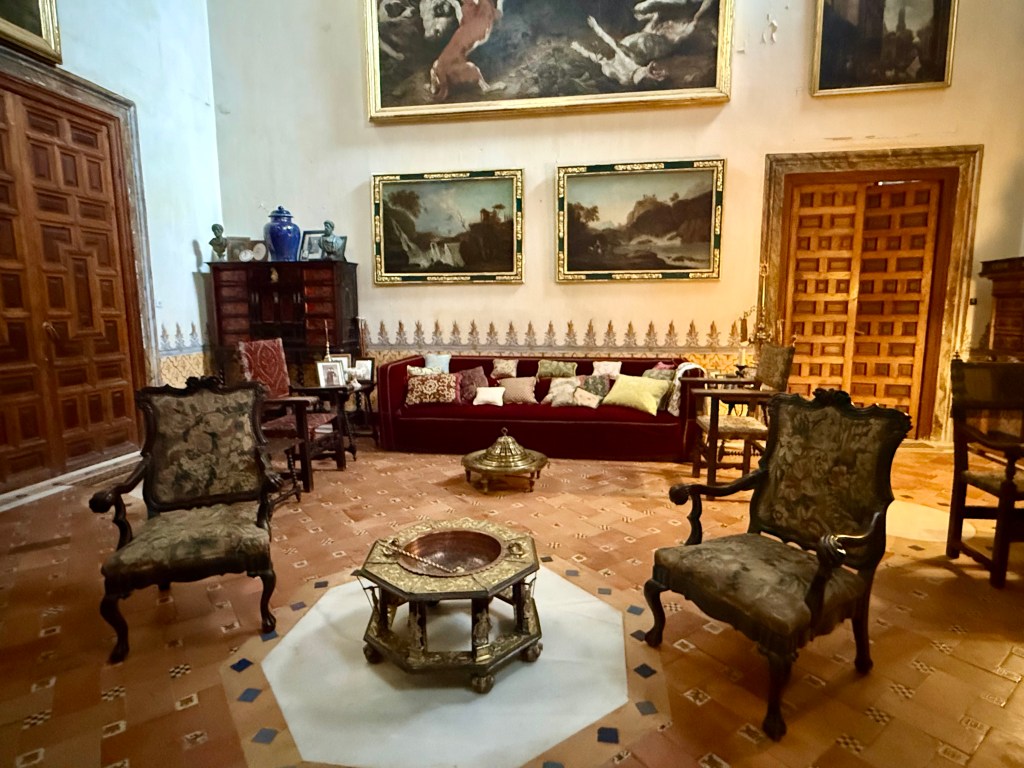
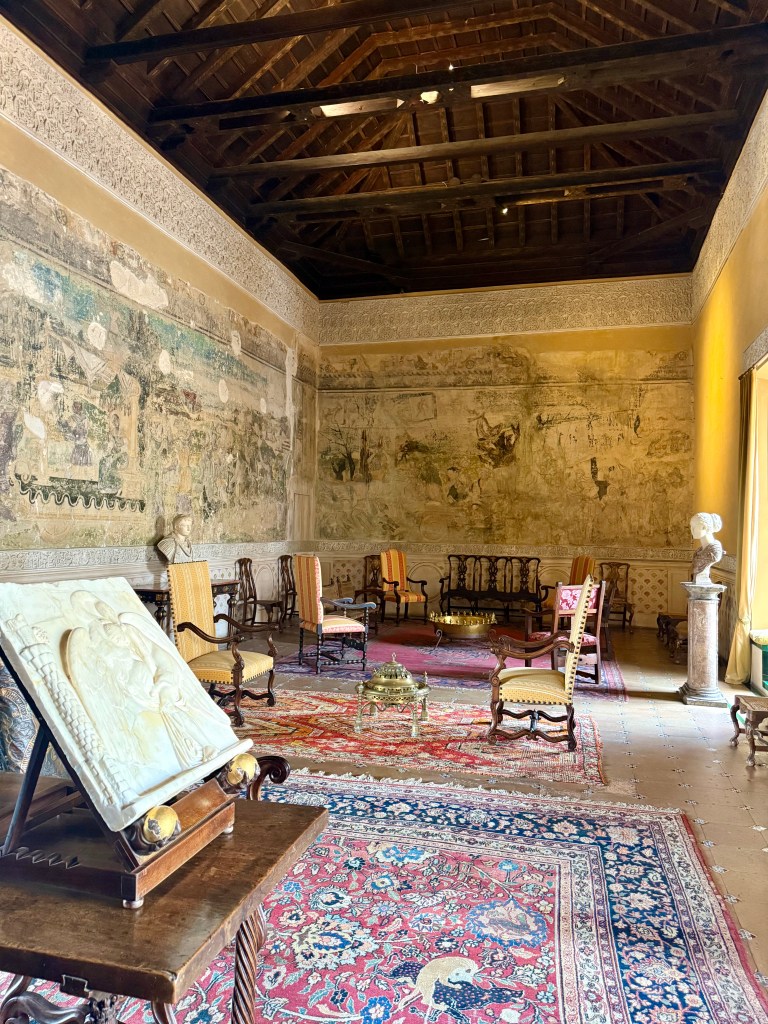
    Curious to see more, I booked a tour of the palace’s upper apartments, which I had never visited before. With apologies to the House of Medinaceli, I found these rooms surprisingly drab, lacking the color and vitality that so animate the ones below. Mediocre paintings hang on otherwise bare white walls. The most compelling space was a large room once adorned with frescoes depicting the four seasons—almost entirely lost after lime was used to disinfect the room during an outbreak of plague.

    Before leaving, I spent a few more minutes taking in the tiles. It’s easy to understand why filmmakers have been drawn to the building: its interiors have appeared in films like Lawrence of Arabia and Kingdom of Heaven, standing in for places far removed from Seville.

  • Rediscovering the Magic of the Alcázar

    Rediscovering the Magic of the Alcázar

    Seville’s Alcázar is easily my favorite place in this city. I finally visited it again yesterday, holding off so I could include a stop at the royal apartments, which required booking a special tour.

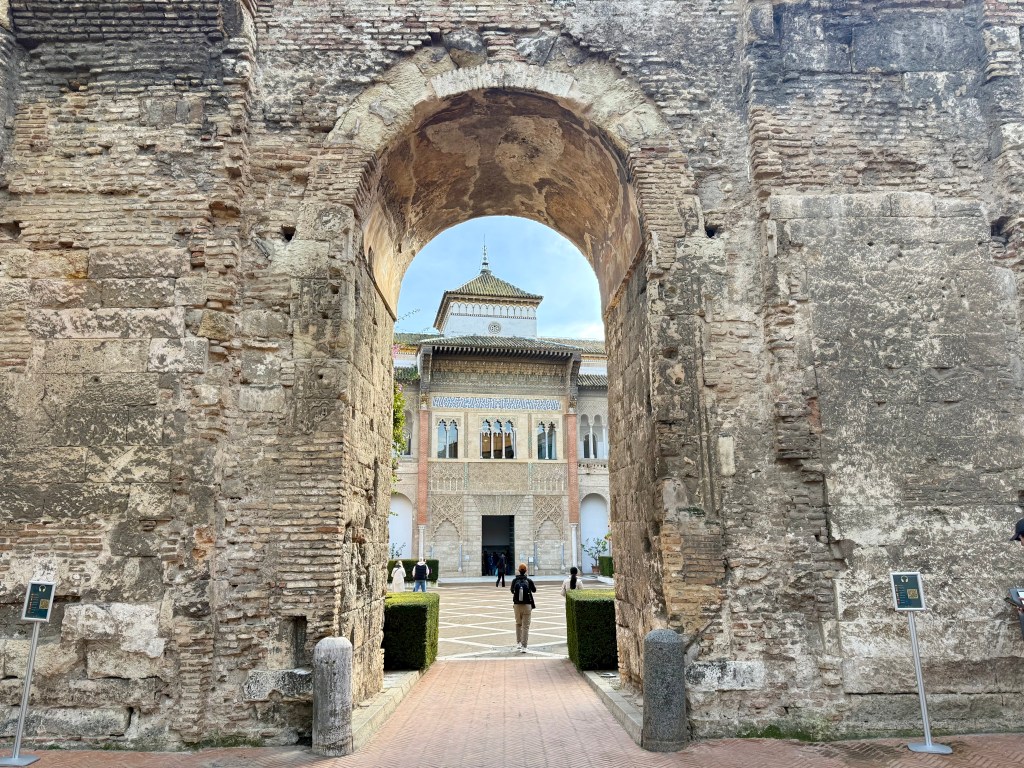
    The cathedral may be the city’s most massive monument, but the Alcázar is the site that, in my mind, best captures Seville’s layered history. The building’s origins stretch back to the tenth century, After the Christian reconquest of Seville in 1248, successive rulers chose not to destroy the complex but instead to expand and adapt it, building directly atop earlier Islamic foundations.

    The Alcázar, as it exists today, reflects the Mudéjar style—a Muslim architectural language adapted to Christian tastes. This was less an aesthetic choice than a practical one: Muslim artisans remained in Seville after Christian rule was reestablished, and their techniques, materials, and visual vocabulary continued to shape royal architecture.

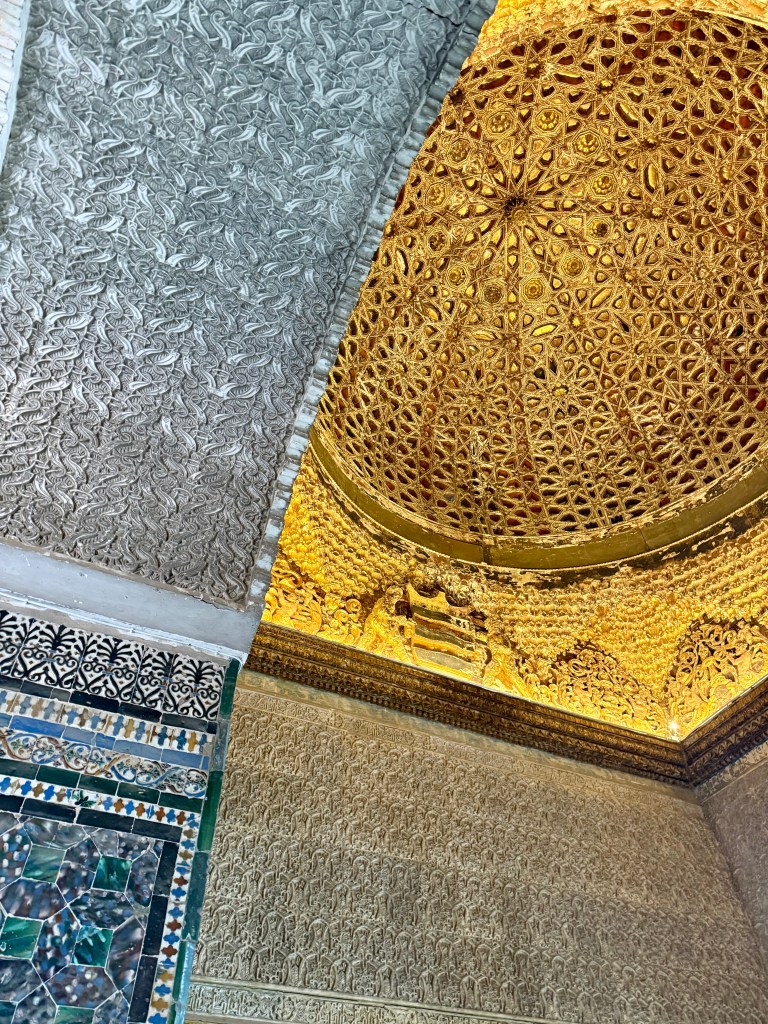
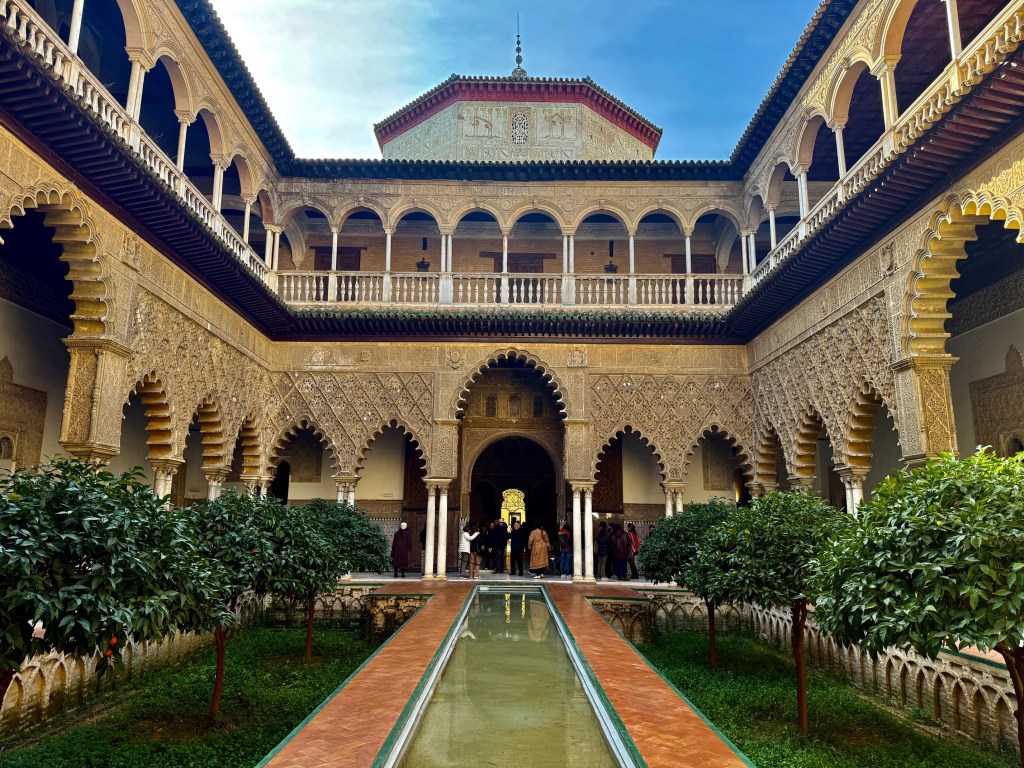
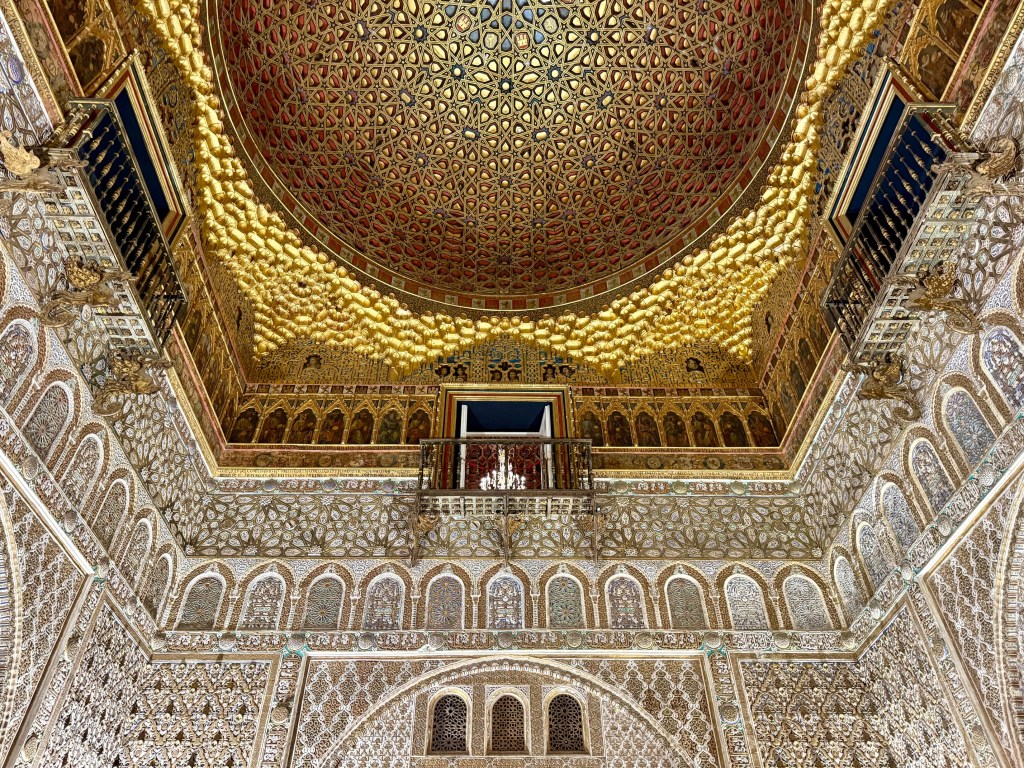
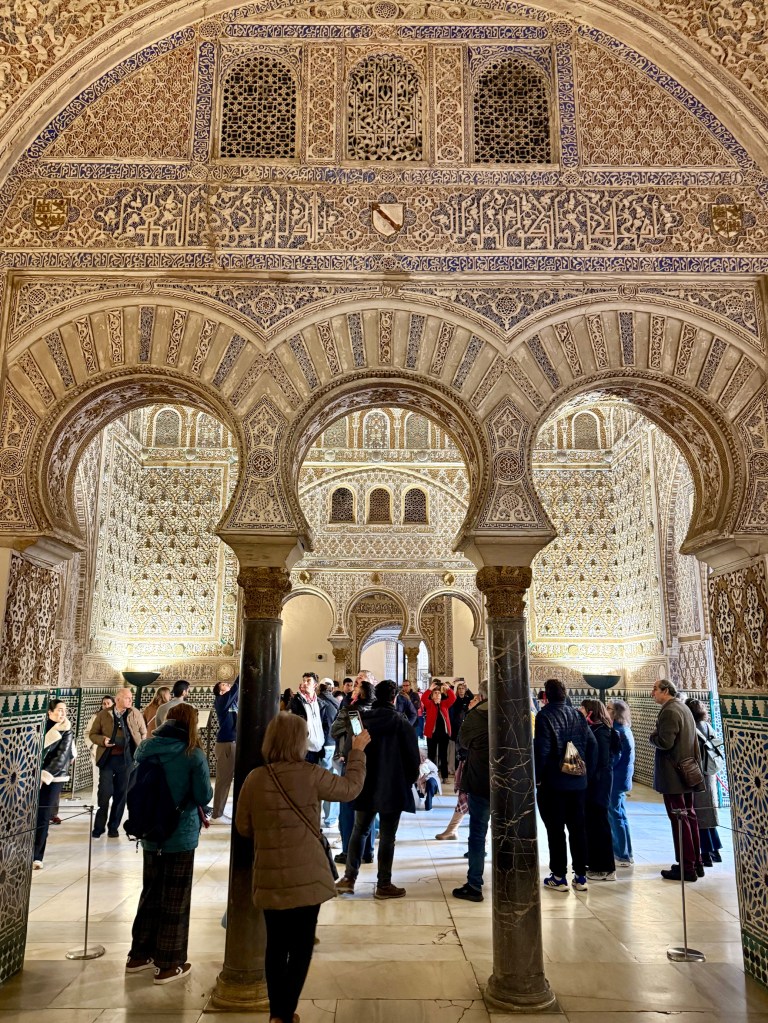
    Unlike the cathedral, the Alcázar is best appreciated for its intricacy rather than its scale. Delicate stuccowork, horseshoe arches, glazed tilework, and carved wooden ceilings reward slow looking. Its interwoven indoor and outdoor spaces invite wandering, lingering in the shade, and noticing how light moves across patterned surfaces. I could sit in the Patio de las Doncellas (Courtyard of the Maidens) for hours. The star-patterned, domed wooden ceiling of the Sala de Embajadores (Ambassadors’ Room) remains a marvel.

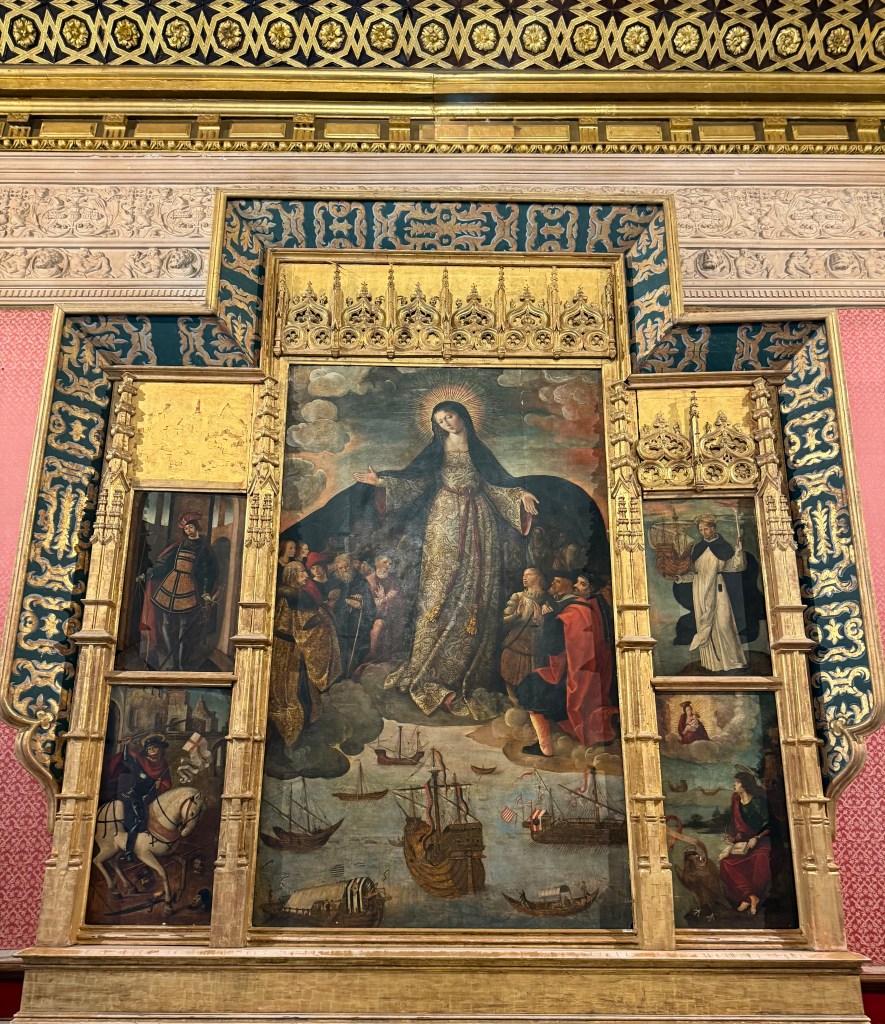
    One painting in the opening galleries that I return to again and again is The Virgin of the Navigators, in which Mary extends her protection over Spanish explorers as well as the Indigenous peoples of the Americas. It’s often cited as the earliest European depiction of the Americas in painting, but what that encounter wrought—plague and other forms of devastation—remains hard to stomach.

    The Alcázar also remains an active royal residence—the oldest in Europe still in use—and serves as the home of the king and queen of Spain when they are in Seville. Touring the royal apartments was fascinating, though photography was not allowed. Within five minutes of the tour, someone had already sat down in one of the living room chairs. The guard accompanying us was not amused.