Tag: seville

  • Church Fatigue and San Salvador

    Church Fatigue and San Salvador

    Have you heard the term “church fatigue”? No? Maybe it’s a phrase my husband, Donald, and I coined during our travels. In many European cities, there’s a long checklist of churches you’re told you should see—this one for a Caravaggio, that one for an El Greco, and yet another for its groundbreaking architecture.

    I was feeling a particularly strong case of church fatigue today while visiting the Church of San Salvador. It’s the second-largest church in Seville and an important one, but after spending hours in the city’s massive cathedral a couple of days earlier, I could have used a longer break from sacred spaces. (I apologize for not being at my best, San Salvador.)

    Like many Catholic churches in Seville, San Salvador was built atop a former mosque after Muslims were expelled from the city in 1248. (One of my favorite history books, The Ornament of the World, by the late scholar María Rosa Menocal, describes how Muslims, Christians, and Jews once created a culture of tolerance on the Iberian Peninsula.)

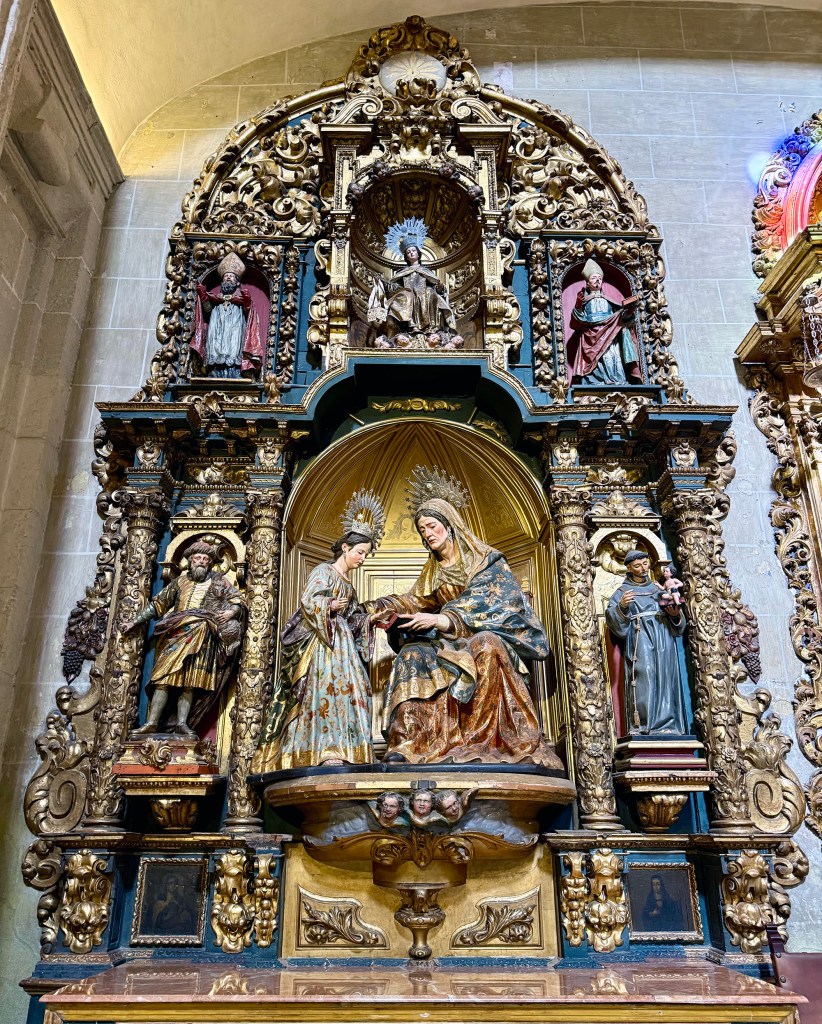
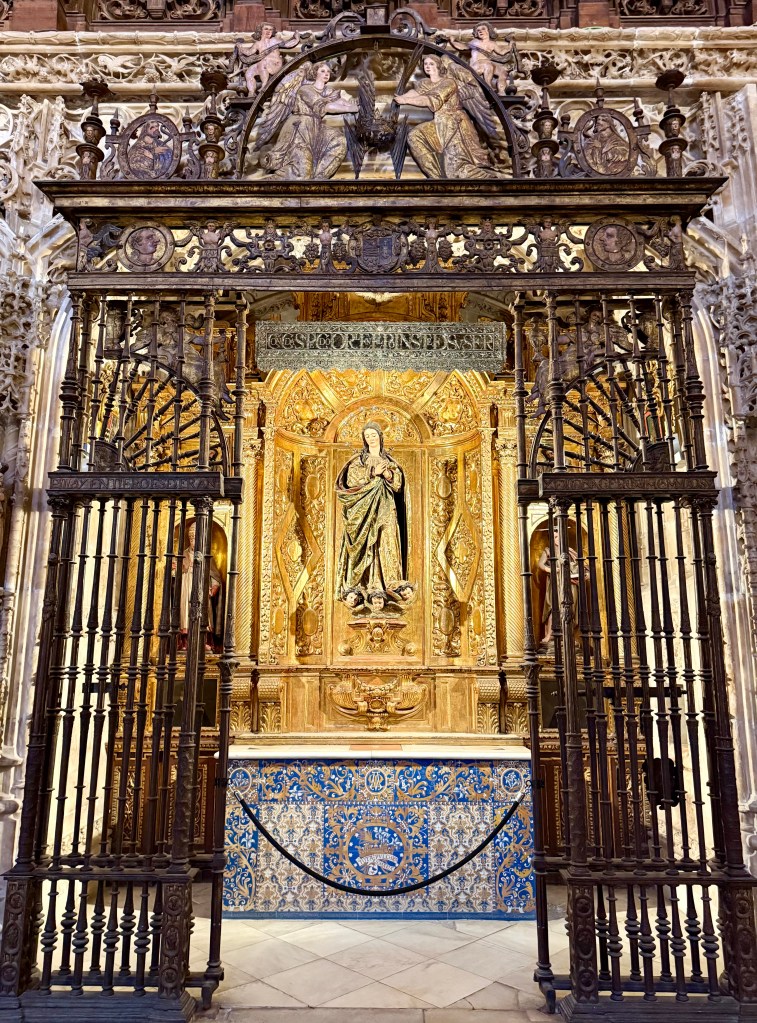
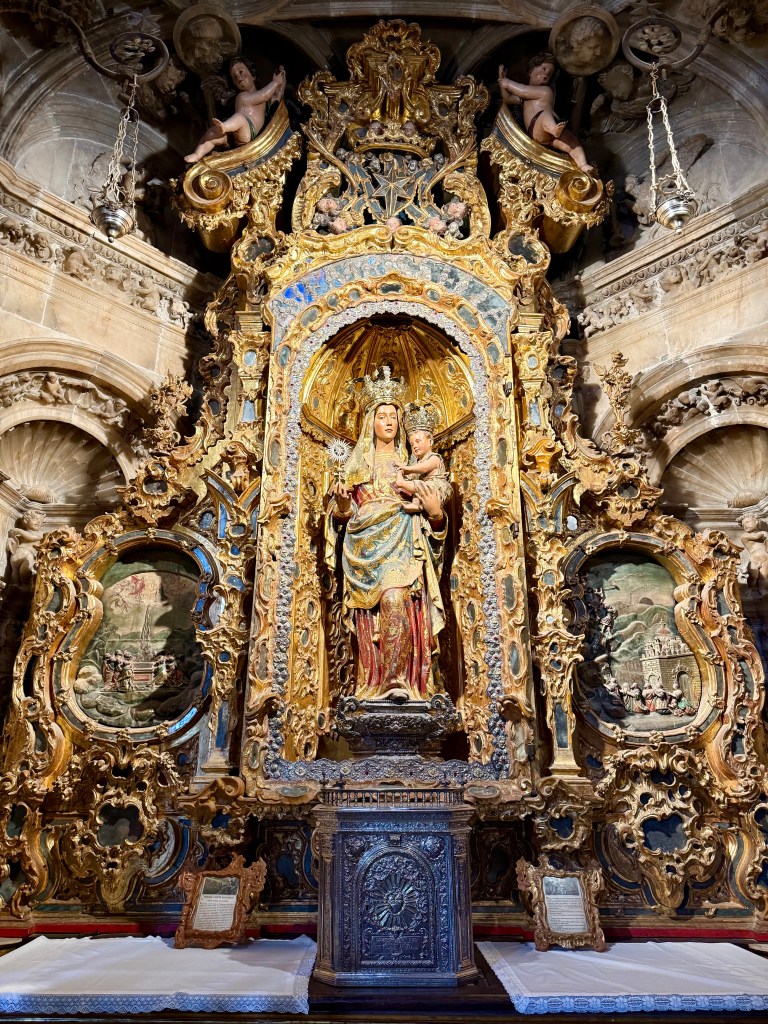
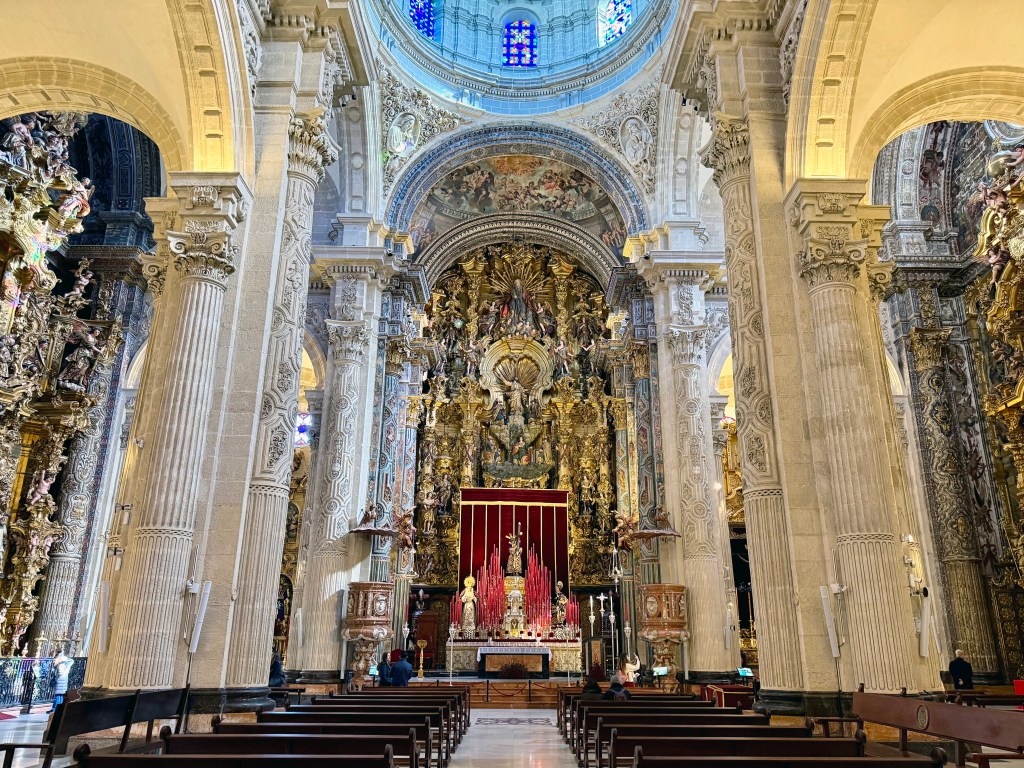
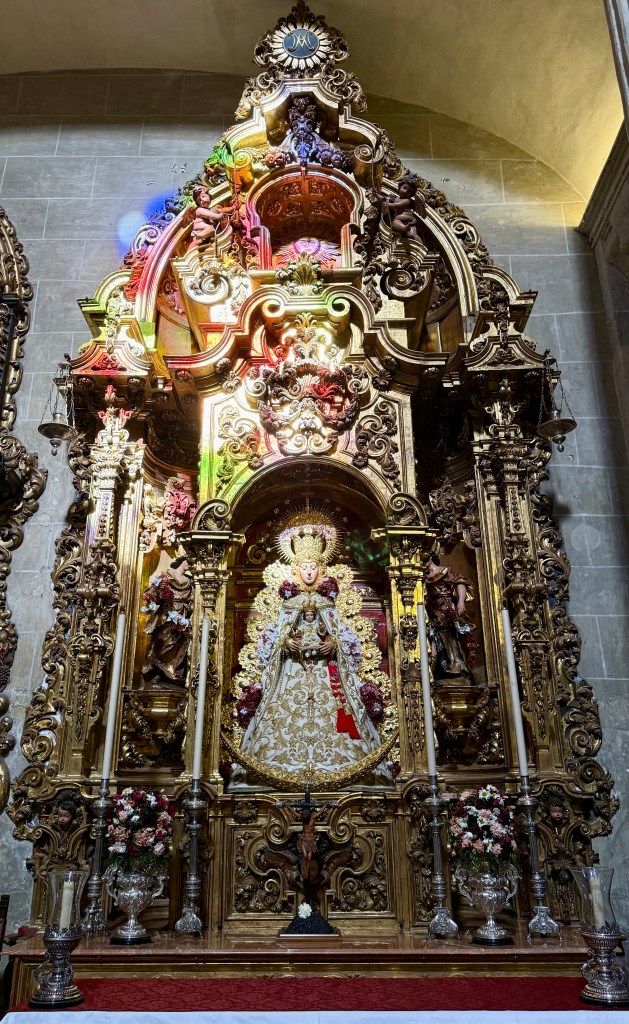
    It’s a church worth seeing, though. The interior is organized around a wide nave with side chapels lined with gilded altarpieces. At one point, light from a high stained-glass window fell across the altarpiece of Our Lady of El Rocío; even church staff paused to take photos. The church also houses important works by Juan Martínez Montañés, one of Spain’s most celebrated Baroque sculptors, including figures that parade through the streets during Seville’s famous Holy Week processions.

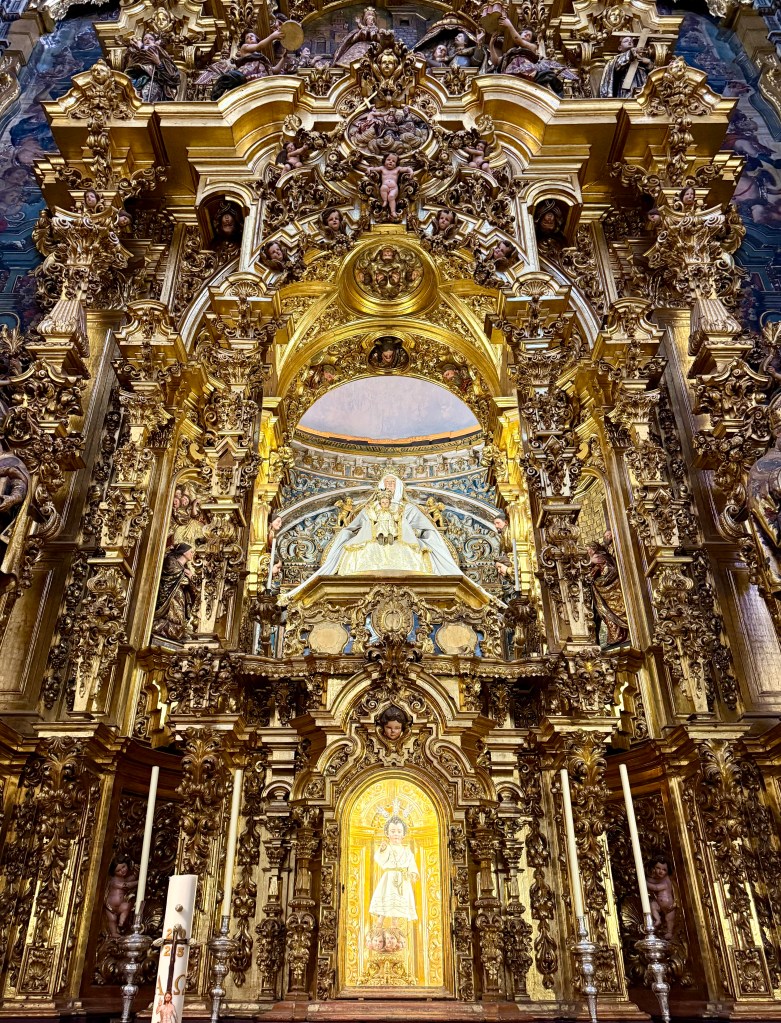
    The main altarpiece, massive and densely packed with sculpted figures, anchors the space. The church claims it as one of the last great Baroque altarpieces.

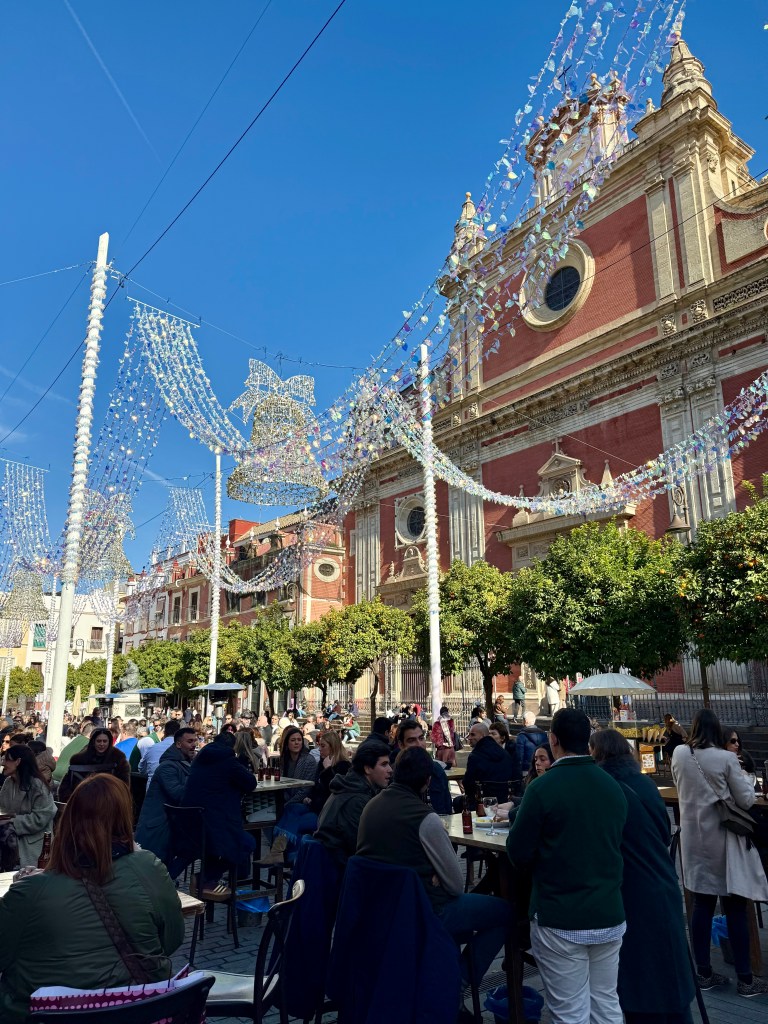
    Outside this quiet space, the plaza was crowded and noisy, full of people enjoying the weekend. I snapped out of my fatigue and grabbed a quick beer amid the crowd before heading back to my apartment.
  • The Quiet Archives of the Spanish Empire

    The Quiet Archives of the Spanish Empire

    I’ve now learned how to avoid the weekend crowds in Seville—by seeking out the lesser-known places. After grabbing my customary morning coffee at Moin Café, I set out to explore two such sites: the Church of San Salvador (more on that later) and the General Archive of the Indies.

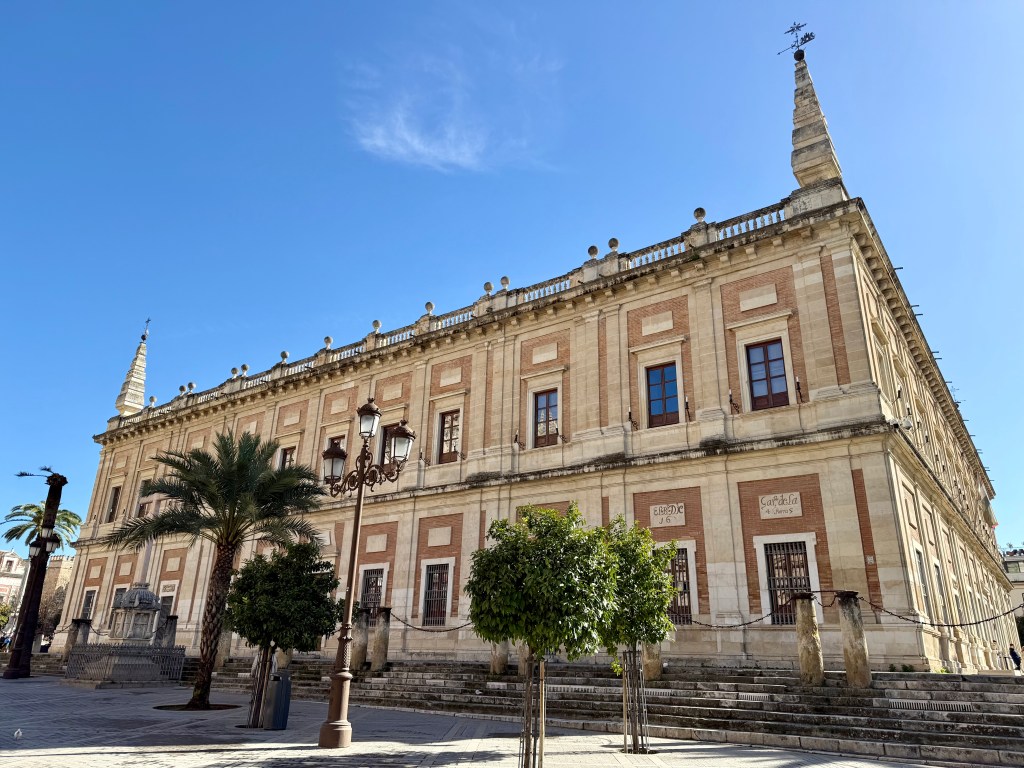
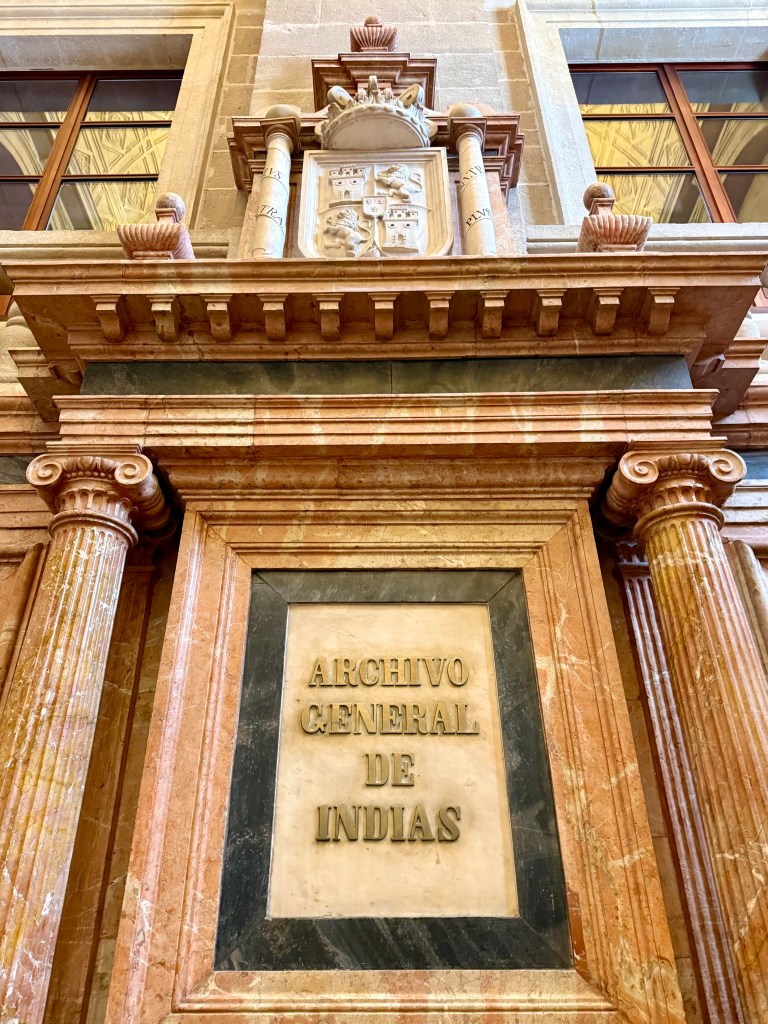
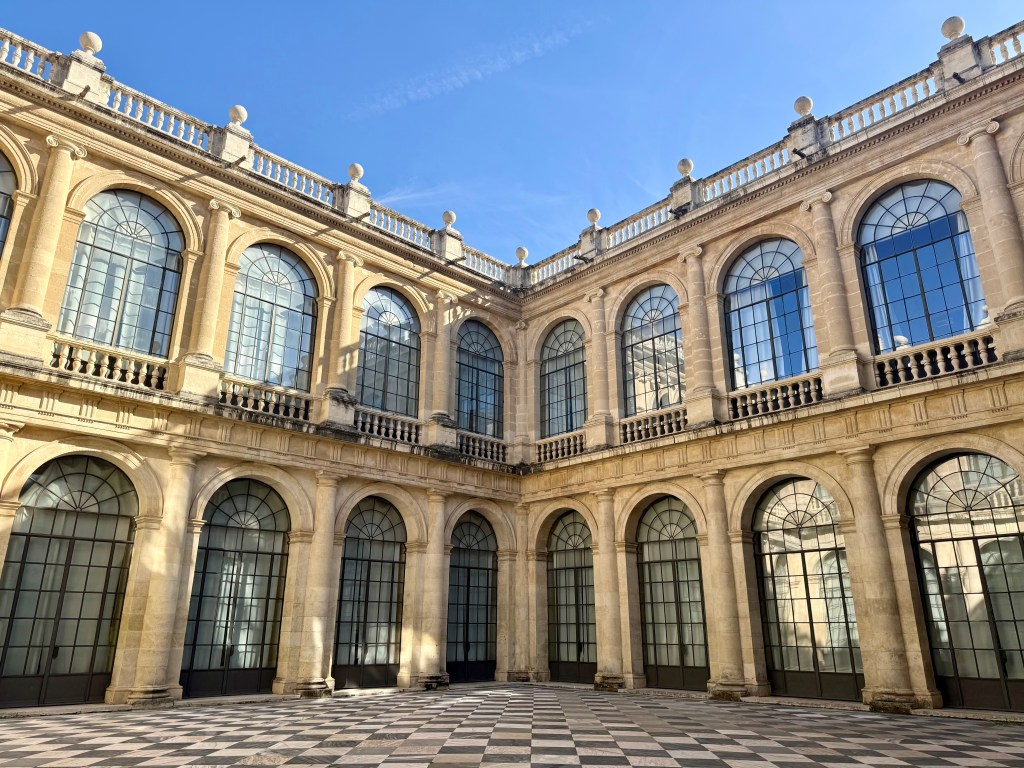
    Though largely off the tourist track, the General Archive of the Indies is one of Seville’s most significant historic institutions—and one of its few UNESCO World Heritage sites. It sits quietly beside the city’s cathedral and preserves the documentary record of Spain’s global empire from the late fifteenth through the nineteenth centuries. That story begins nearby: Spain’s involvement in the so-called “New World” took shape in this region of Andalusia, where Christopher Columbus set sail on his first voyage across the Atlantic, beginning centuries of expansion and extraction.

    Established in 1785 under King Charles III, the archive brought together millions of pages that had previously been scattered across Spain—correspondence, decrees, maps, and financial ledgers that once governed an empire stretching across oceans and continents.

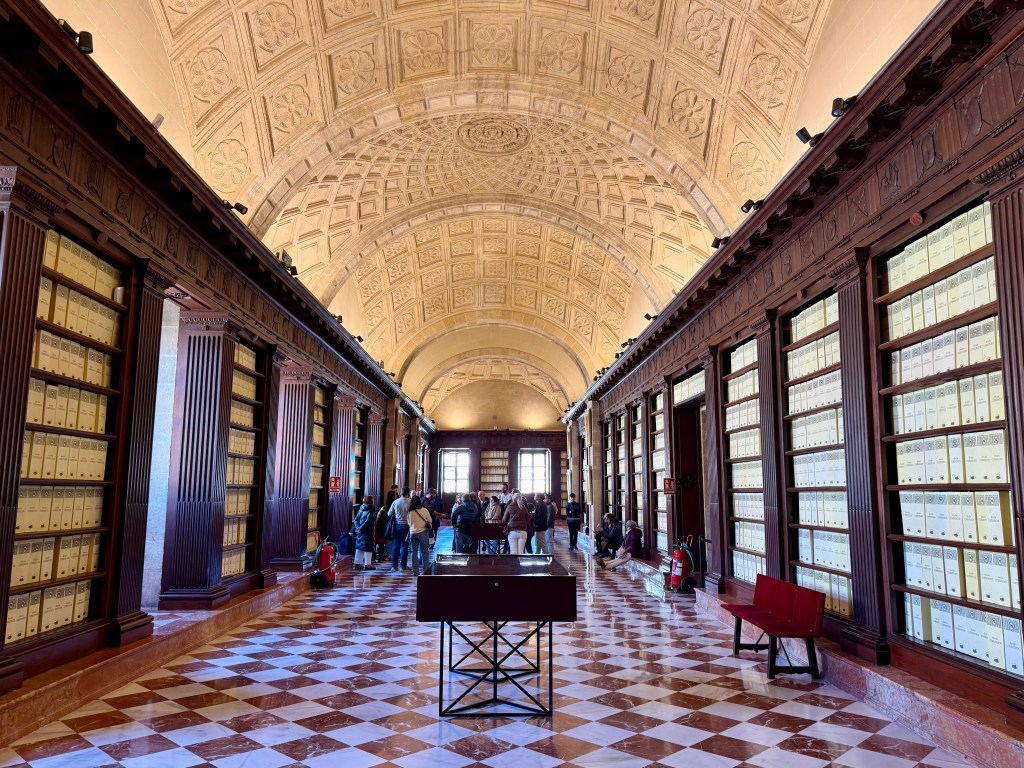
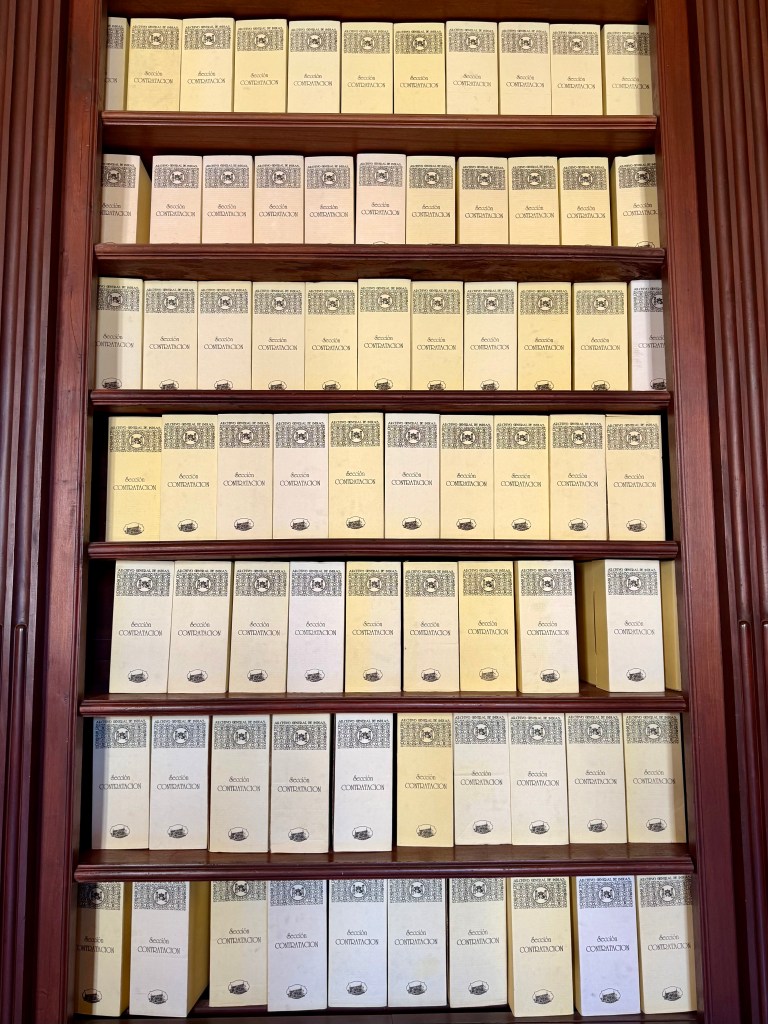
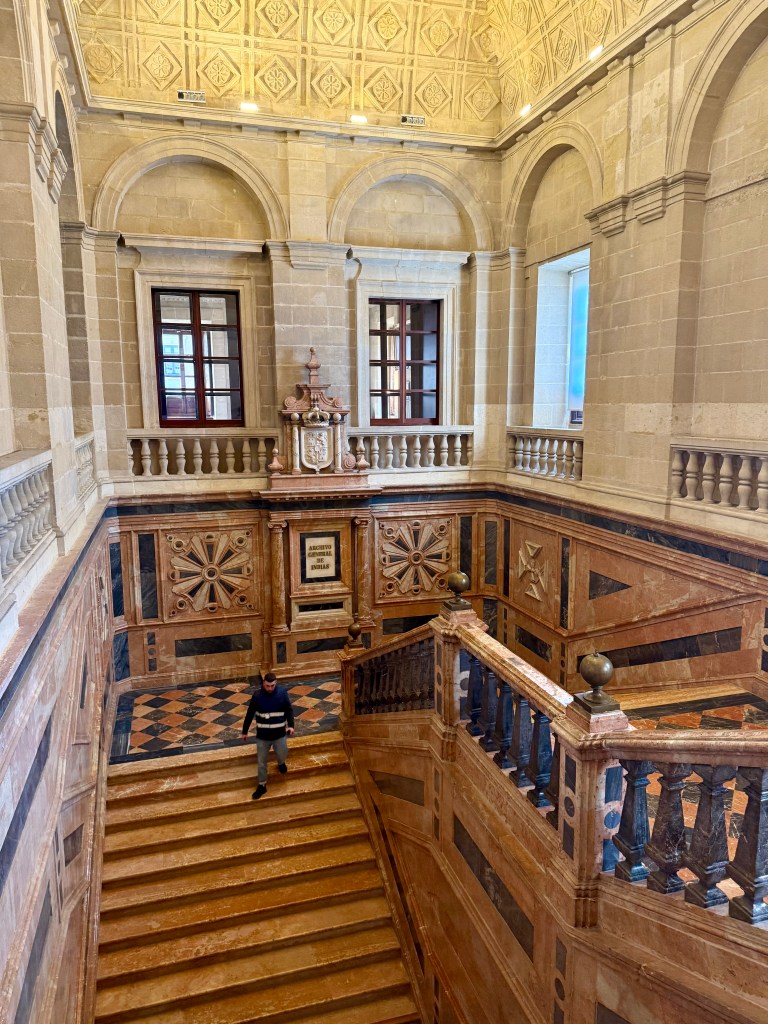
    These documents are housed in what was once the Casa Lonja de Mercaderes, a Renaissance structure designed by Juan de Herrera. The pages, carefully bound, line the walls, their spines indicating categories of trade and administration. The building itself—austere and meticulously maintained—feels more monumental than the artworks and artifacts on display, which include portraits and busts of Columbus, Hernán Cortés, and various other power players associated with the age.

    The real experience lies in taking in the sheer space of the archives—the weight of history on shelves carefully guarded behind glass, and the quiet reminder of how much power Spain once held, now preserved in near silence.

  • Mahler and Strauss in Seville

    Mahler and Strauss in Seville

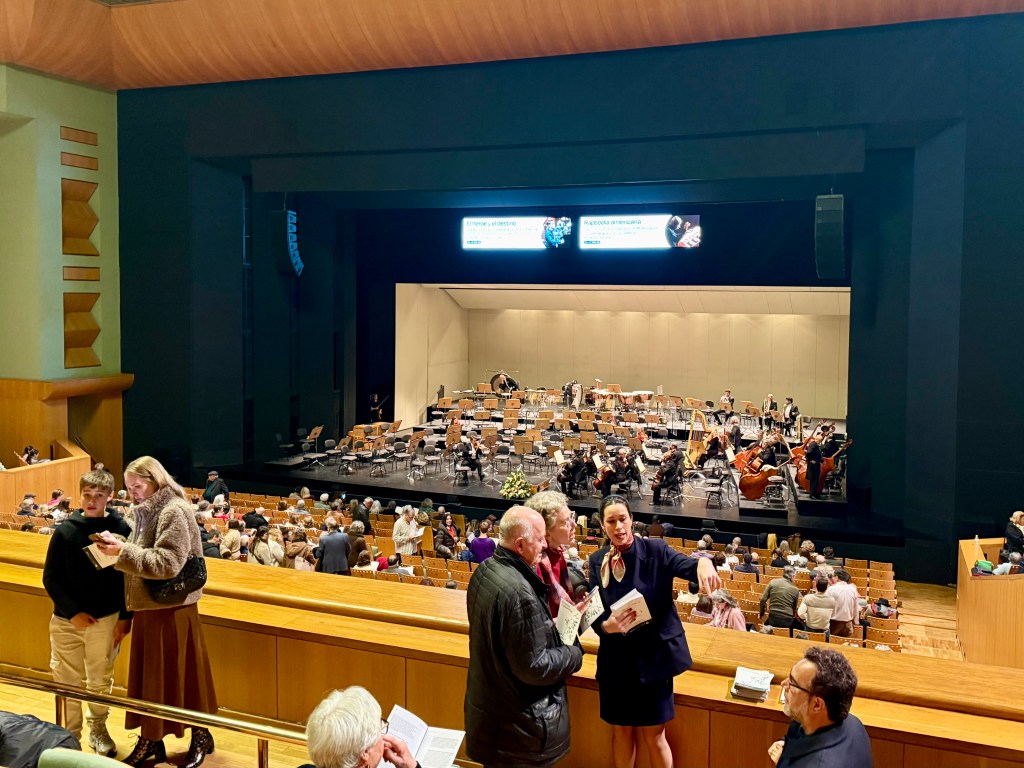
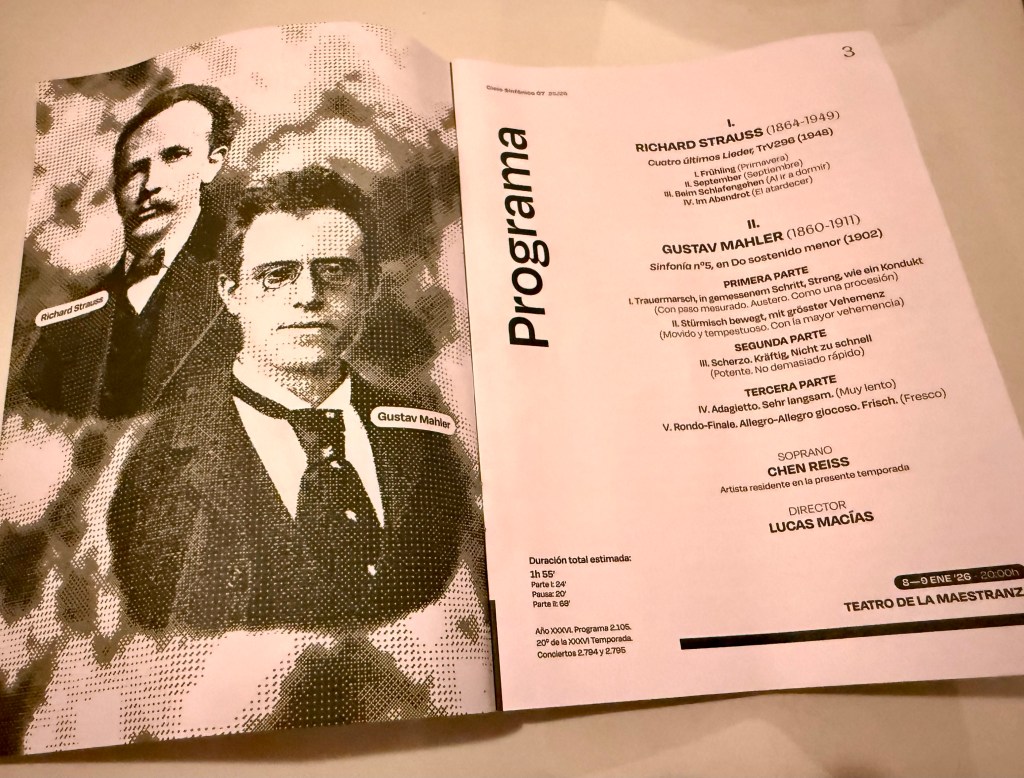
    It might sound strange to trade an evening of tapas or flamenco in Seville for a concert of works by two central European composers, but sometimes a program is too good to pass up. Tonight, the Royal Seville Symphony Orchestra performed Richard Strauss’s Four Last Songs and Mahler’s Symphony No. 5, so I found myself walking toward the Teatro de la Maestranza—new to both the orchestra and the hall, and curious what the evening would bring.

    The concert hall sits beside the Guadalquivir River in the heart of Seville. It’s large but unusually wide, creating a sense of intimacy with the stage. The program notes doubled as a quiet test of my Spanish.

    Opening the evening, Strauss’s luminous Four Last Songs invite reflection in a way that feels especially natural while traveling. After intermission came Mahler’s Fifth, a work that seems to contain entire worlds, dizzying in its textures and rhythms. The music rarely settles, constantly pulling itself in new directions—except in the lyrical Adagietto, which is closer in tone to the Strauss songs.

    The applause at the end was rapturous—far more enthusiastic than I’m used to hearing in New York, even at places like Lincoln Center or Carnegie Hall.

    :Program notes
  • A Church of Maddening Scale

    A Church of Maddening Scale

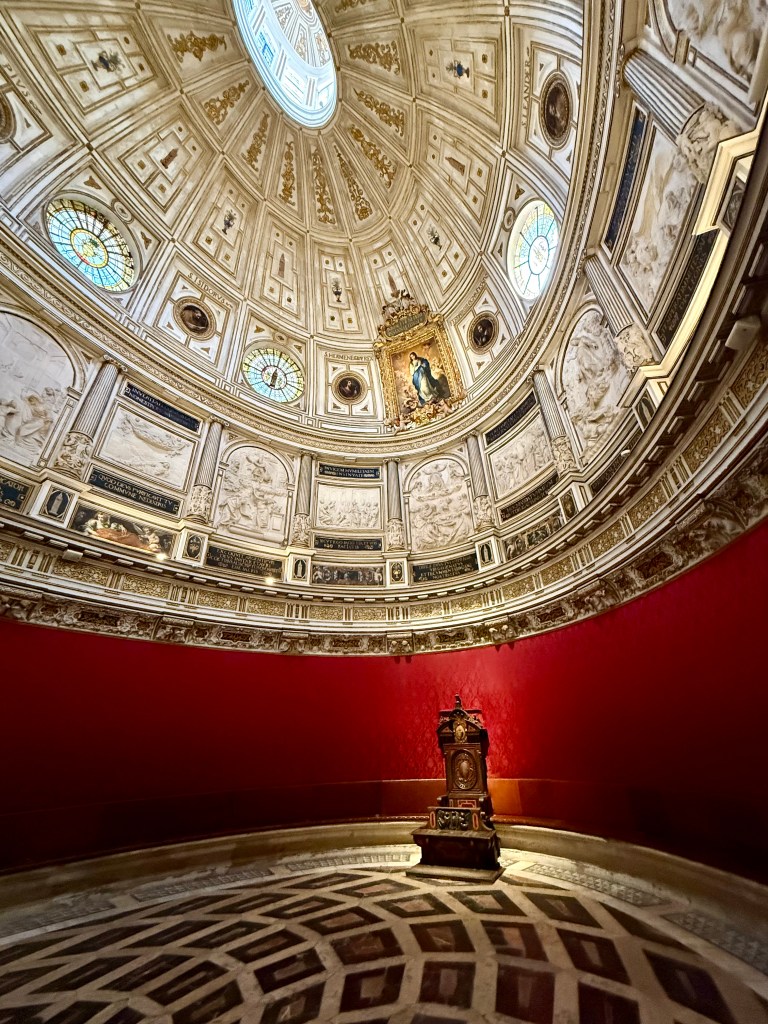
    With most of the holiday crowds now dispersed, I made my way today to arguably Seville’s most famous building: the Cathedral of Saint Mary of the See. Before construction began in 1402, the city’s clerics, according to local lore, set an ambitious goal: “Hagamos una iglesia tan hermosa y tan grandiosa que los que la vieren labrada nos tengan por locos” (“Let us build a church so beautiful and so grand that those who see it finished will take us for mad”).

    Mission accomplished. By any measure, Seville Cathedral is the most massive Gothic church in the world, and a Guinness World Records plaque displayed proudly inside certifies it as the largest cathedral by volume.

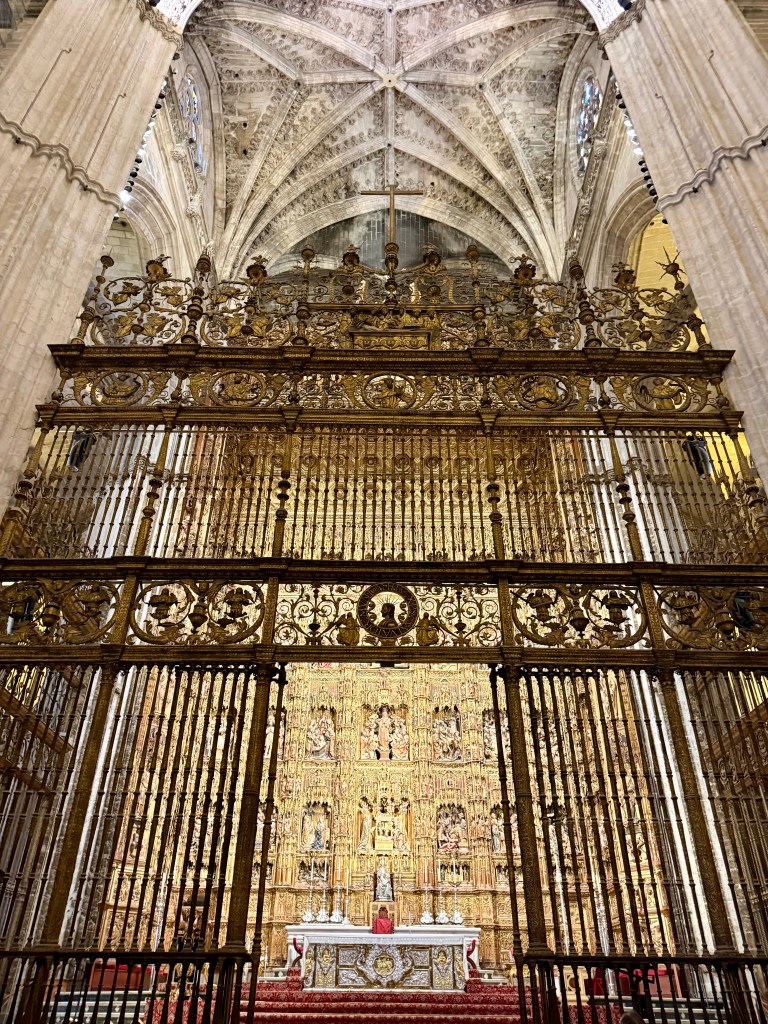
    Its scale is matched by the excess of its contents. Spread across roughly 80 chapels is a dense accumulation of art, sculpture, and architecture spanning centuries. The cathedral’s audio guide offers more than forty stops, though locating them can feel like its own form of pilgrimage. Dominating them all is the main altarpiece—the largest ever made—a vast, gilded wall of carved biblical scenes that took a succession of artists more than forty years to complete and functions less as a single artwork than as a visual argument for the power, wealth, and ambition of the Church at its height.

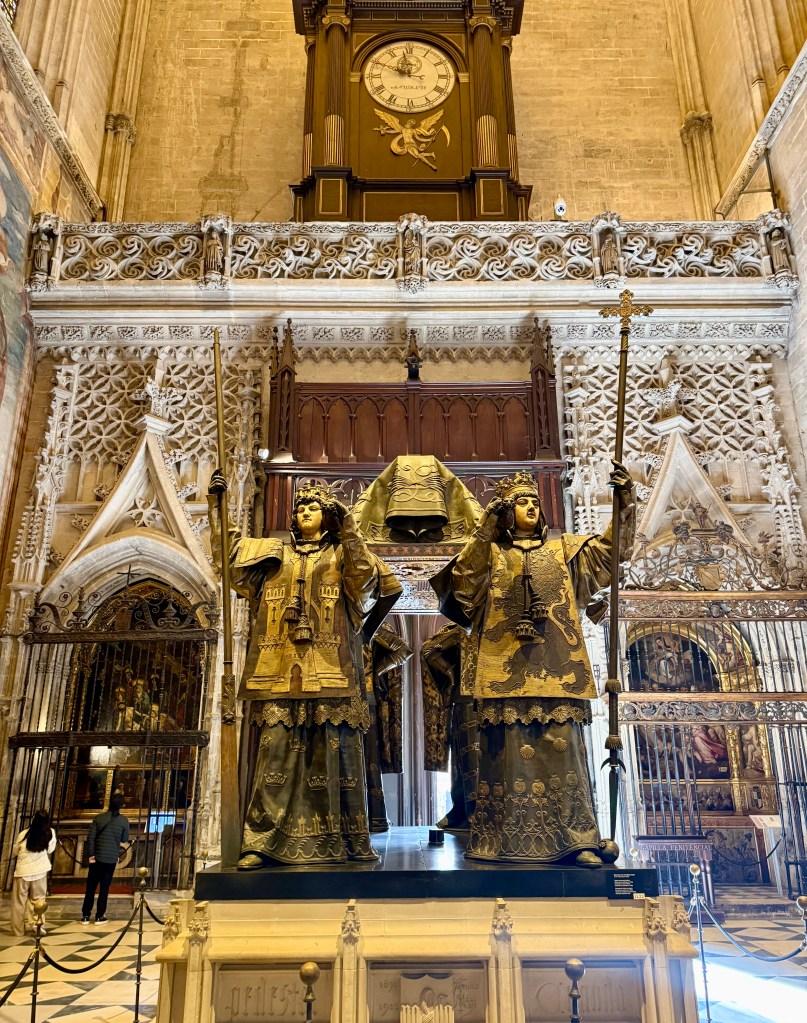
    You find the greatest concentration of visitors crowded around the Tomb of Christopher Columbus, whose voyages from this region to the Americas brought Spain enormous wealth and power. In this theatrical monument, the explorer’s coffin is carried by four larger-than-life figures representing the historic Spanish kingdoms of Castile, León, Aragón, and Navarre. (The remains interred there might actually be those of his son. A box of bones labeled “Don Cristóbal Colón” was found in the Dominican Republic in 1877. Whoops.)

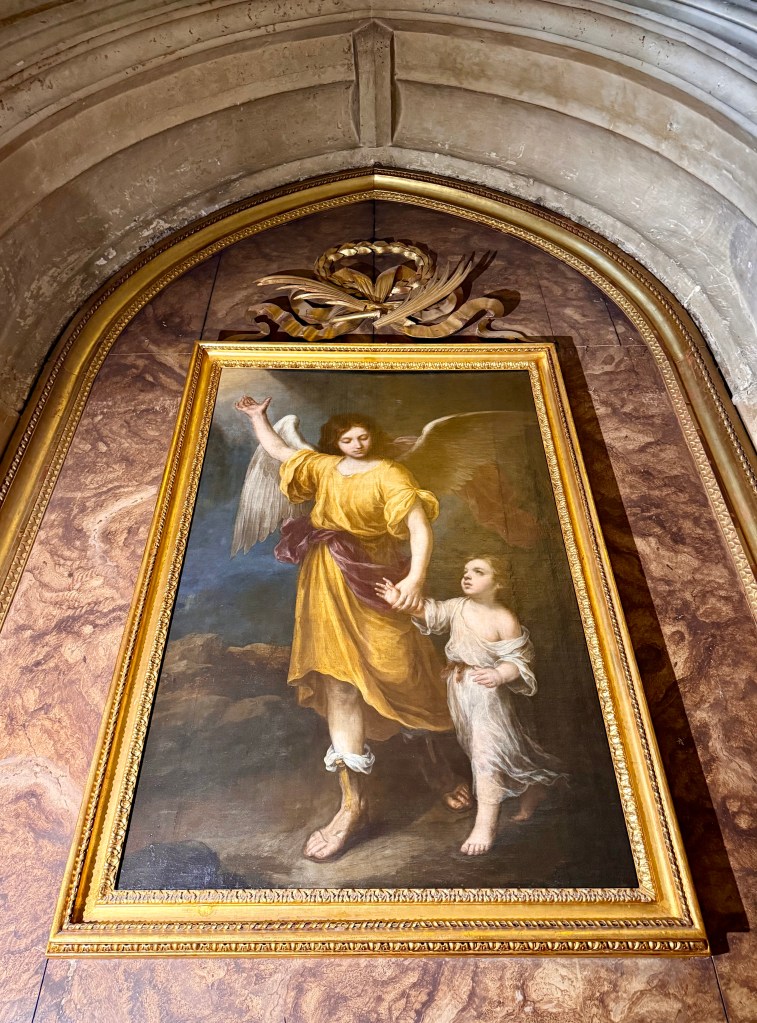
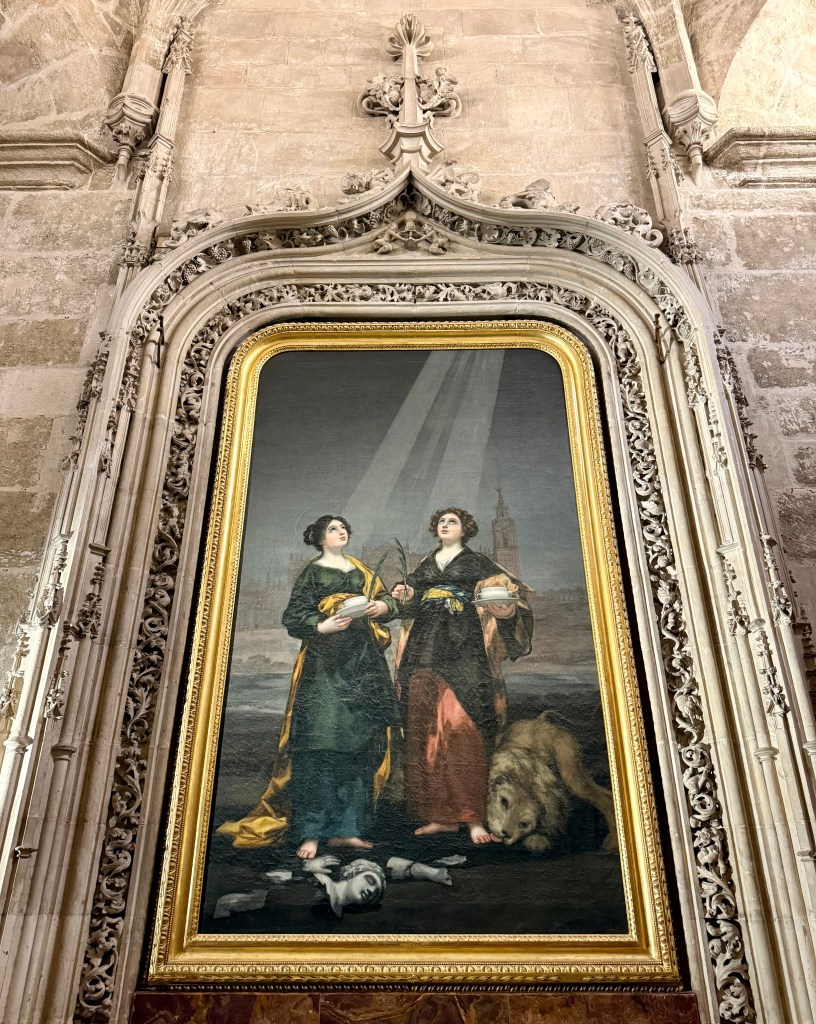
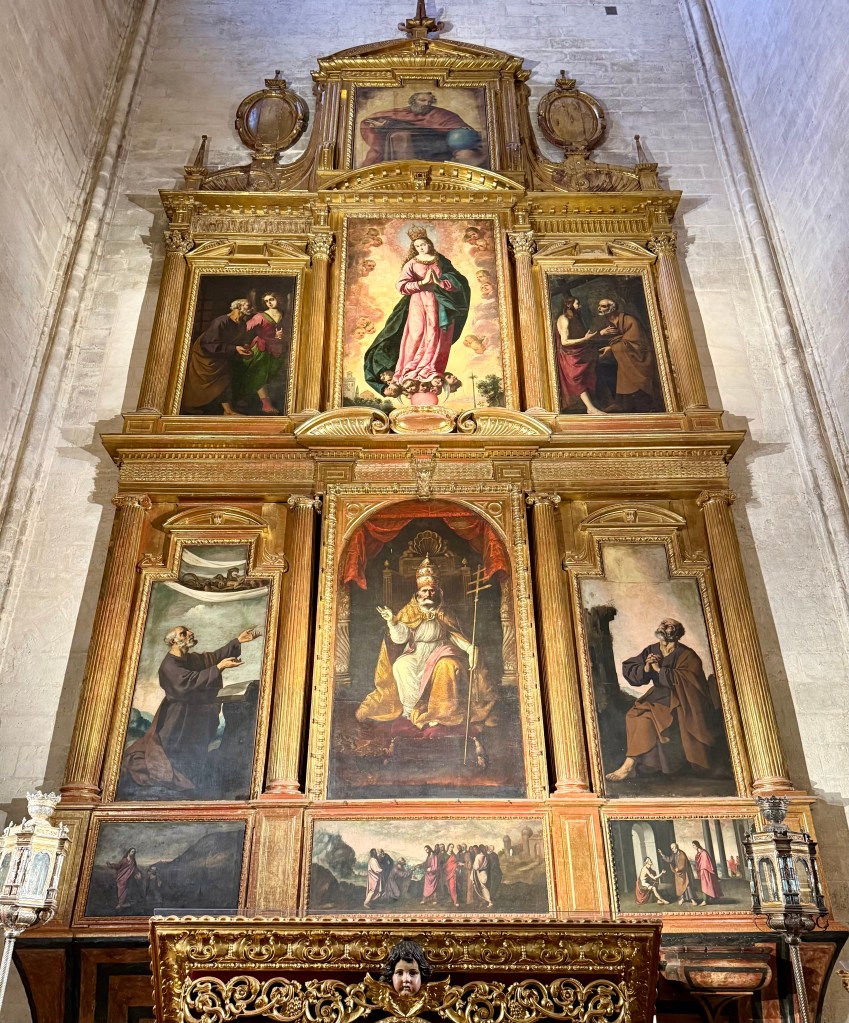
    I had forgotten how many remarkable paintings are scattered throughout the cathedral. Goya’s portrait of Justa and Rufina, patron saints of Seville, hangs in the Sacristy of the Chalices, the light from the room’s only window seeming to merge with the light in the painting itself. Numerous scriptural scenes and portraits of saints by Murillo appear throughout; my favorite is The Guardian Angel. And in the Chapel of Saint Peter, you encounter a massive altarpiece containing several paintings by Zurbarán, its central panel a commanding depiction of Peter as pope.

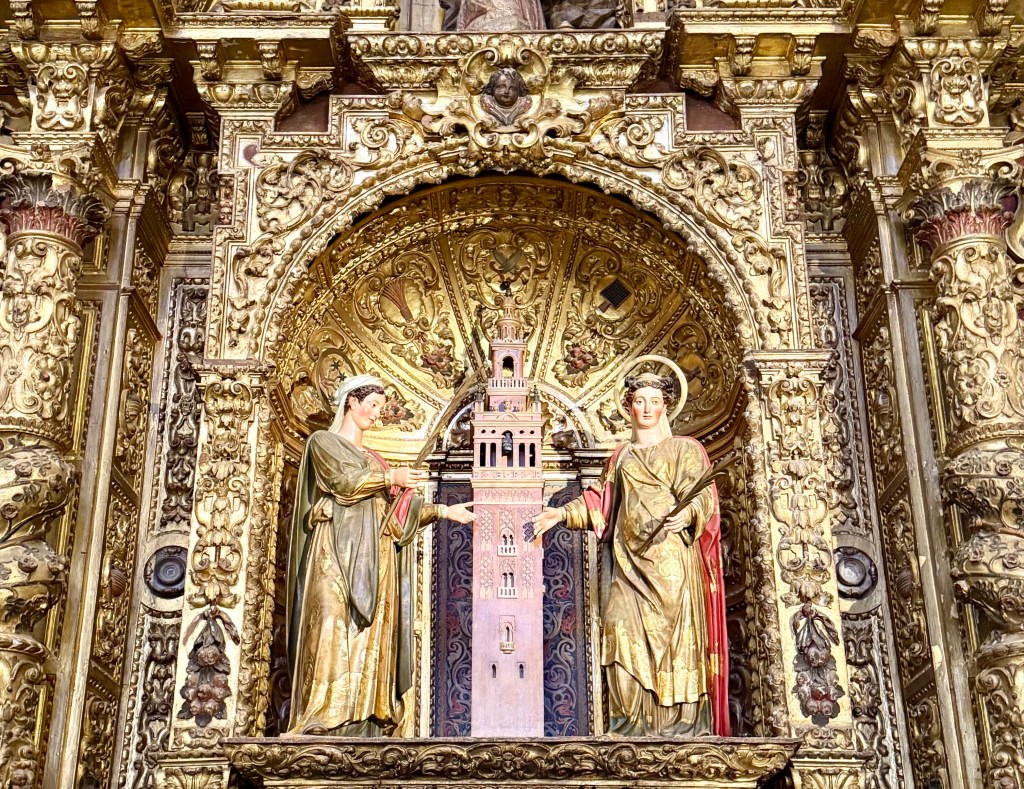
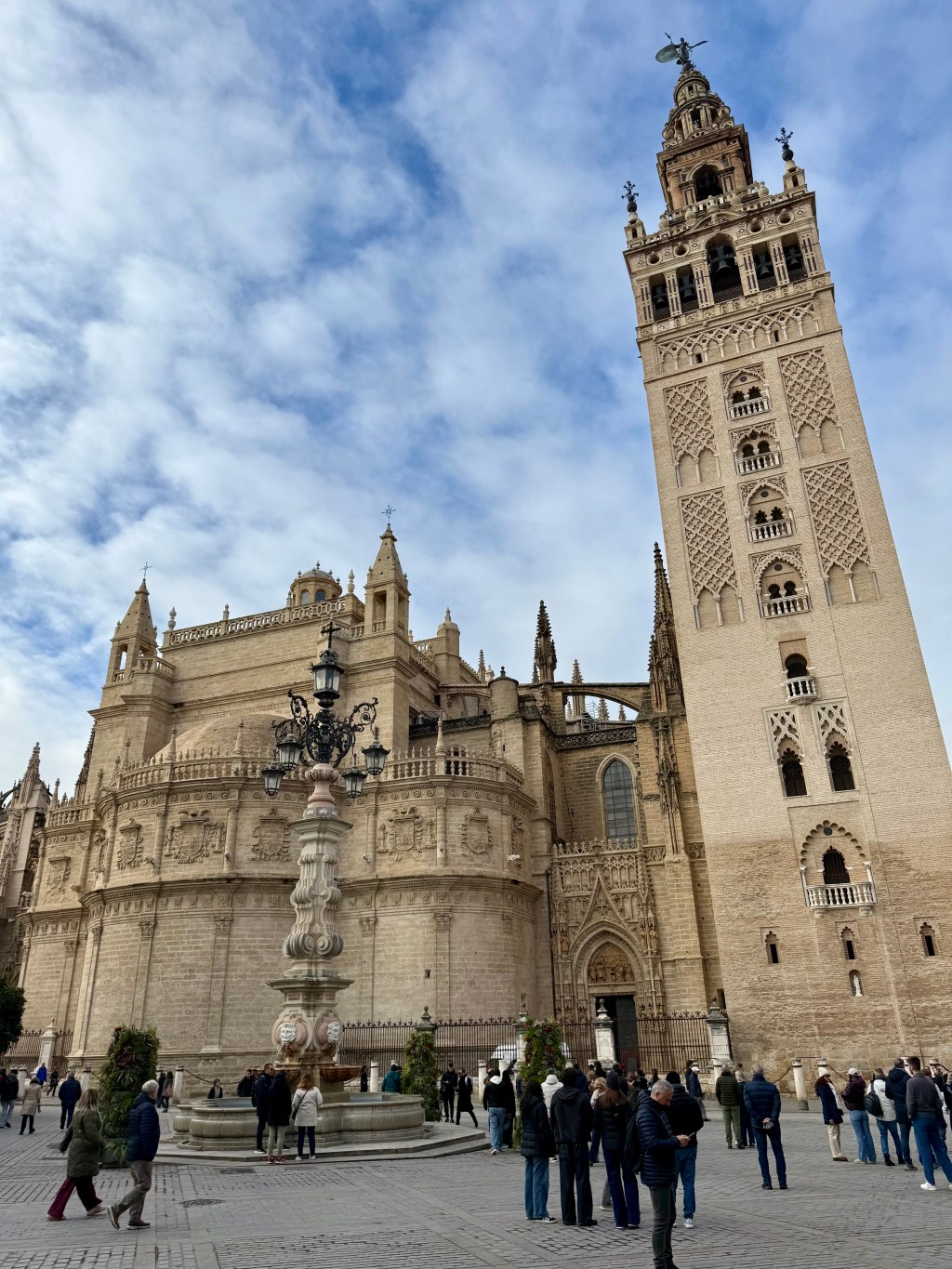
    Next to the Cathedral stands its bell tower, the Giralda, one of the only visible reminders that this site once housed a mosque (a fact the audio guide also conveniently glosses over). Built originally as a minaret in the late twelfth century, its lower portion retains its Islamic character—brickwork and geometric patterning—while the Christian additions appear toward the top: a Renaissance belfry crowned with bells, cross motifs, and a towering bronze weather vane representing “The Triumph of the Church.” Given the long wait, I opted not to climb to the top this time, though the view is spectacular.

  • Standing Room Only

    Standing Room Only

    One of my lingering anxieties about spending a month in Seville has been dining alone. In a city where eating is so social—often done standing shoulder to shoulder at tapas bars—it can feel awkward to take a table by yourself. I’ve made a few solo reservations and eaten well enough, but unless you bring a book, there’s a lot of empty time to manage.

    After visiting the Palacio de las Dueñas on Monday, I stopped for lunch at Casa Román, a well-regarded tapas bar around the corner from my apartment. It was still early, so I assumed there would be space.
    There wasn’t. The place was full, with a forty-five-minute wait for a table. I said I’d stand and have a couple of tapas and a drink.

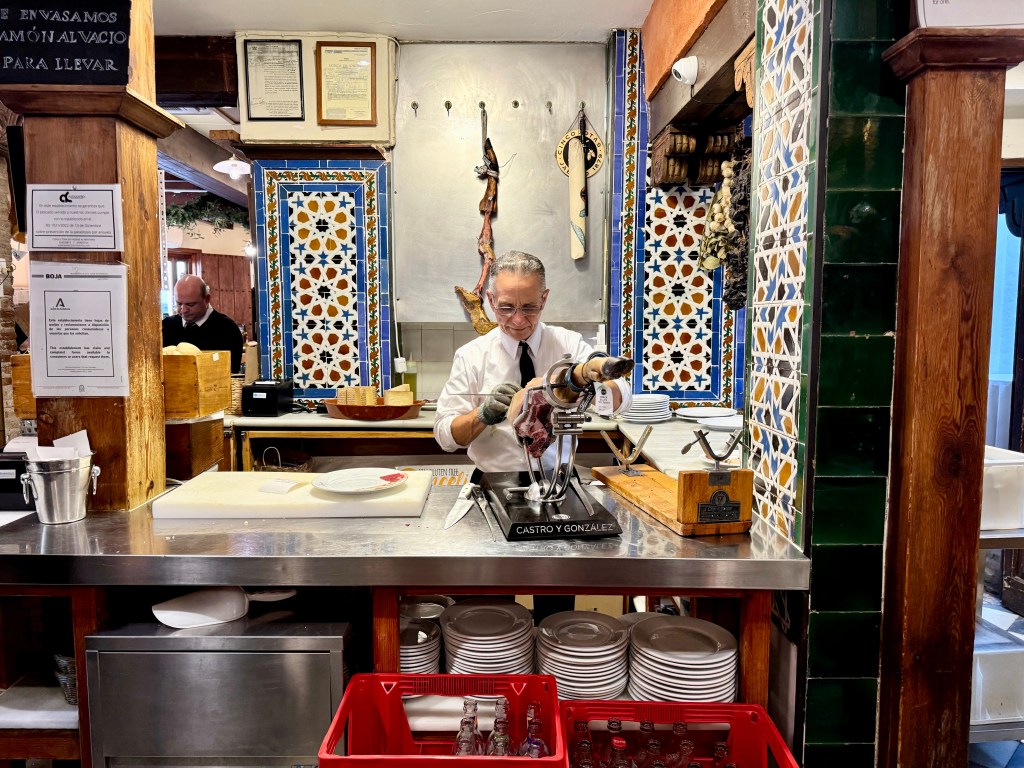
    Standing at the bar turns the meal into something else entirely. From there, you see the system at work: waiters weaving past each other in the tightest spaces, plates moving swiftly from kitchen to counter, glasses washed and rehung. I couldn’t do it for an hour, much less a full shift.

    I ended up directly across from the ham carver. Carving jamón ibérico is treated as a serious skill in Spain, and it was absorbing to watch him work—thin, precise slices. When the leg he was carving ran low, he began preparing a second one simultaneously.

    Time passed quickly, and by the time I finished eating, I was reminded that the bar was the far more exciting vantage point. It was a front-row seat—to labor, to rhythm, to the small competencies that keep the place running. You’re briefly inside the machinery of it all.

  • Palacio de las Dueñas

    Palacio de las Dueñas

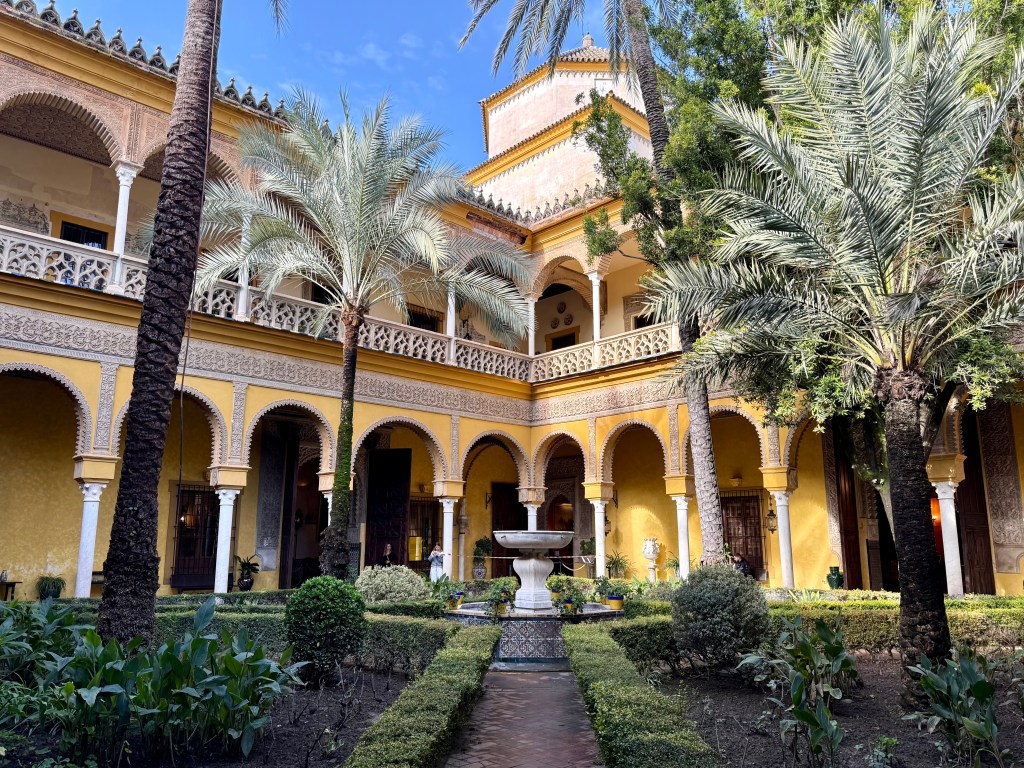
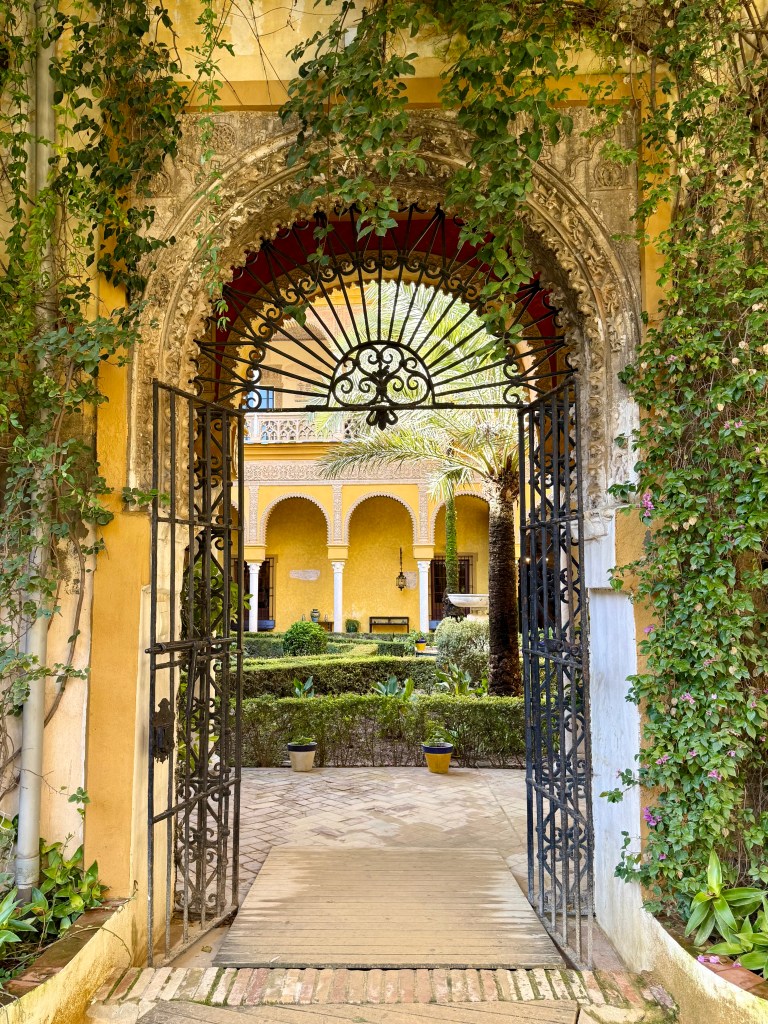
    Even on my fourth visit to Seville, I’m still discovering new and remarkable things. Today I spent a couple of hours somewhere I’d never been: the Palacio de las Dueñas, the Andalusian residence of the House of Alba.

    I’m not sure how this palace, built in the late fifteenth century, escaped my radar, or why it seems to have escaped everyone else’s. On a winter afternoon when Seville otherwise felt crowded, there were only about thirty visitors wandering the grounds.

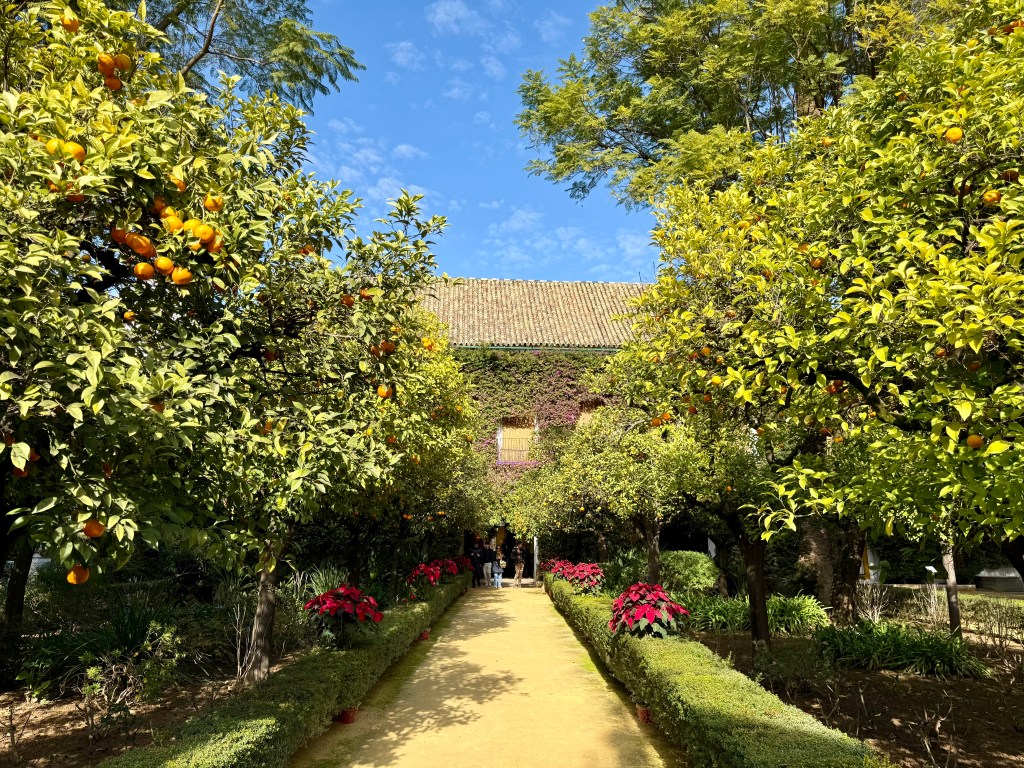
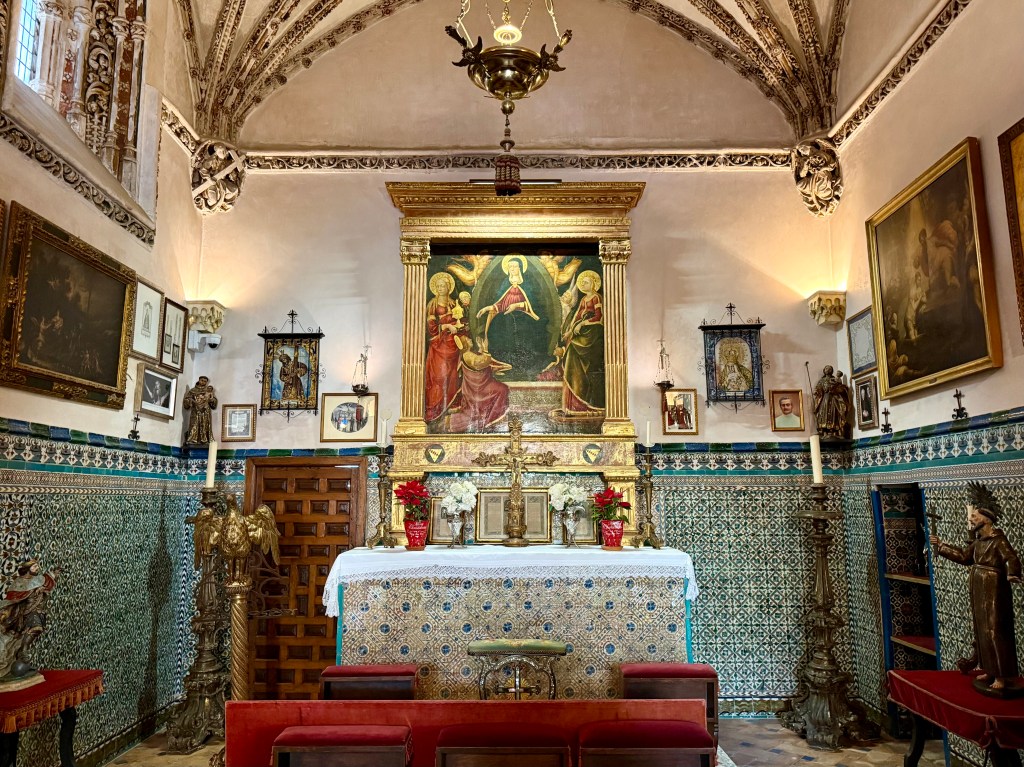
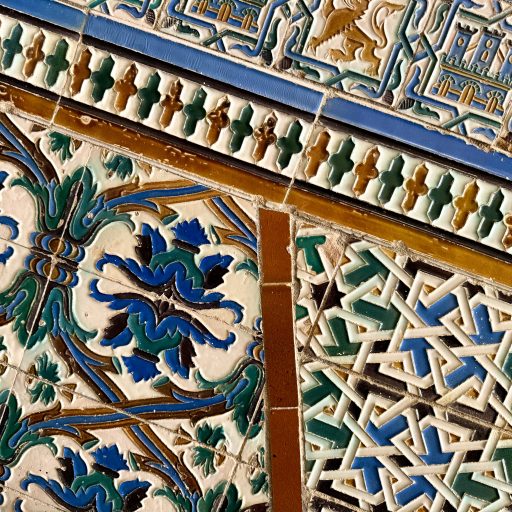
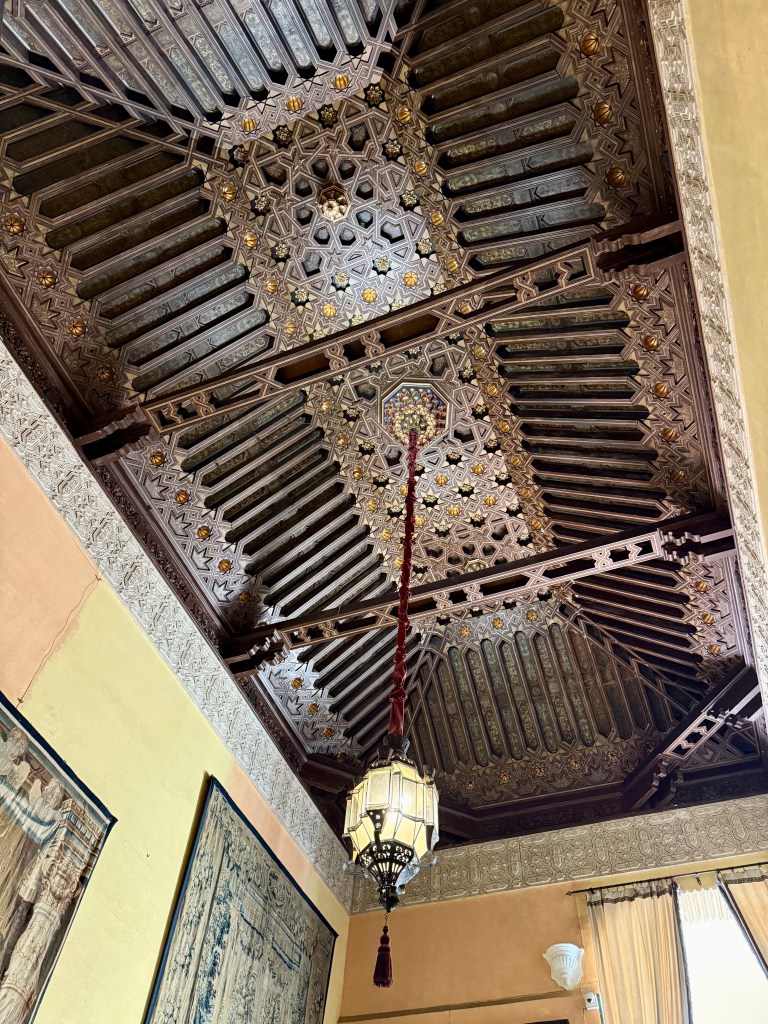
    The gardens are striking, as is the architecture. Elements of Mudéjar—a style developed by Muslim craftsmen working under Christian rule, characterized by patterning and an emphasis on surface rather than imagery—are woven throughout the complex. A geometric wooden ceiling above the main staircase, tilework lining the halls, and a series of spacious courtyards organized around fountains.

    The history of the House of Alba is its own kind of spectacle. The current head of the house, Carlos Fitz-James Stuart, 19th Duke of Alba, lives a relatively private life. His mother, Cayetana Fitz-James Stuart, 18th Duchess of Alba, did not. Described as an “unconventional aristocrat” in her New York Times obituary, she was recognized by Guinness World Records as the noble with the most official titles in the world—more than forty. She was a direct descendant of Mary, Queen of Scots, and a childhood playmate of Queen Elizabeth II. As the Times also notes, she also drew attention for her cosmetic surgery and her fondness for hippie-style hats and brightly flowered dresses—and she held the right to ride on horseback into Seville Cathedral. Good for her.

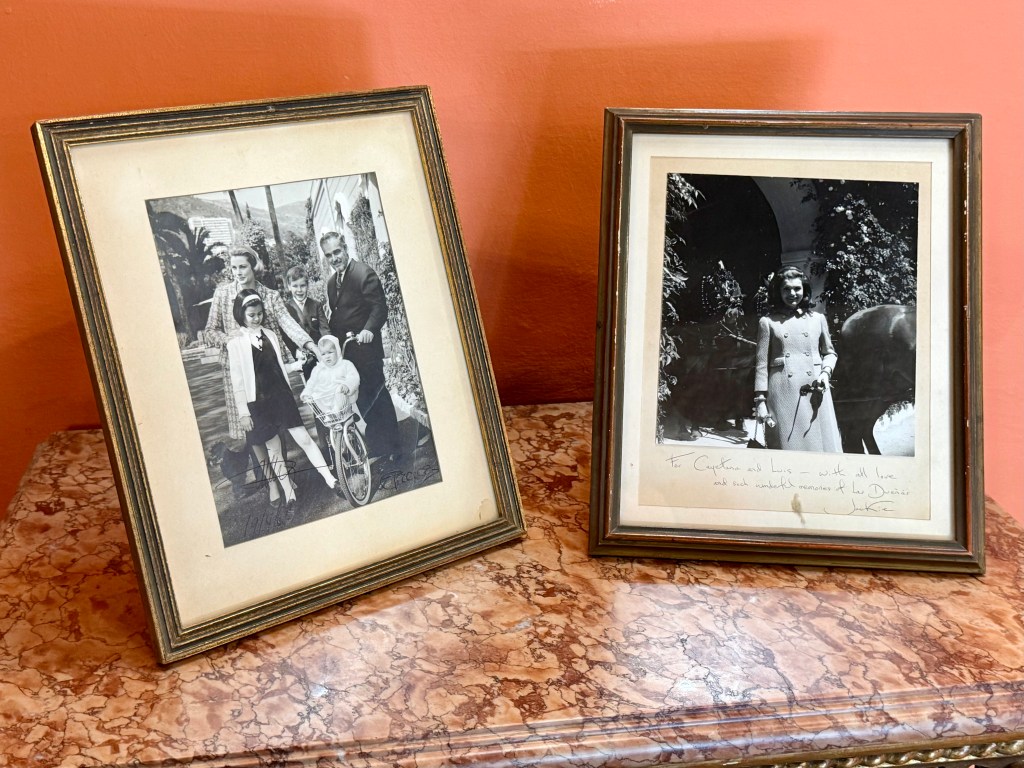
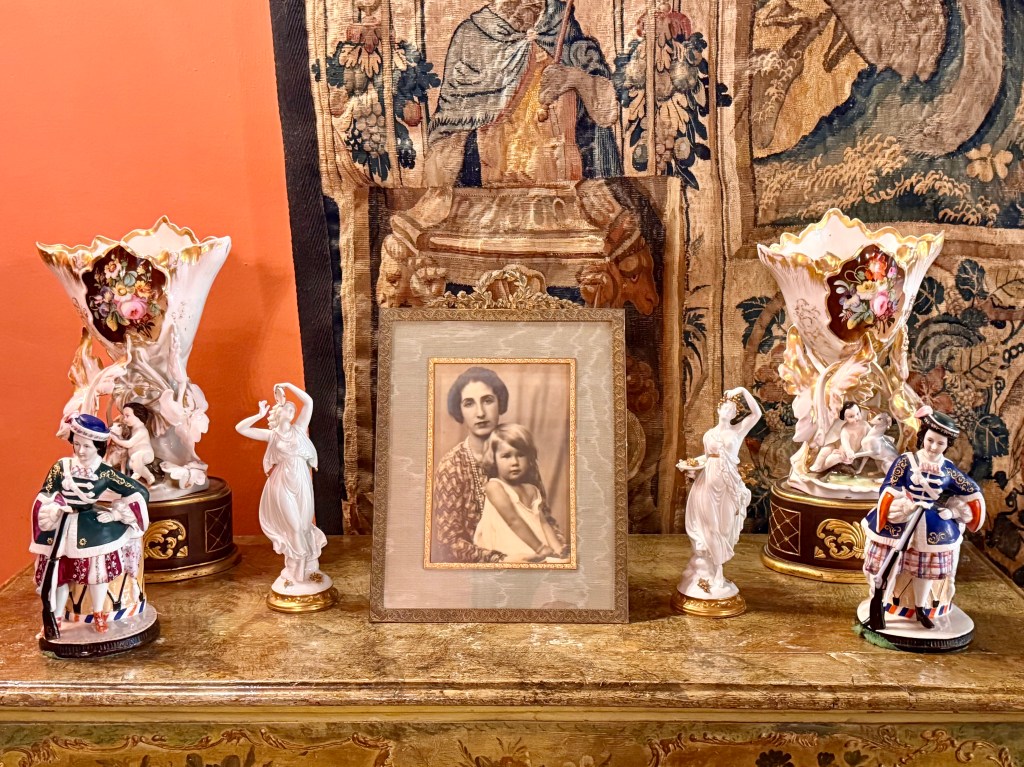
    Touching mementos appear throughout the palace. Family photographs of the House of Alba and their famous visitors—including Jackie O., Prince Rainier, and Grace Kelly—sit casually atop tables.

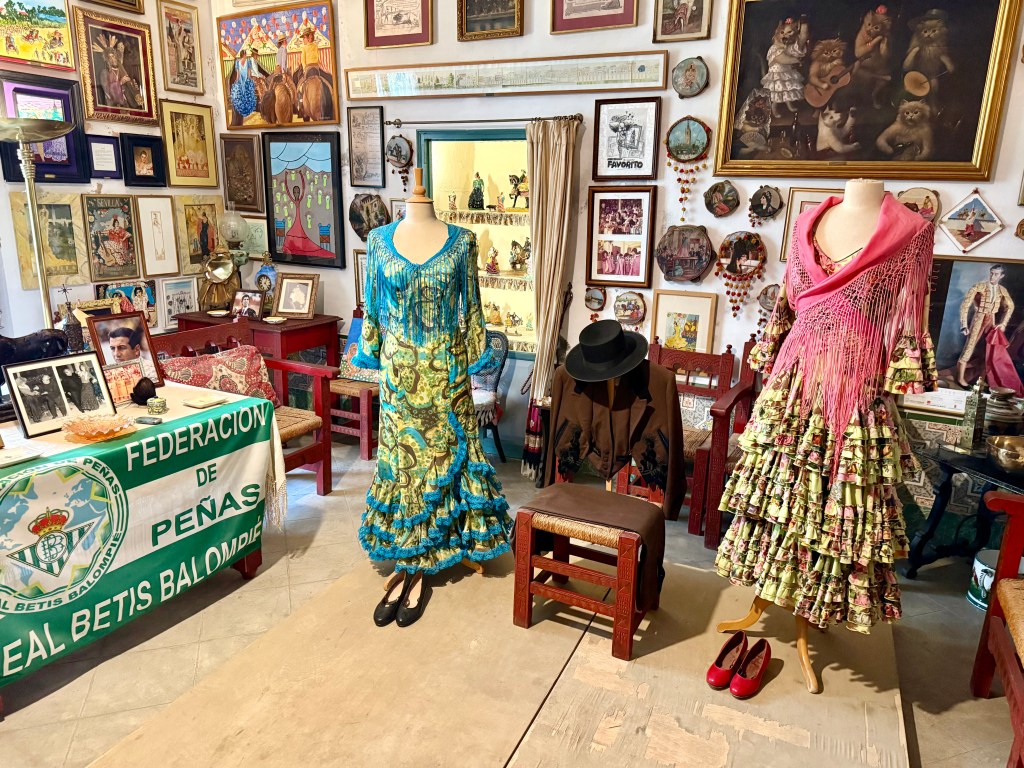
    As a dance lover, I was tickled to learn that the Duchess of Alba enjoyed flamenco and had a small stage built inside the palace for her to practice and perform. The stage, and her flamenco dresses, are on prominent display.