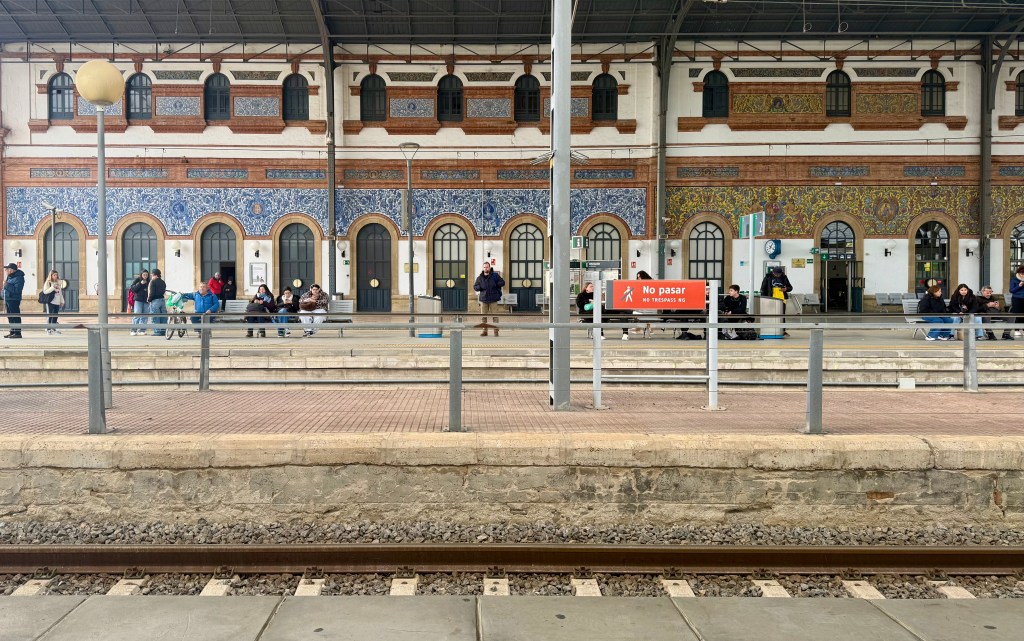
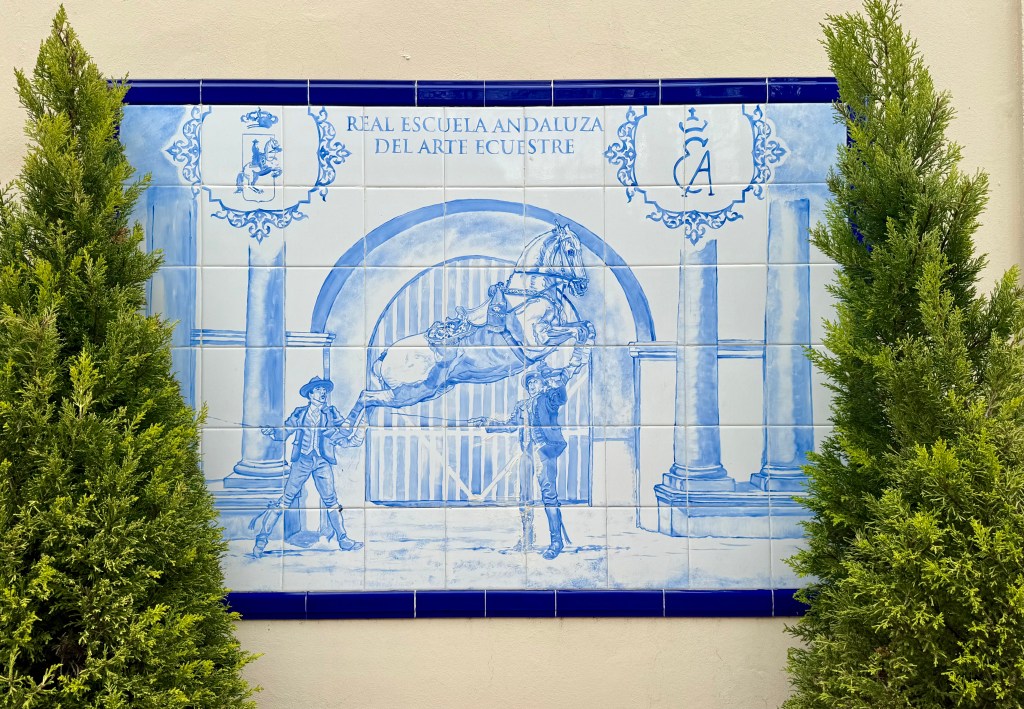
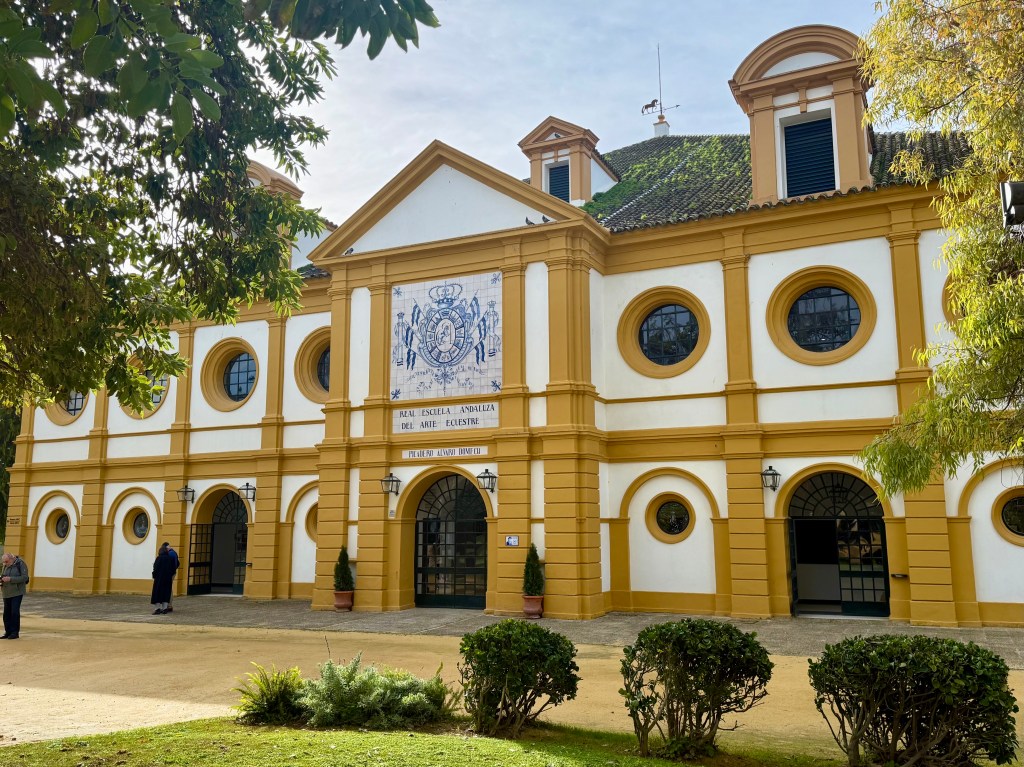
Like a true Virgo, I tend to arrive early. So when traveling from Seville to Jerez to see the famous horse show, I left myself plenty of extra time.
On my way to the city center, I passed Jerez Cathedral. Checking my watch, I realized I had nearly two hours before the performance began, so I stepped inside and grabbed an audio guide.
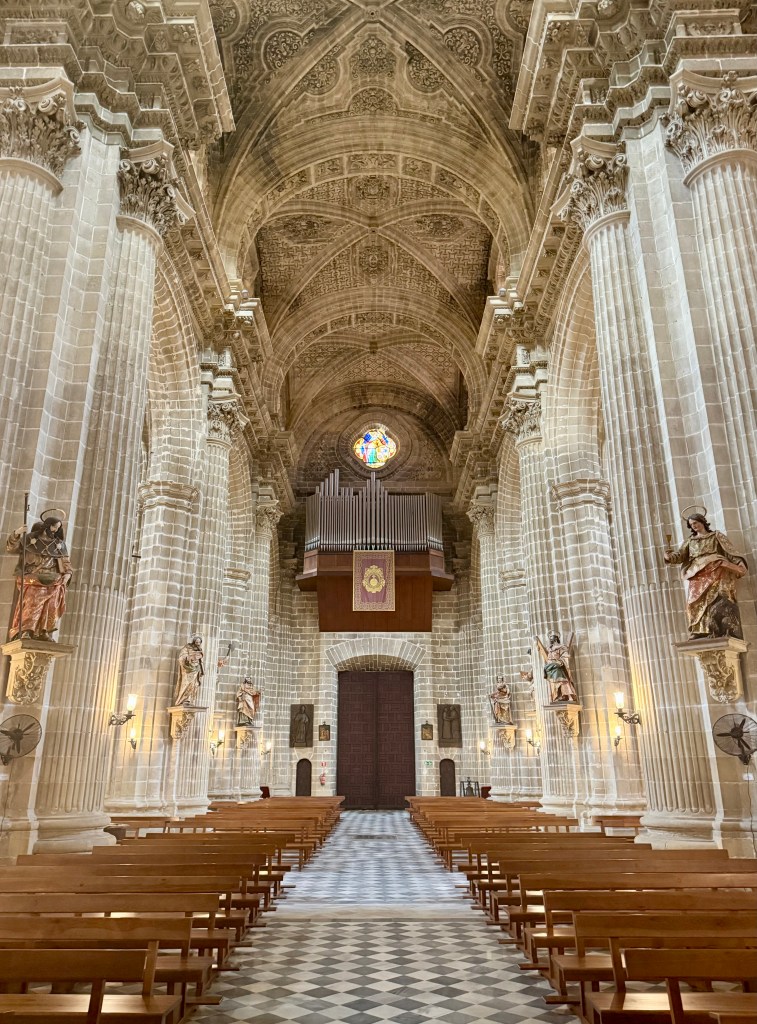
Officially the Cathedral of San Salvador, Jerez Cathedral stands on a site that has been sacred for centuries—once home to a mosque during Islamic rule and later a humble Christian church. Construction of the current building began in 1695 and continued well into the eighteenth century. It was elevated to cathedral status only in 1980, when Jerez became the seat of its own diocese—making it, by cathedral standards, relatively young.
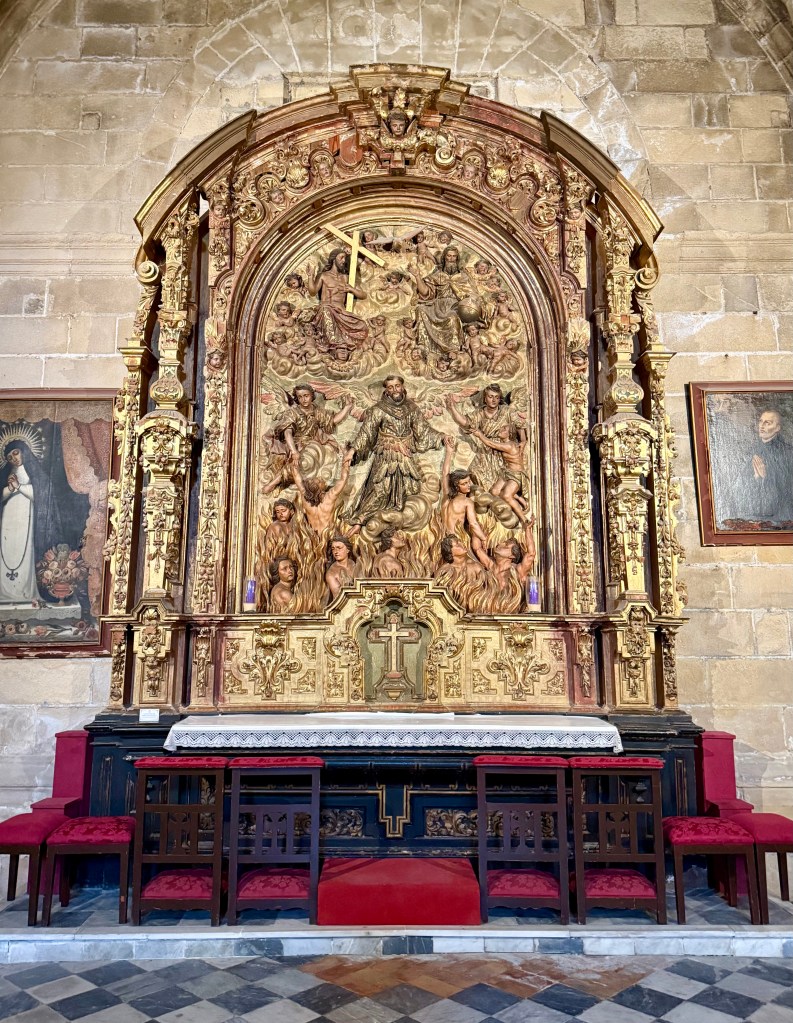
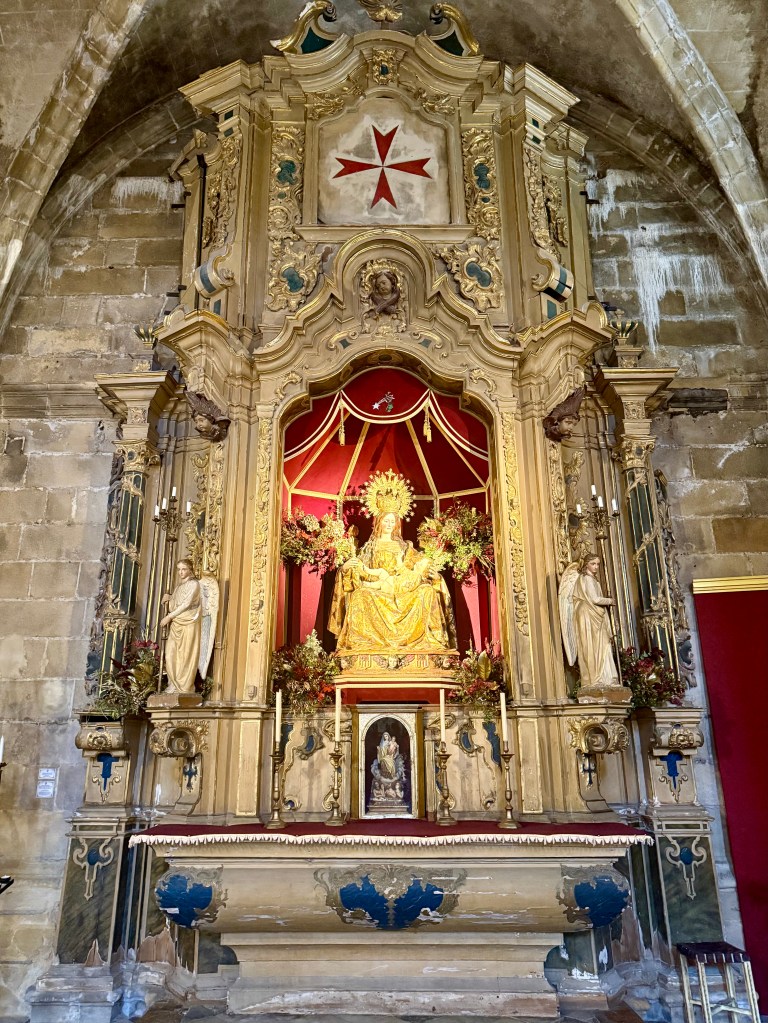
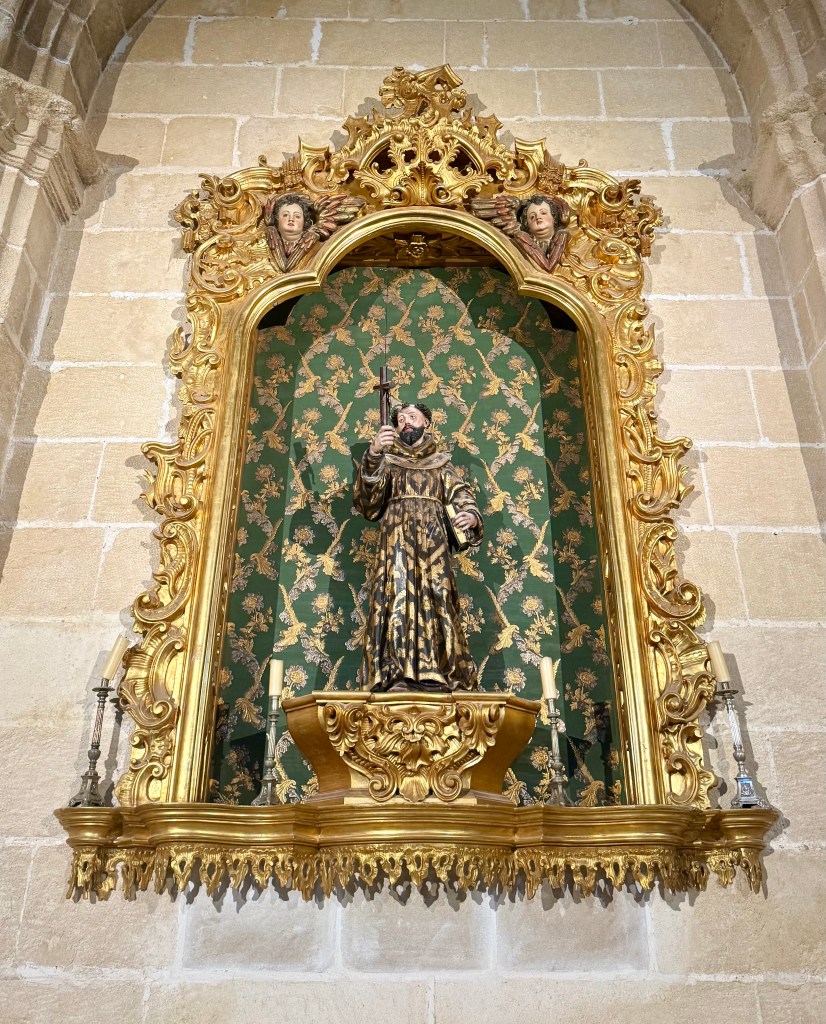
Seville’s cathedral is massive; this one is more intimate—invitingly so. Rather than numerous built-in chapels, most of the devotional spaces here take the form of side altars, decorated with sculpture. The altarpiece that stayed with me most is Las Ánimas del Purgatorio (The Souls in Purgatory), in which anguished figures emerge from flame and shadow, reaching upward toward salvation.
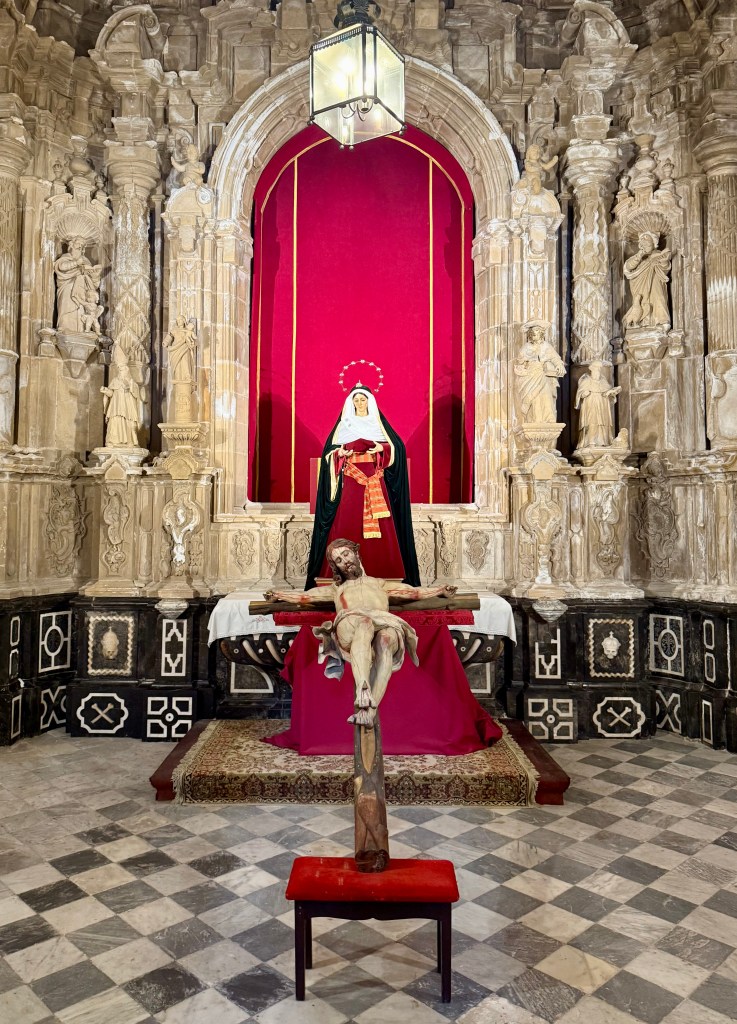
Of the few true chapels, I lingered longest in the Chapel of Souls, where the Cristo de la Viga (Christ of the Beam)—a fifteenth-century Gothic wooden sculpture that predates the cathedral itself—is displayed before a figure of Mary as Nuestra Señora de los Dolores (Our Lady of Sorrows). I don’t consider myself Catholic—or even Christian—anymore, yet the passion behind much Spanish Catholic art remains hard to resist.
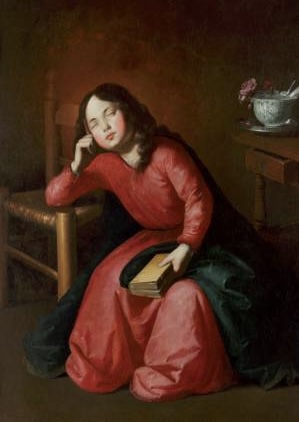
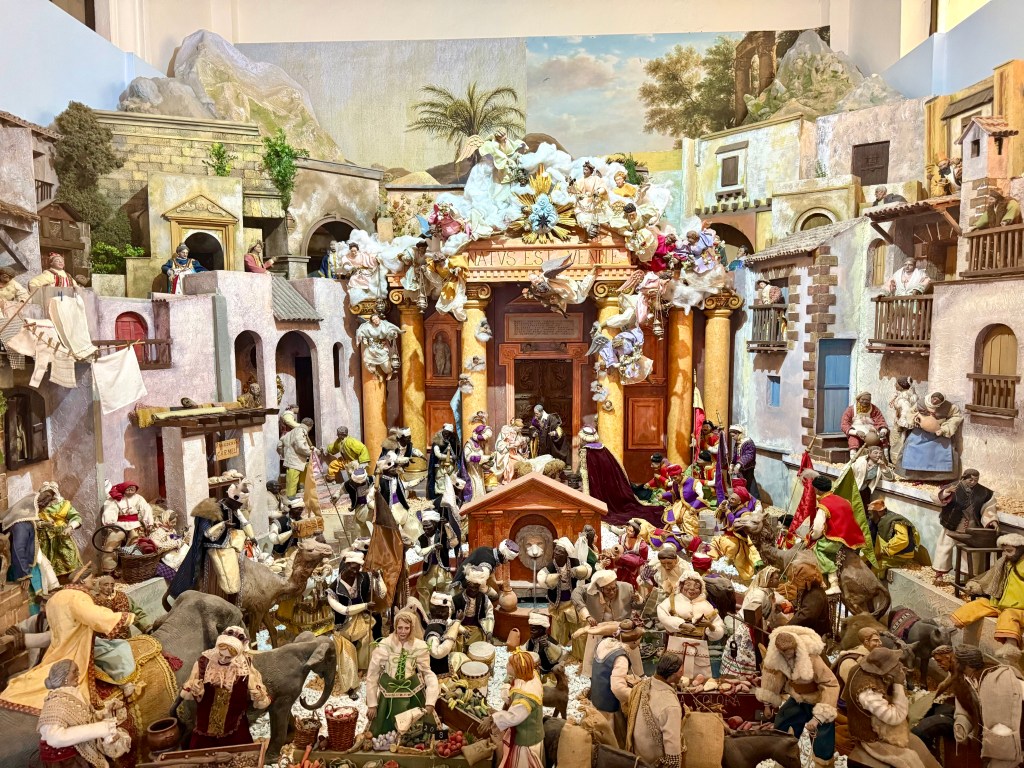
The side rooms are intimate as well and worth visiting. In the sacristy, where photos aren’t allowed, hangs Zurbarán’s Virgin as a Child, a rare and restrained depiction of Mary absorbed in her book of psalms. An extraordinarily elaborate Neapolitan-style nativity scene sits in another side room.
After visiting the cathedral, I wandered Jerez for a while. It has more grit than Seville and isn’t as colorful; historic buildings and ungainly modern ones sit side by side. The locals are kind. I stopped into a neighborhood café for a coffee and felt a bit out of place, but they seemed happy that I was willing to speak Spanish.
I regret not having time to see Jerez’s Alcázar or the monastery on the city’s outskirts, which dates to 1475. Next time.
 One month in Seville