Tag: history

  • Doña Regla’s House of Treasures

    Doña Regla’s House of Treasures

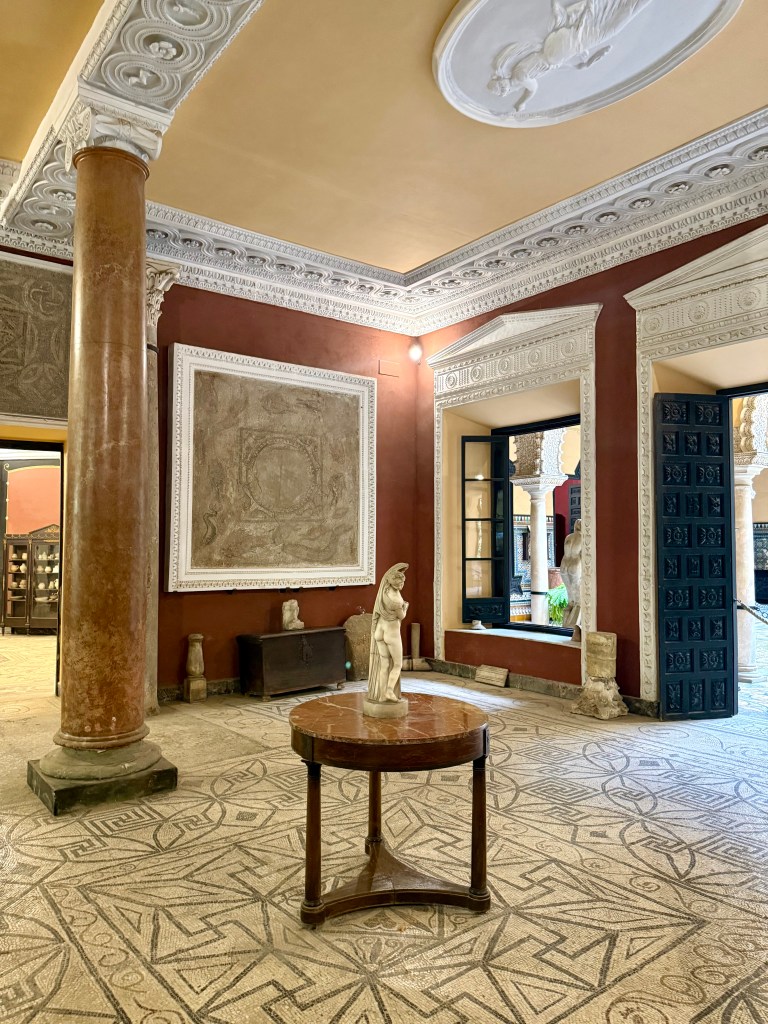
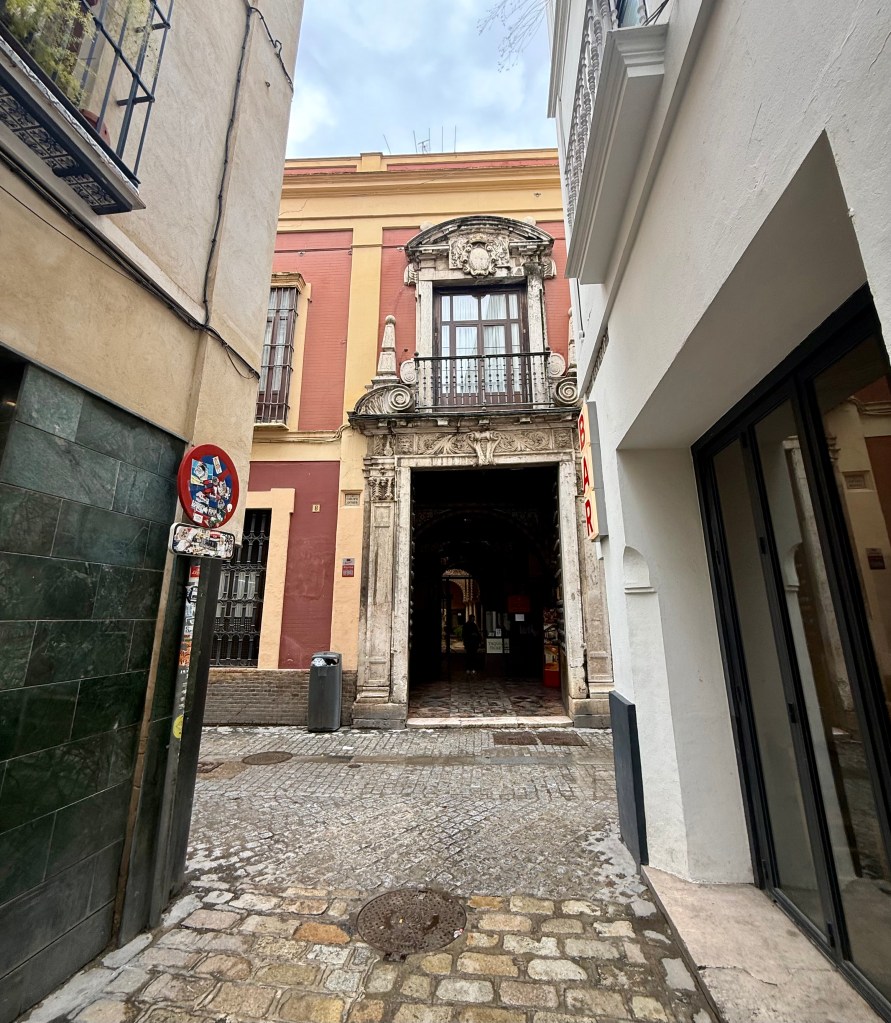
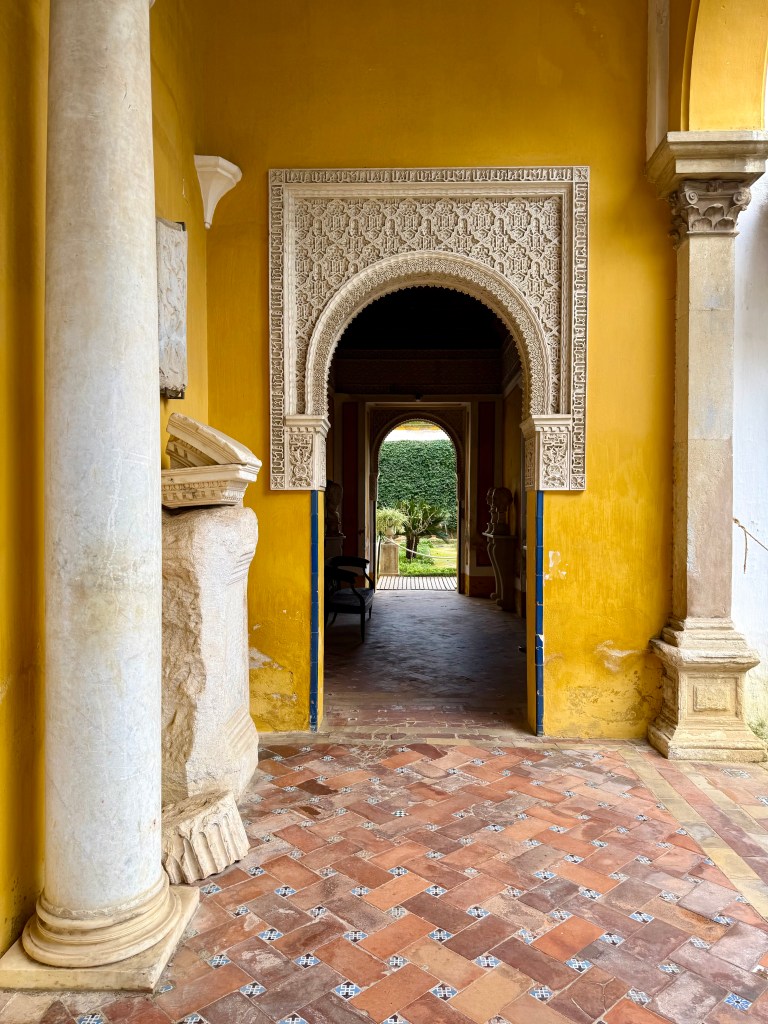
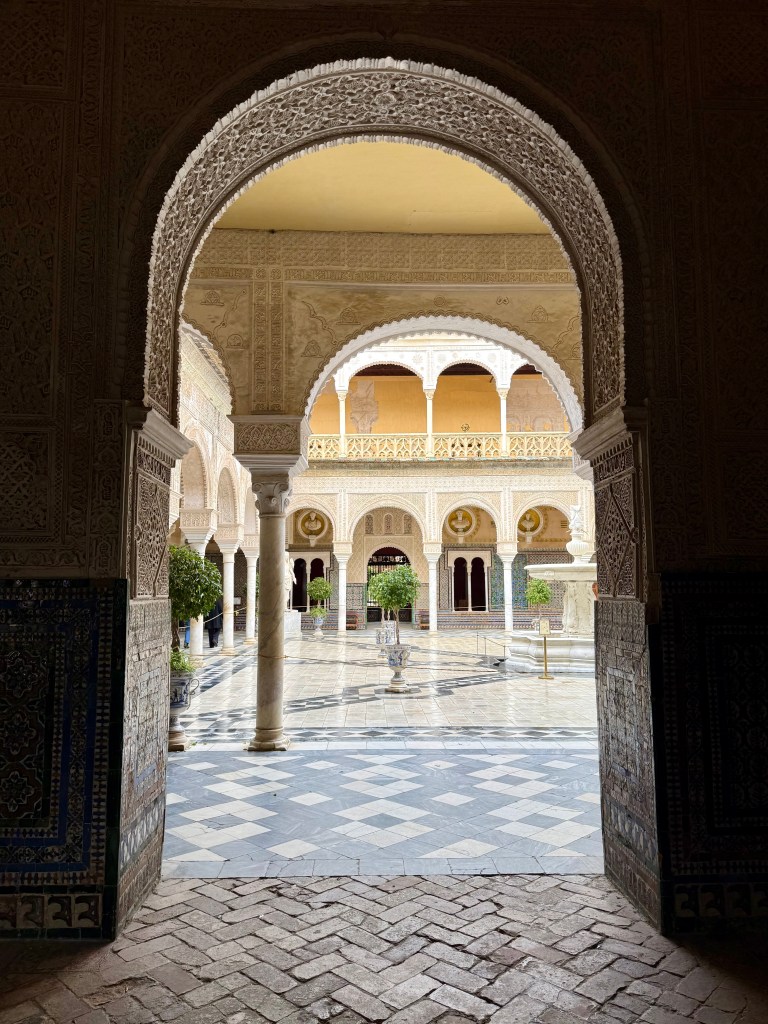
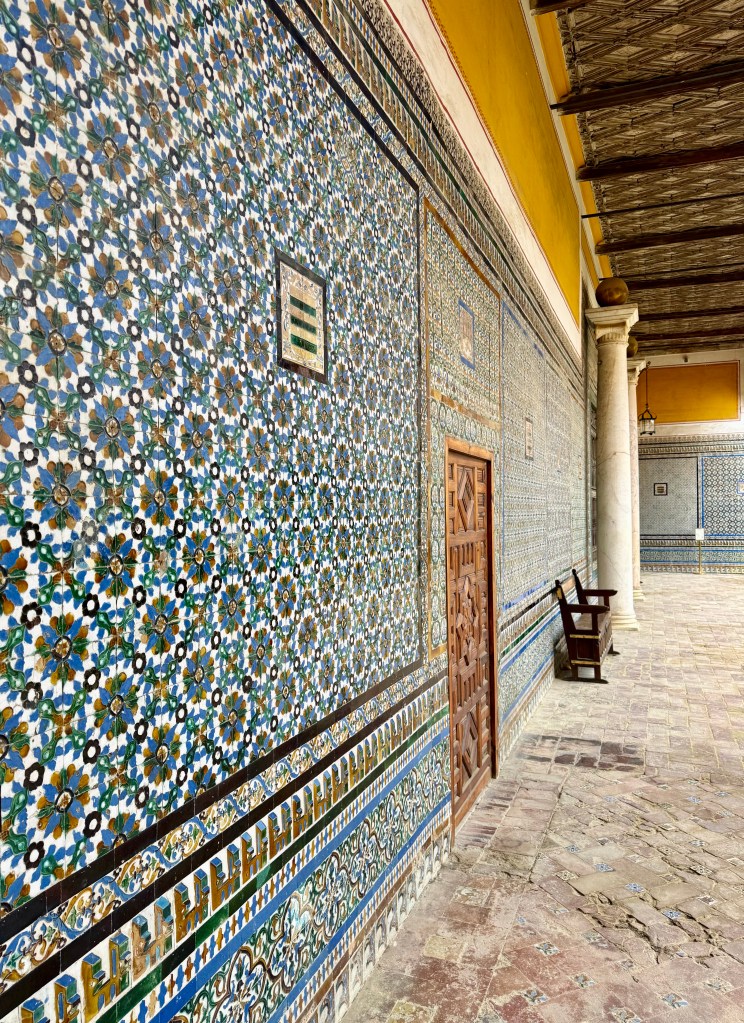
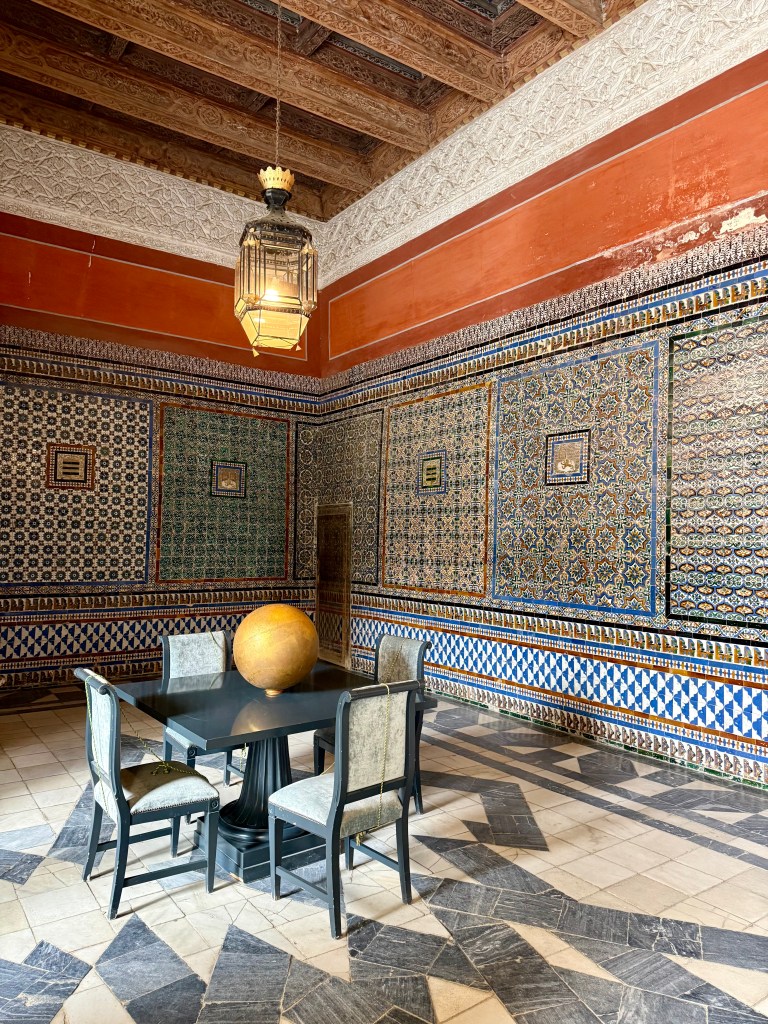
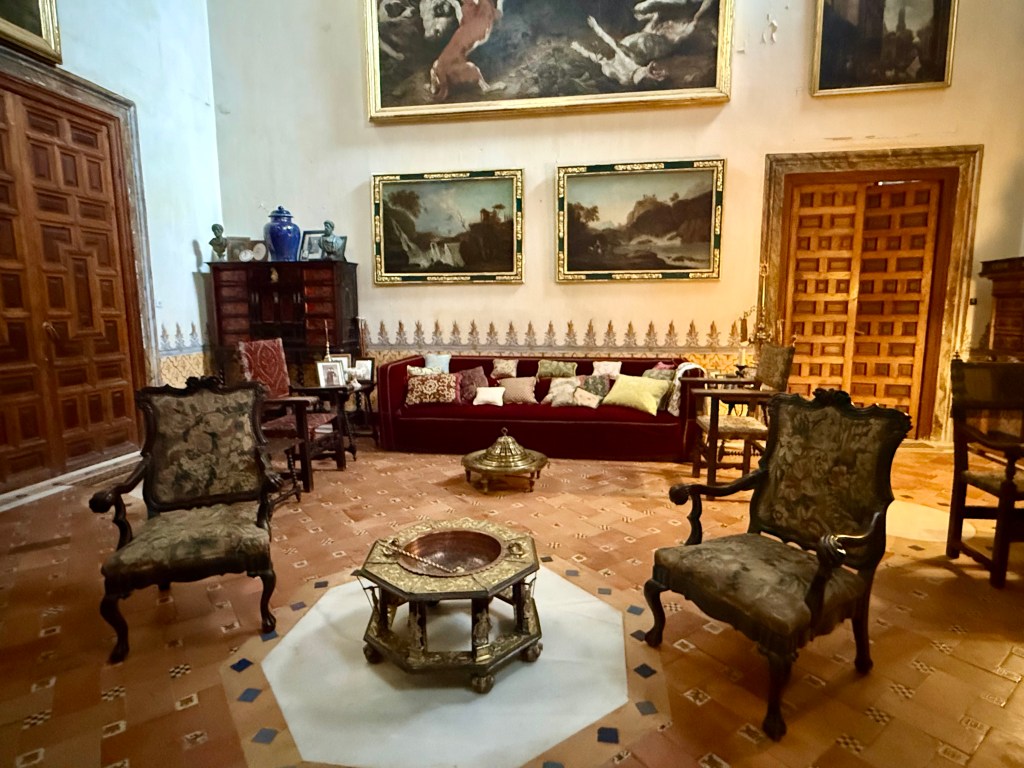
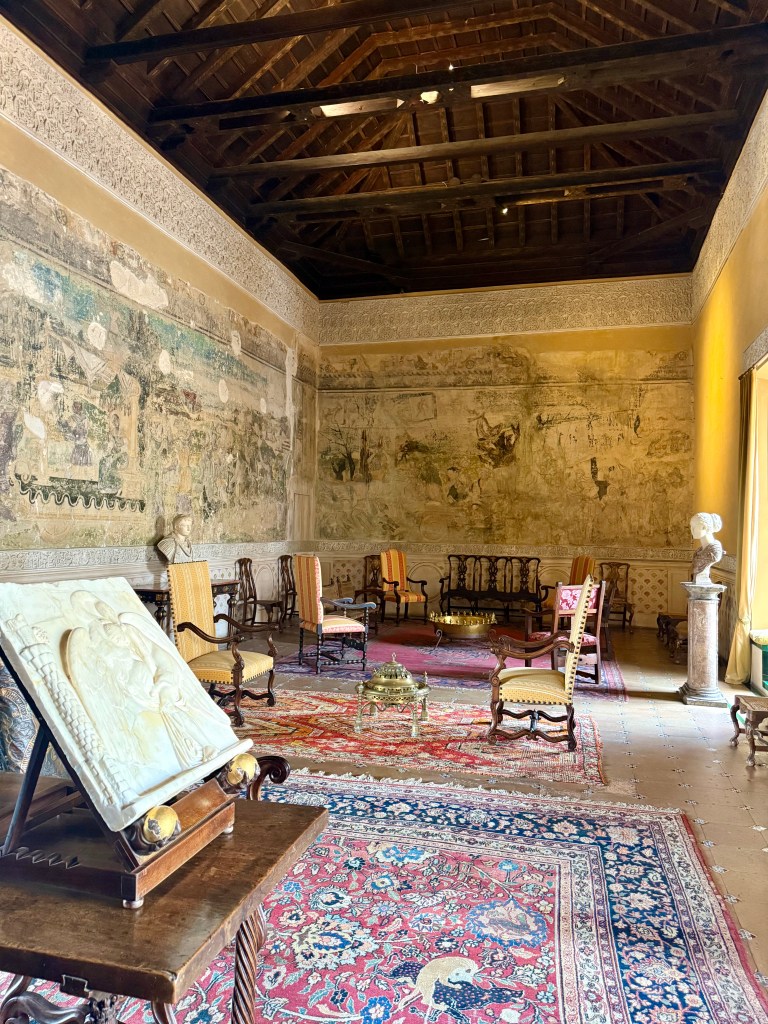
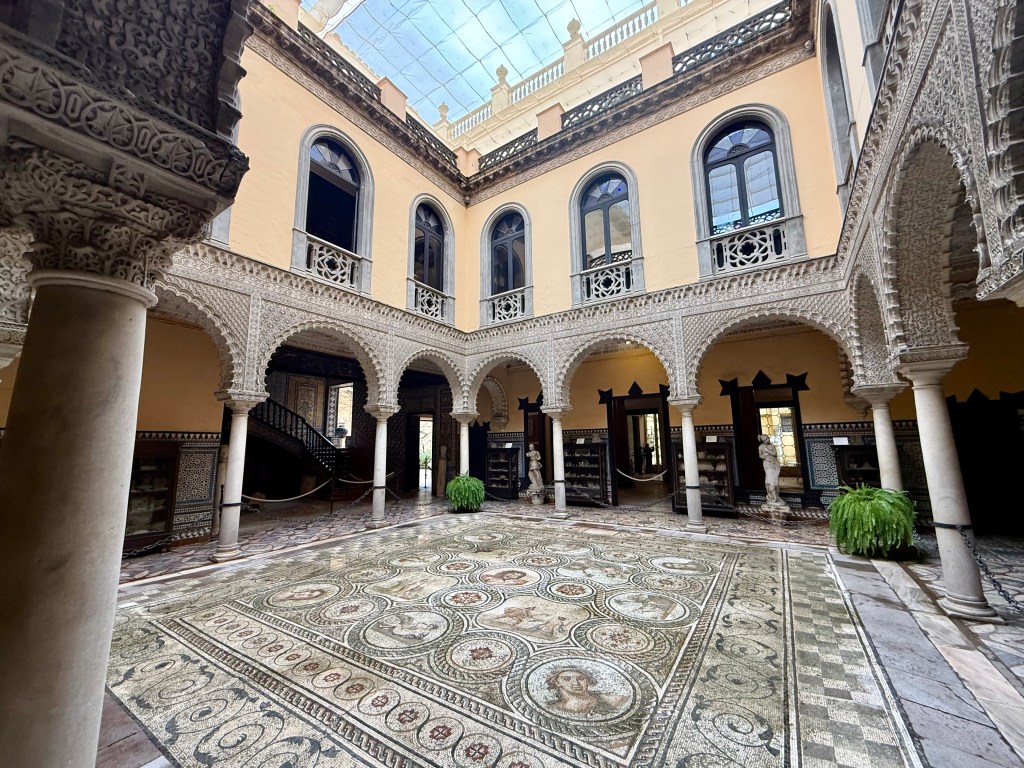
    With just days left in my monthlong sabbatical in Seville, I assumed I had seen pretty much everything I should. A few late-breaking surprises have proved me wrong. The most unexpected of these was the Palace of the Countess of Lebrija, another of the city’s celebrated casa palacios—grand private homes that blur the line between residence and museum.

    The original building dates to the sixteenth century, but the palace achieved both its fame and its name in the early twentieth century, when it was purchased by Doña Regla Manjón Mergelina, the Countess of Lebrija. Over the years, she bought up neighboring houses, dramatically expanding the property and renovating it to suit her ambitions.

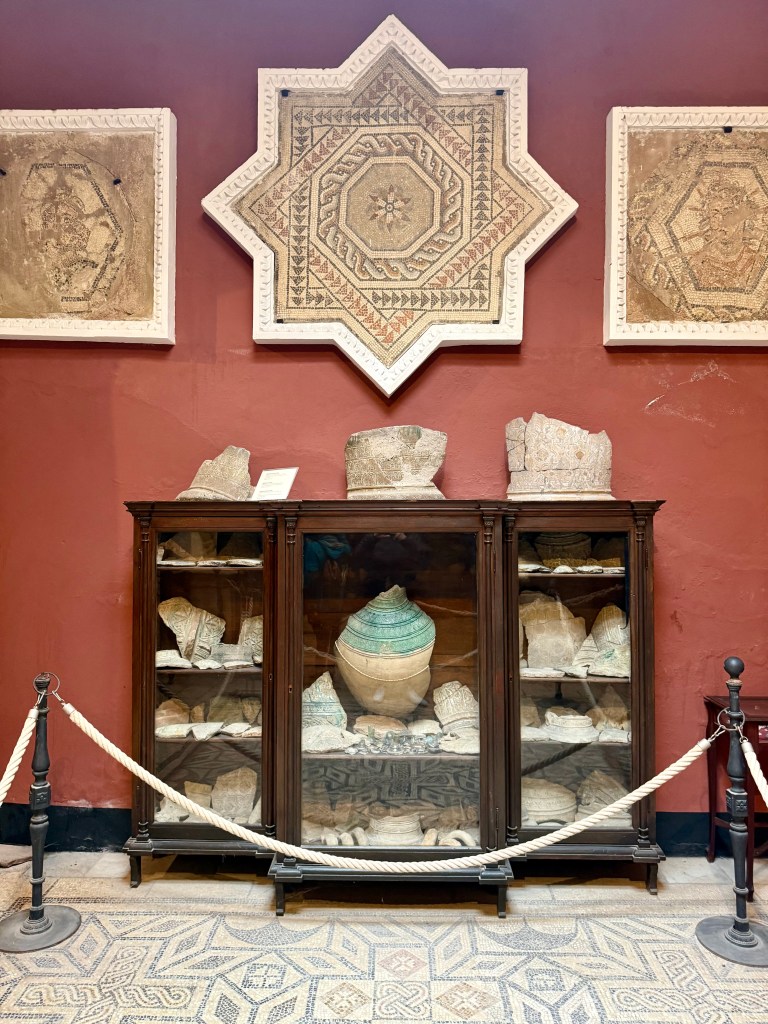
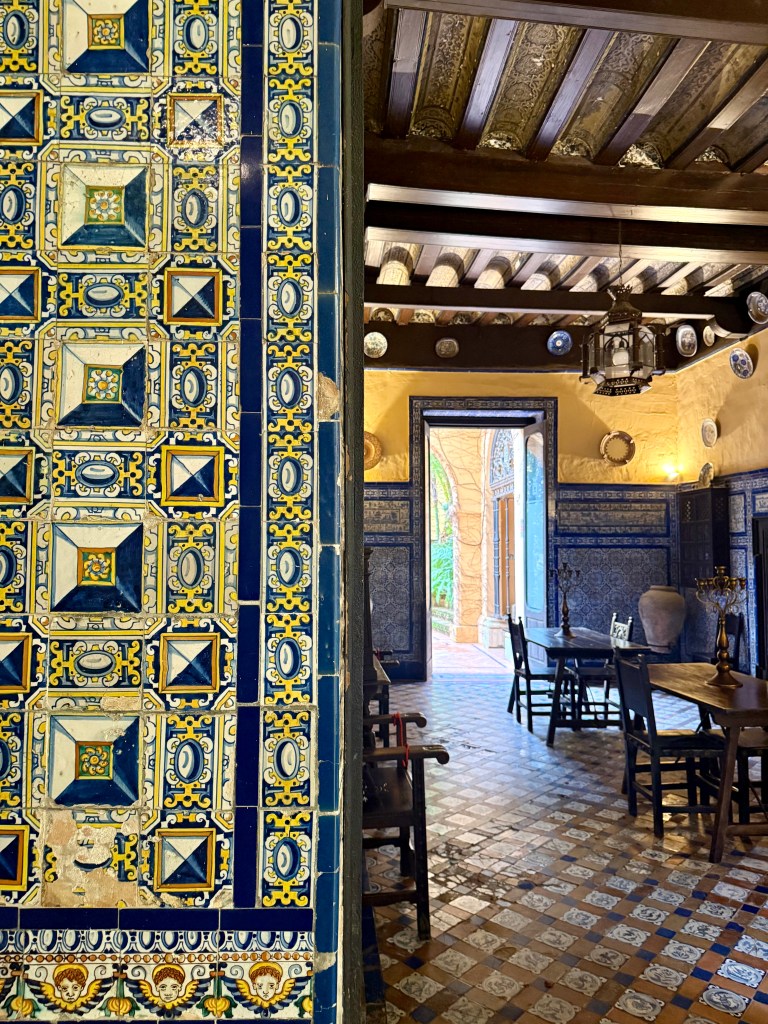
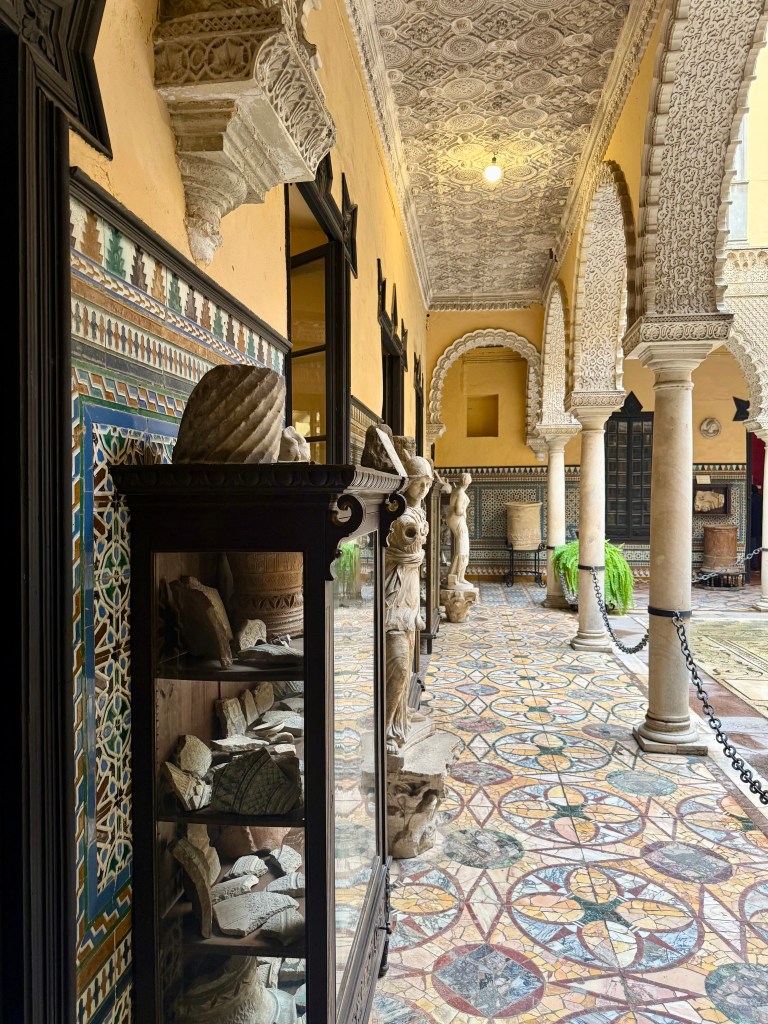
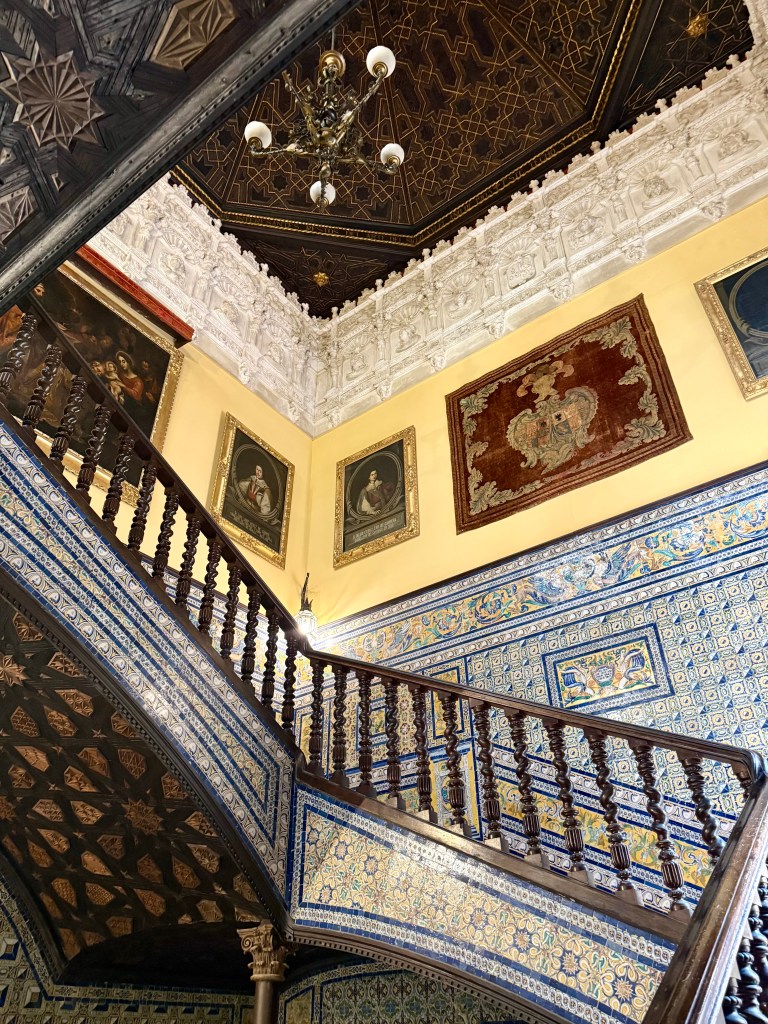
    The countess herself led a fascinating life. An avid collector of art and antiquities, she was also recognized as a genuine authority in the field, becoming the first woman admitted to Seville’s Royal Academy of Fine Arts. Something of a packrat, she was also a fervent preservationist. When a local monastery closed its doors, she purchased its sixteenth-century tiles and lined her staircase with them. From a defunct palace in a nearby town came the ornate wooden ceiling that now hangs above the same stairwell, an architectural transplant rescued from oblivion. Artworks and artifacts from across her collection are thoughtfully arranged in display cases throughout the building.

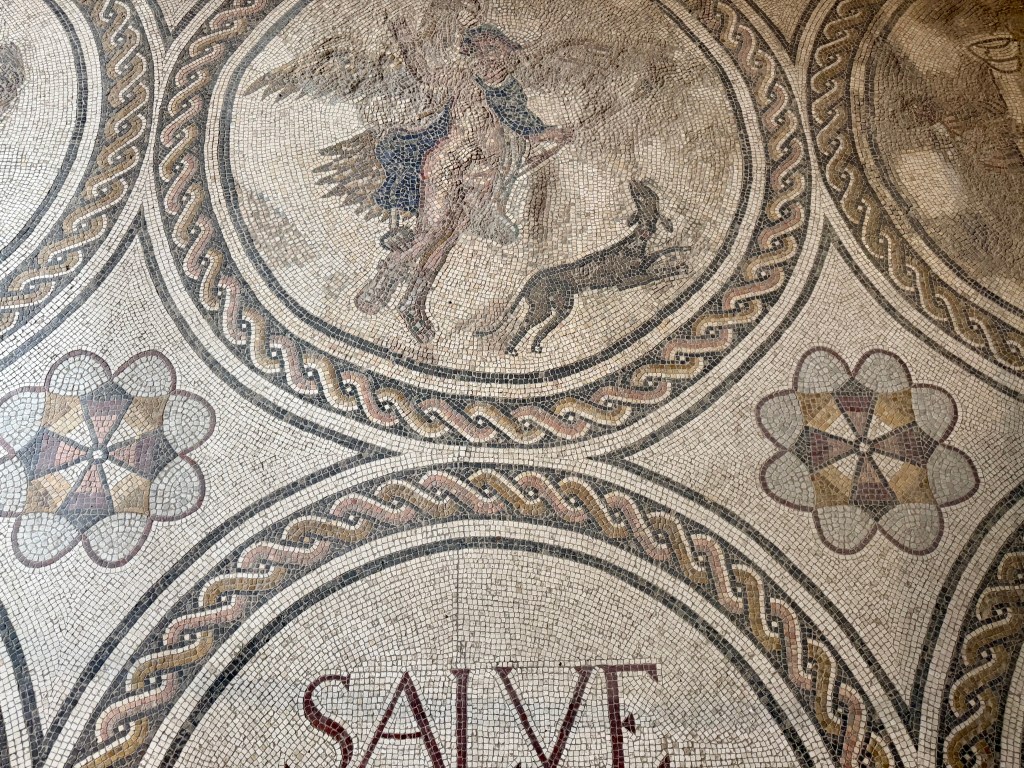
    Most astonishing are the mosaics that cover much of the palace’s ground floor. These were brought from the nearby ruins of Italica, the ancient Roman settlement just outside Seville. The countess didn’t merely acquire them; she actively participated in the excavation of the site itself. How they were transported, intact, and installed in the center of a modern city is something I still can’t quite fathom.

    I arrived just in time to join a tour of the upper rooms, which turned out to be every bit as lavish as the rest of the house—though, alas, photography wasn’t allowed. Traditional Spanish décor sits comfortably alongside Chinese porcelain, Florentine woodwork, and English china, somehow adding up to a coherent whole rather than chaos. Our guide mentioned that in most casa palacios, bathrooms were located outside the main building—something I was surprised I hadn’t noticed before—but the countess was ahead of her time, installing one conveniently adjacent to her bedroom.

    Given all this, it’s surprising that the Palace of the Countess of Lebrija is not better known, or at least not more firmly fixed on the standard Seville itinerary. That it took me four visits to the city to discover it says less about the palace than it does about Seville itself—a place that continues to reward curiosity long after the obvious highlights have been checked off.
  • An Early Arrival in Jerez

    An Early Arrival in Jerez

    Like a true Virgo, I tend to arrive early. So when traveling from Seville to Jerez to see the famous horse show, I left myself plenty of extra time.
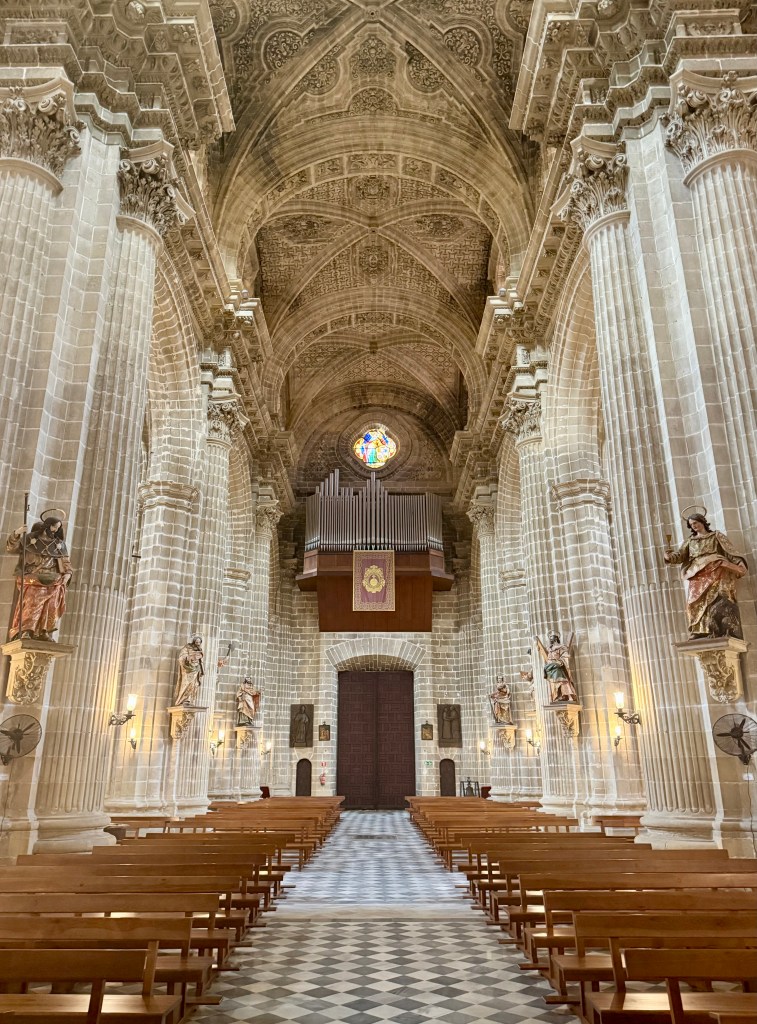
    On my way to the city center, I passed Jerez Cathedral. Checking my watch, I realized I had nearly two hours before the performance began, so I stepped inside and grabbed an audio guide.

    Officially the Cathedral of San Salvador, Jerez Cathedral stands on a site that has been sacred for centuries—once home to a mosque during Islamic rule and later a humble Christian church. Construction of the current building began in 1695 and continued well into the eighteenth century. It was elevated to cathedral status only in 1980, when Jerez became the seat of its own diocese—making it, by cathedral standards, relatively young.

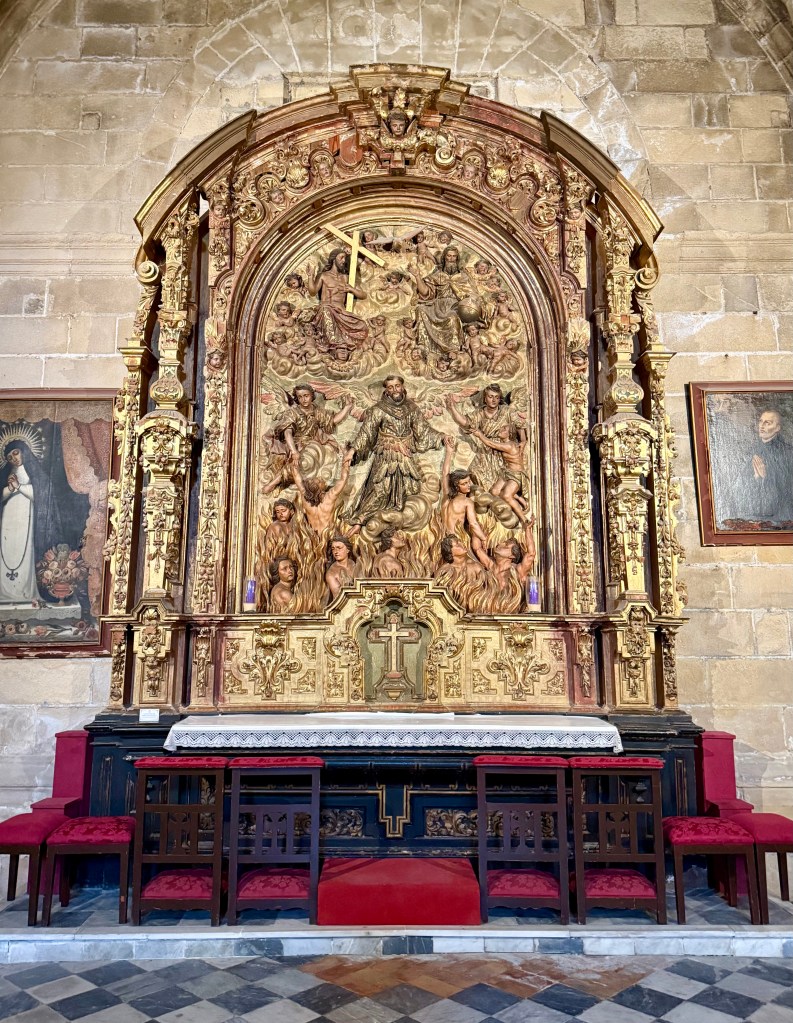
    Seville’s cathedral is massive; this one is more intimate—invitingly so. Rather than numerous built-in chapels, most of the devotional spaces here take the form of side altars, decorated with sculpture. The altarpiece that stayed with me most is Las Ánimas del Purgatorio (The Souls in Purgatory), in which anguished figures emerge from flame and shadow, reaching upward toward salvation.

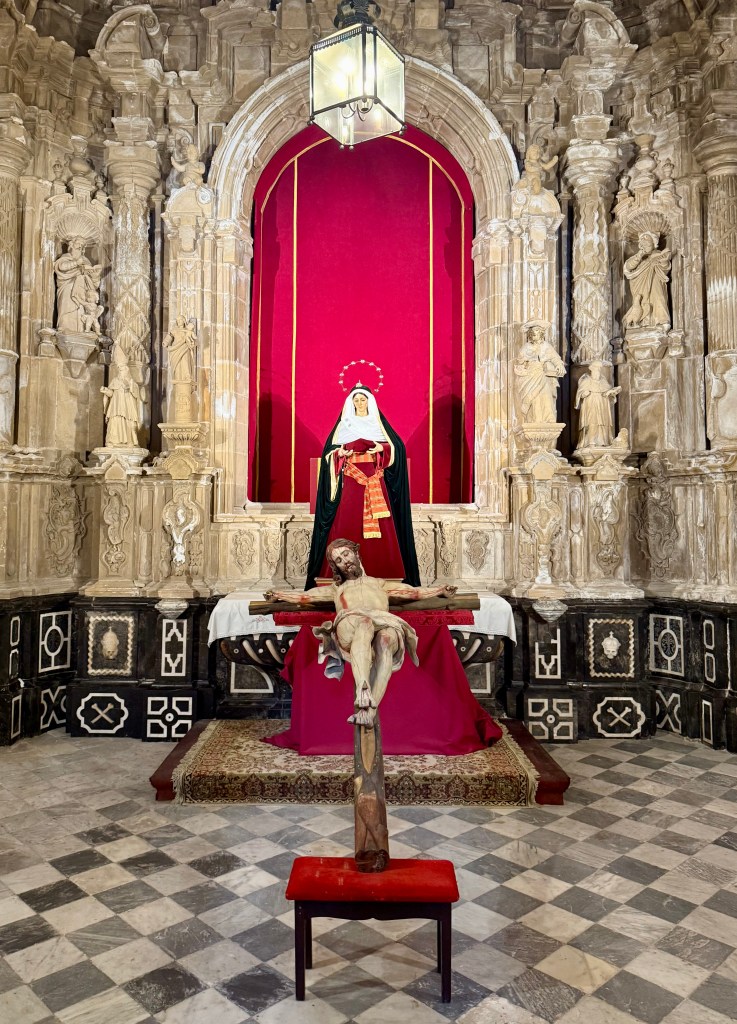
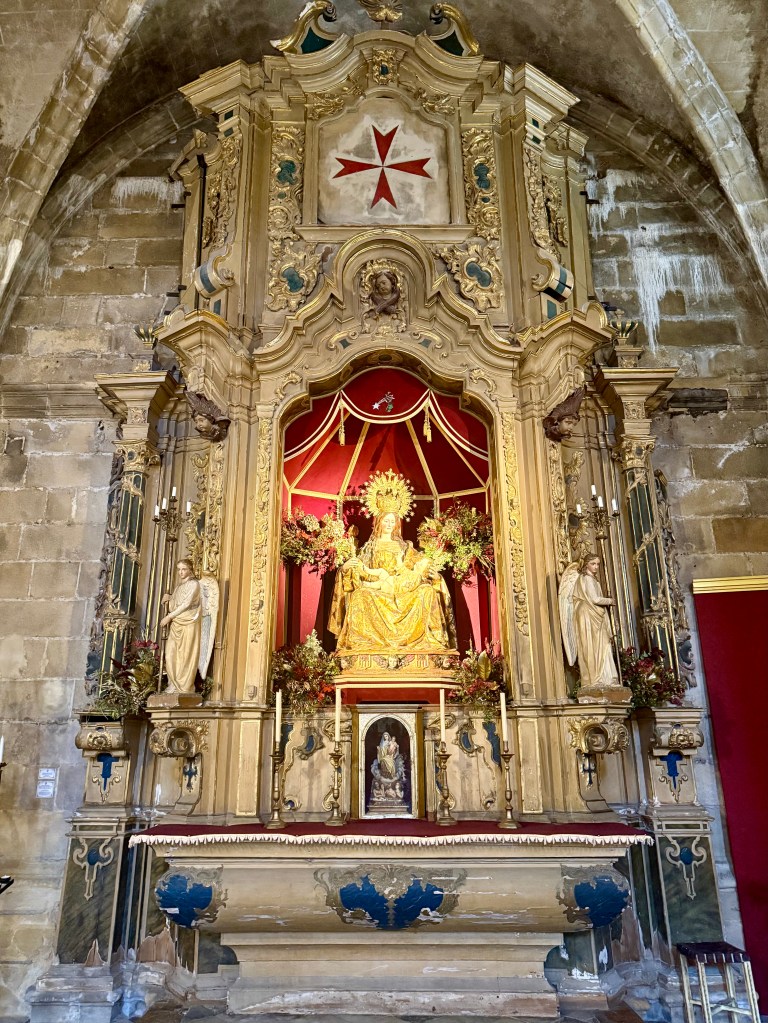
    Of the few true chapels, I lingered longest in the Chapel of Souls, where the Cristo de la Viga (Christ of the Beam)—a fifteenth-century Gothic wooden sculpture that predates the cathedral itself—is displayed before a figure of Mary as Nuestra Señora de los Dolores (Our Lady of Sorrows). I don’t consider myself Catholic—or even Christian—anymore, yet the passion behind much Spanish Catholic art remains hard to resist.

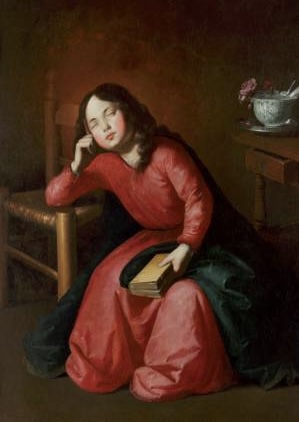
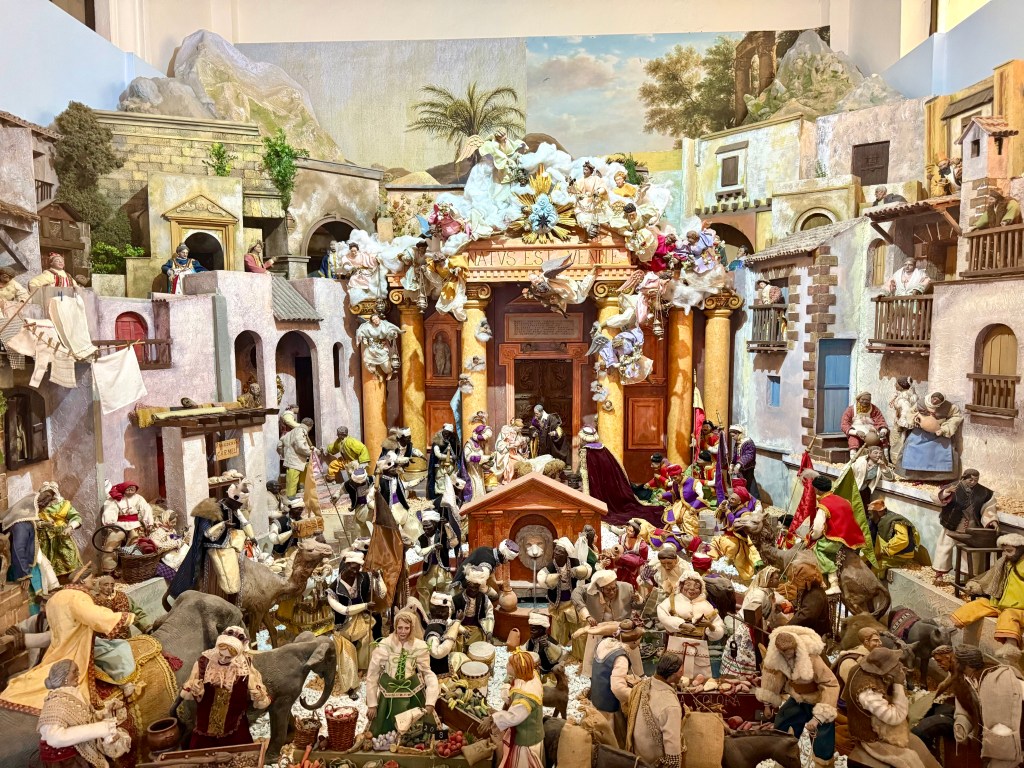
    The side rooms are intimate as well and worth visiting. In the sacristy, where photos aren’t allowed, hangs Zurbarán’s Virgin as a Child, a rare and restrained depiction of Mary absorbed in her book of psalms. An extraordinarily elaborate Neapolitan-style nativity scene sits in another side room.

    After visiting the cathedral, I wandered Jerez for a while. It has more grit than Seville and isn’t as colorful; historic buildings and ungainly modern ones sit side by side. The locals are kind. I stopped into a neighborhood café for a coffee and felt a bit out of place, but they seemed happy that I was willing to speak Spanish.

    I regret not having time to see Jerez’s Alcázar or the monastery on the city’s outskirts, which dates to 1475. Next time.

    Neapolitan-style nativity scene
  • Getting Lost in the Tiles at the Casa de Pilatos

    Getting Lost in the Tiles at the Casa de Pilatos

    Seville is home to a remarkable number of casa palacios—grand urban mansions built around traditional Andalusian elements like graceful arched courtyards.

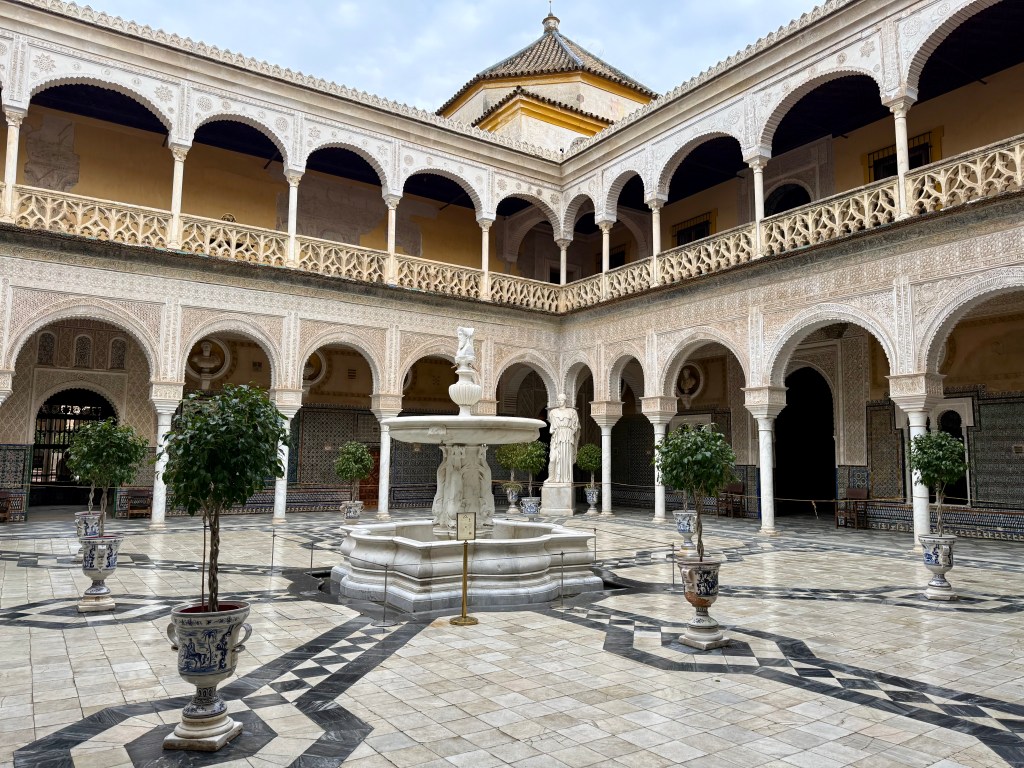
    The Casa de Pilatos, the historic residence of the Dukes of Medinaceli, is an old one. Construction began in 1483, during the transition from late Gothic to early Renaissance Spain, and the palace reflects that moment—a richly layered blend of styles augmented by centuries of additions and restorations.

    The central courtyard is breathtaking. Four classical statues—Roman copies of Greek originals—stand at its corners, their pale stone figures poised amid a riot of tiles, arches, and light. Sunlight filters down into the space, catching on the statues and the fountain at its center.

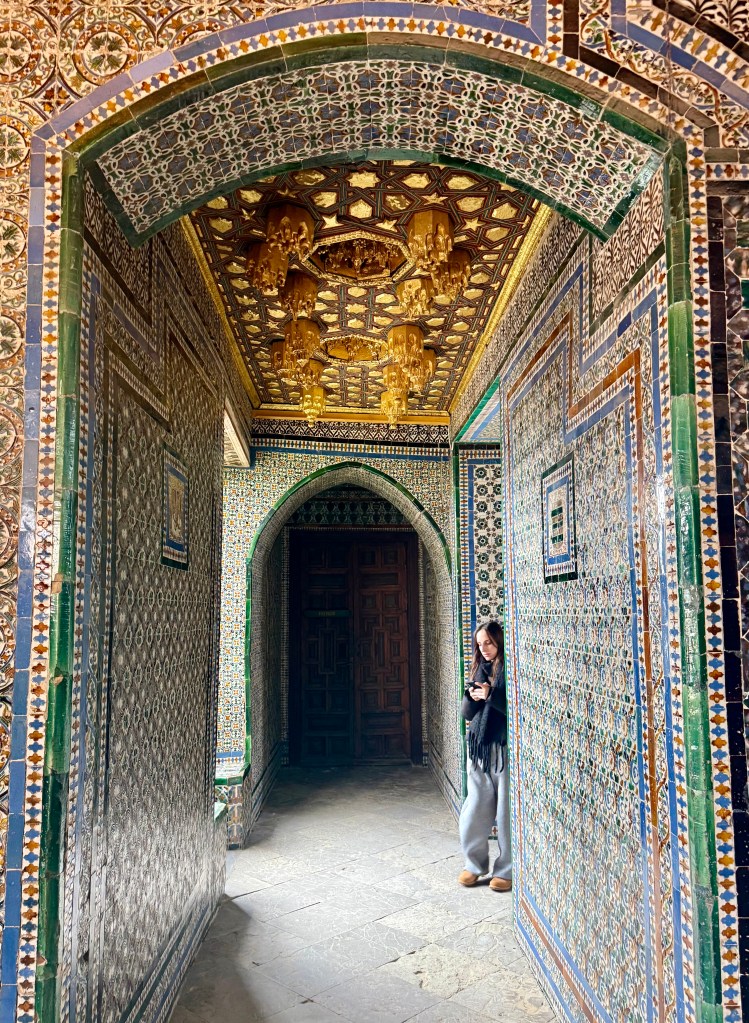
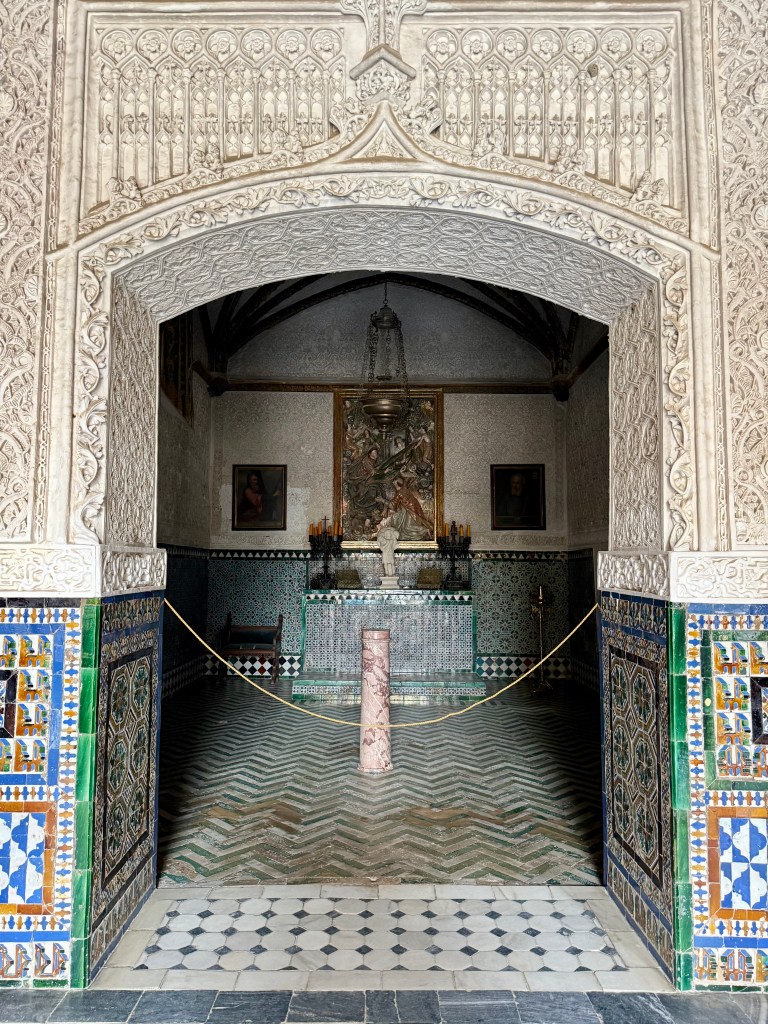
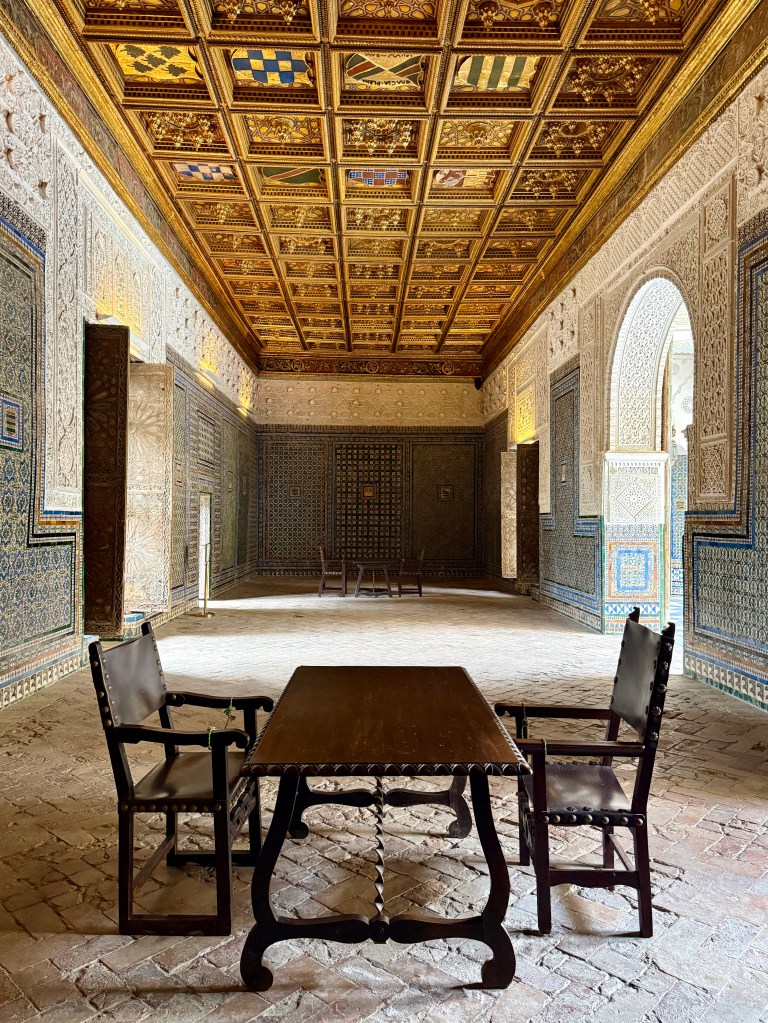
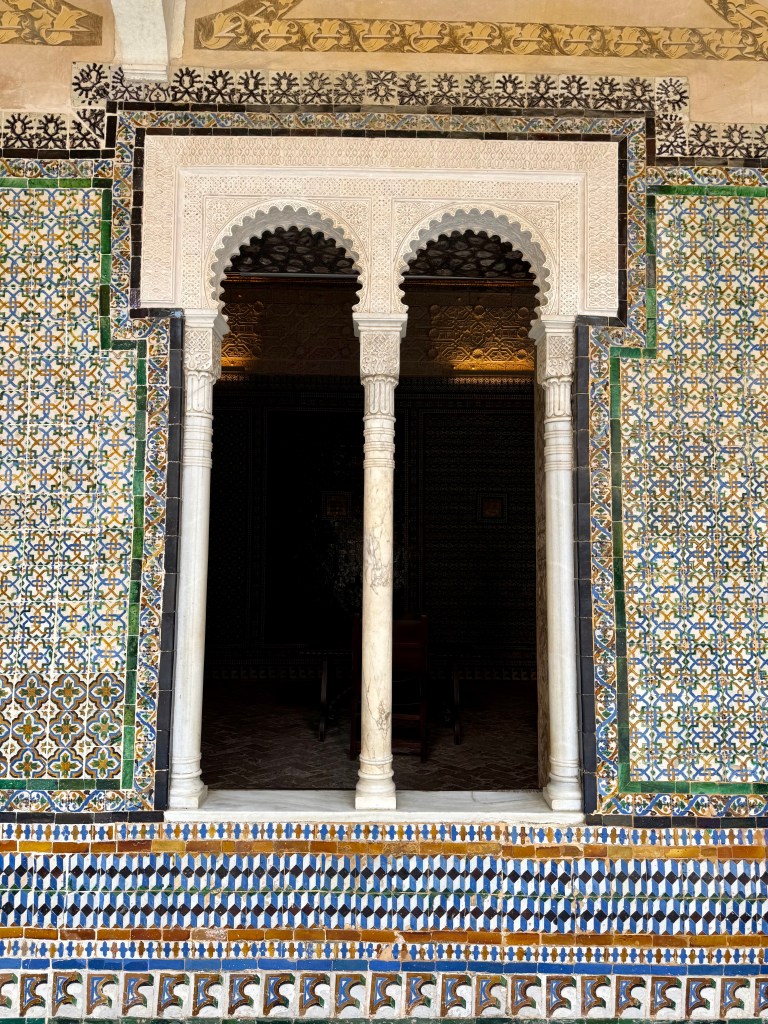
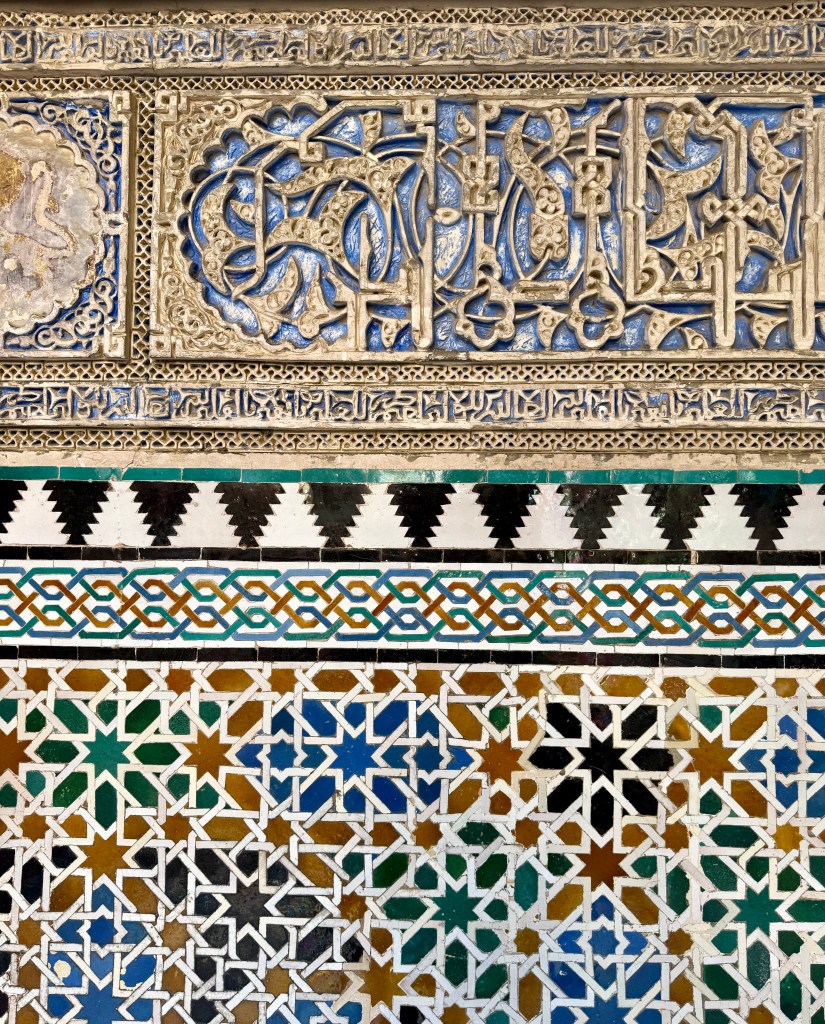
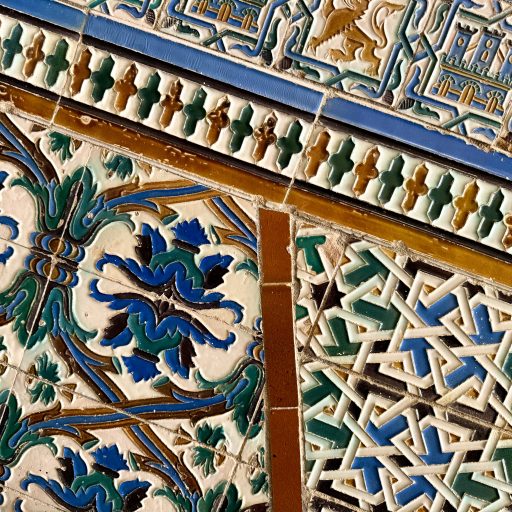
    The true highlight—for me, at least—is the intricate tilework (azulejos). Beyond their beauty, the tiles serve a practical purpose, helping to keep the spaces cool during Seville’s scorching summers, when average high temperatures hover around 100°F. The audio guide is exhaustive (and, at times, exhausting), offering a detailed history of each room, artwork, and renovation campaign. I mostly tuned it out, letting my attention drift instead to the tiles lining galleries, walls, and arches, where I got lost in the patterns.

    Curious to see more, I booked a tour of the palace’s upper apartments, which I had never visited before. With apologies to the House of Medinaceli, I found these rooms surprisingly drab, lacking the color and vitality that so animate the ones below. Mediocre paintings hang on otherwise bare white walls. The most compelling space was a large room once adorned with frescoes depicting the four seasons—almost entirely lost after lime was used to disinfect the room during an outbreak of plague.

    Before leaving, I spent a few more minutes taking in the tiles. It’s easy to understand why filmmakers have been drawn to the building: its interiors have appeared in films like Lawrence of Arabia and Kingdom of Heaven, standing in for places far removed from Seville.

  • Rediscovering the Magic of the Alcázar

    Rediscovering the Magic of the Alcázar

    Seville’s Alcázar is easily my favorite place in this city. I finally visited it again yesterday, holding off so I could include a stop at the royal apartments, which required booking a special tour.

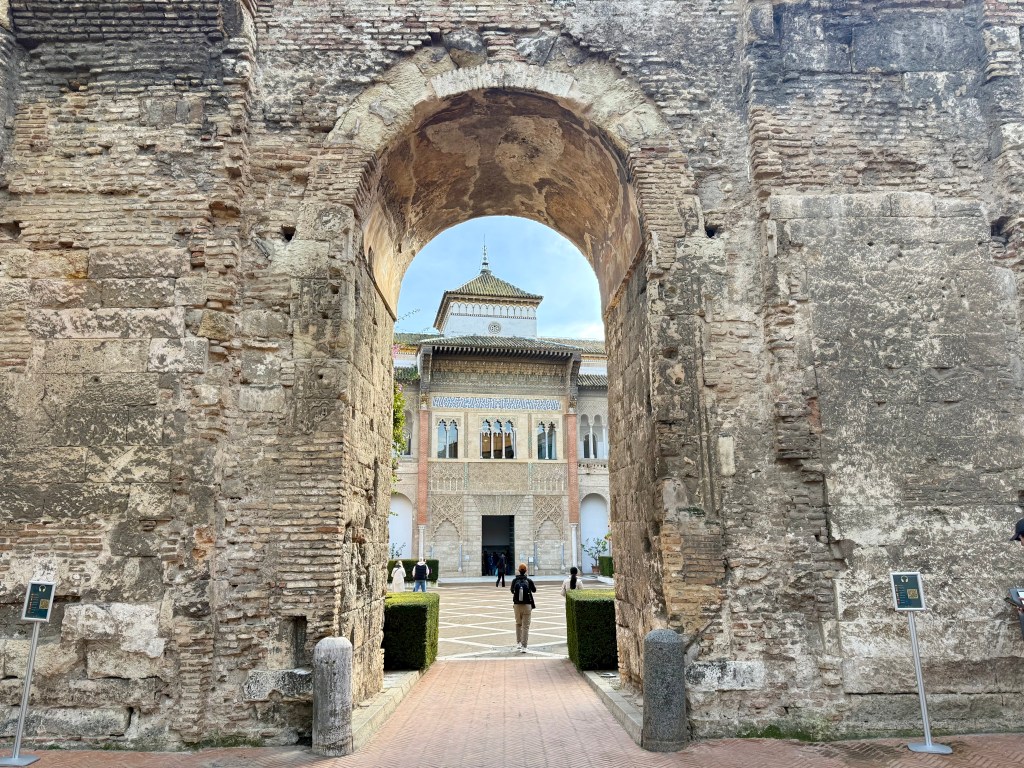
    The cathedral may be the city’s most massive monument, but the Alcázar is the site that, in my mind, best captures Seville’s layered history. The building’s origins stretch back to the tenth century, After the Christian reconquest of Seville in 1248, successive rulers chose not to destroy the complex but instead to expand and adapt it, building directly atop earlier Islamic foundations.

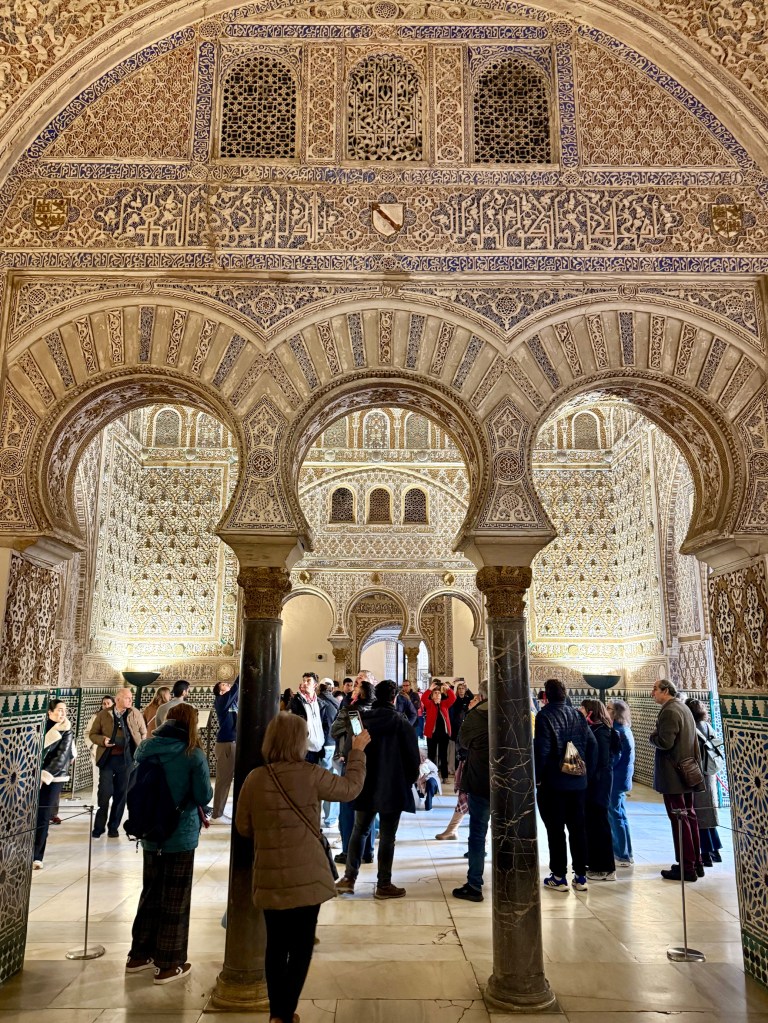
    The Alcázar, as it exists today, reflects the Mudéjar style—a Muslim architectural language adapted to Christian tastes. This was less an aesthetic choice than a practical one: Muslim artisans remained in Seville after Christian rule was reestablished, and their techniques, materials, and visual vocabulary continued to shape royal architecture.

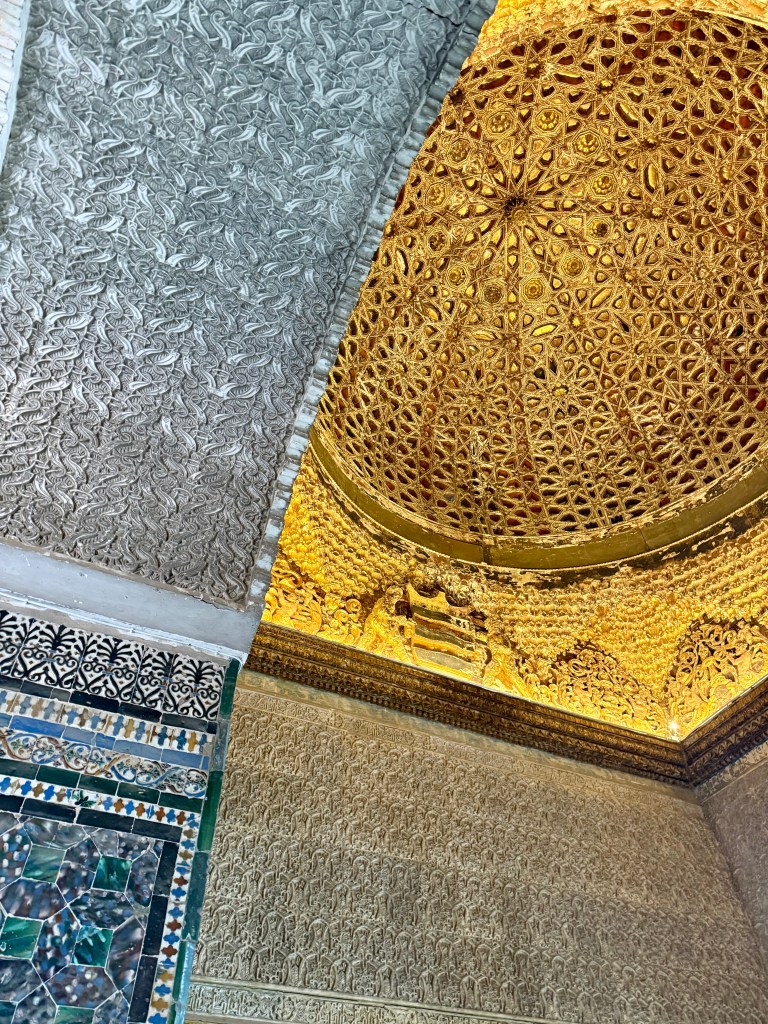
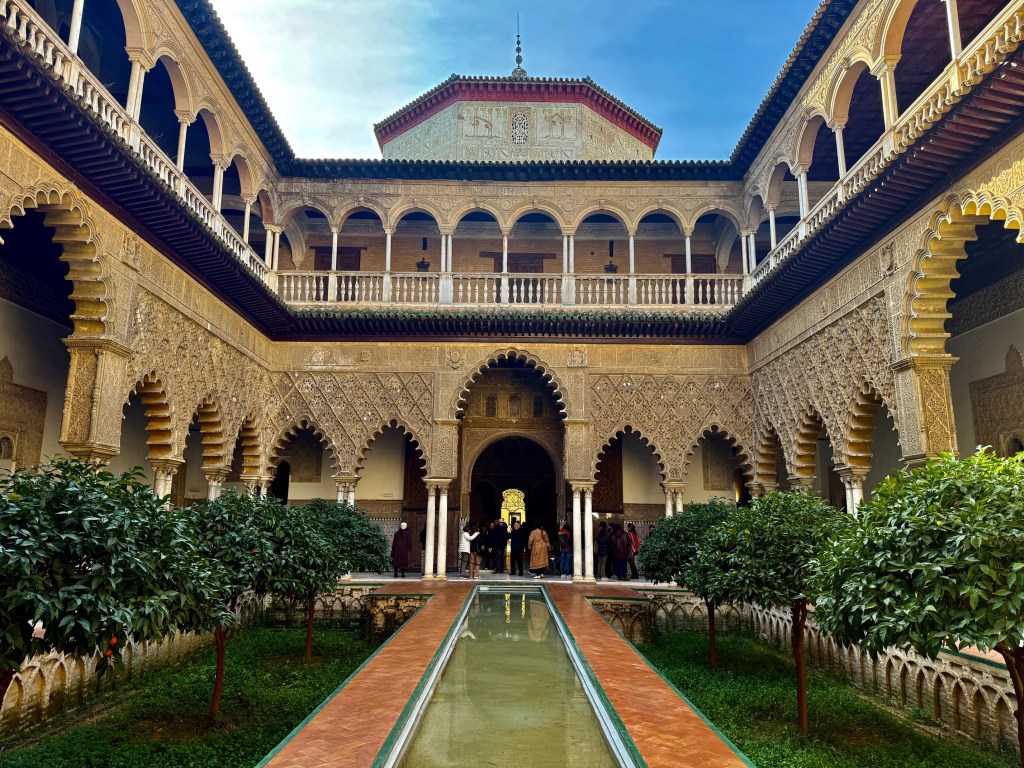
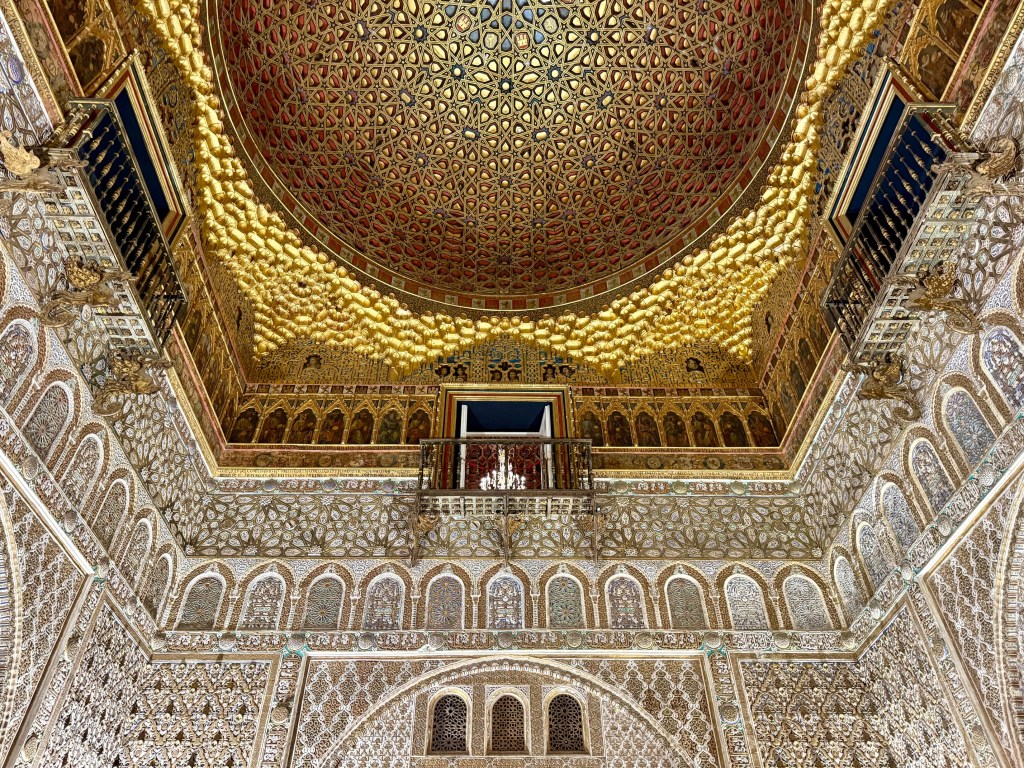
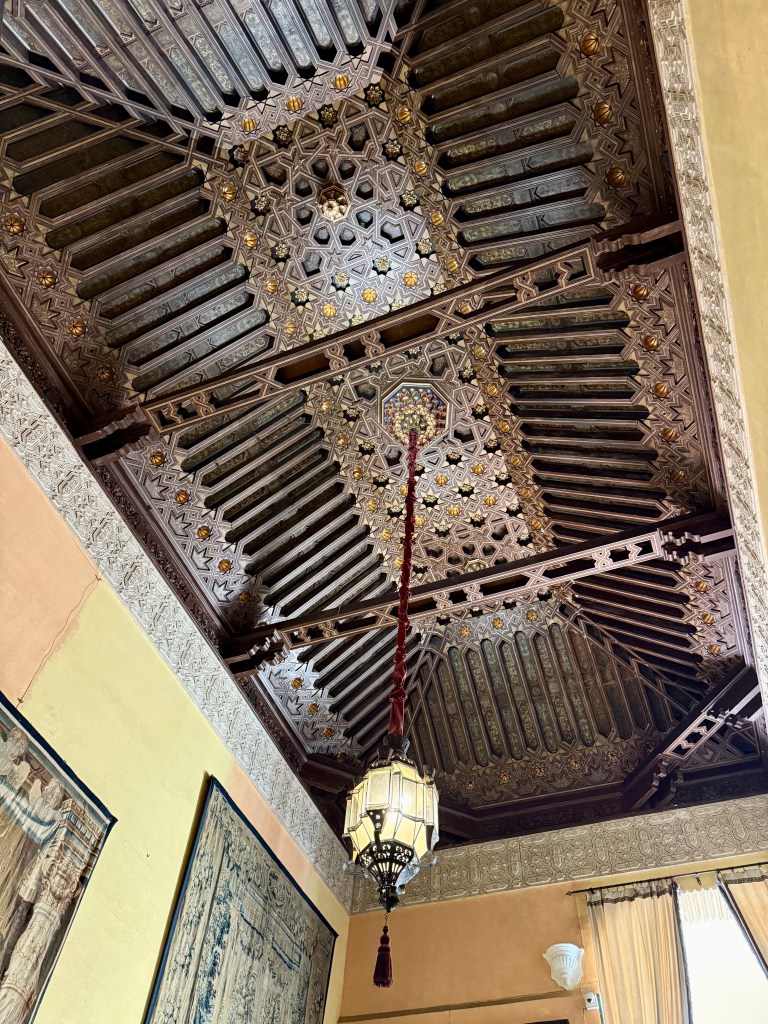
    Unlike the cathedral, the Alcázar is best appreciated for its intricacy rather than its scale. Delicate stuccowork, horseshoe arches, glazed tilework, and carved wooden ceilings reward slow looking. Its interwoven indoor and outdoor spaces invite wandering, lingering in the shade, and noticing how light moves across patterned surfaces. I could sit in the Patio de las Doncellas (Courtyard of the Maidens) for hours. The star-patterned, domed wooden ceiling of the Sala de Embajadores (Ambassadors’ Room) remains a marvel.

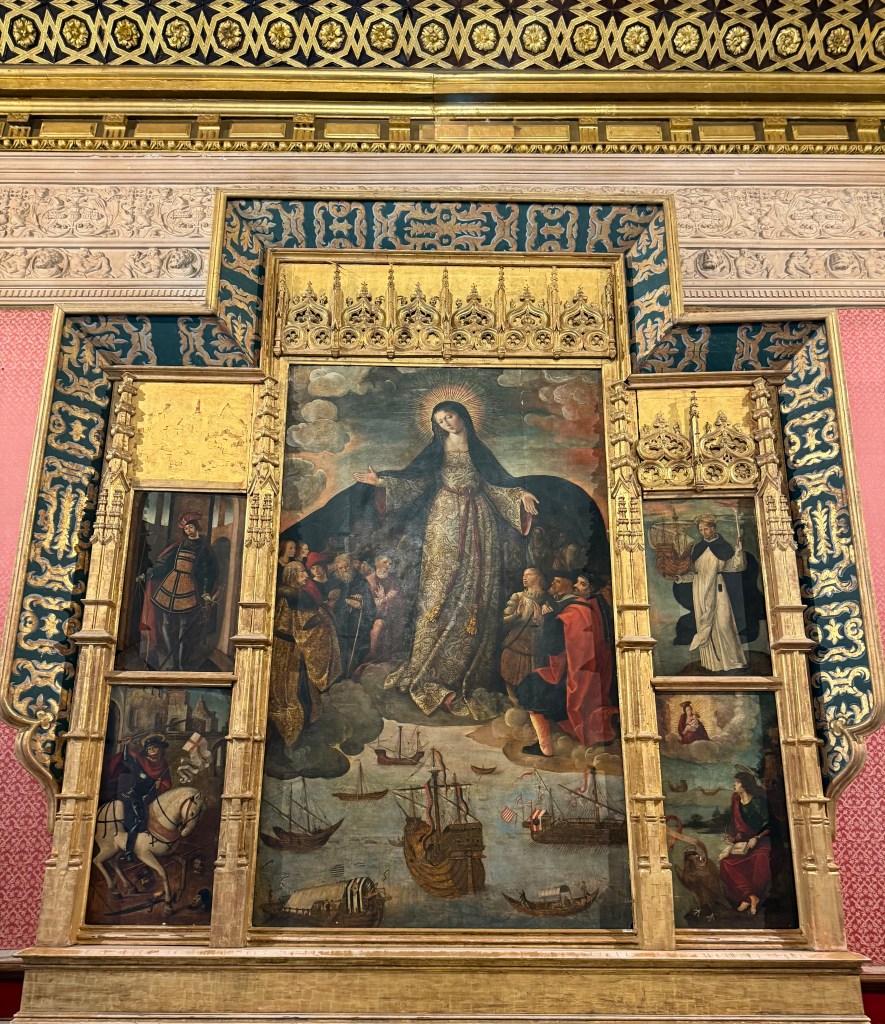
    One painting in the opening galleries that I return to again and again is The Virgin of the Navigators, in which Mary extends her protection over Spanish explorers as well as the Indigenous peoples of the Americas. It’s often cited as the earliest European depiction of the Americas in painting, but what that encounter wrought—plague and other forms of devastation—remains hard to stomach.

    The Alcázar also remains an active royal residence—the oldest in Europe still in use—and serves as the home of the king and queen of Spain when they are in Seville. Touring the royal apartments was fascinating, though photography was not allowed. Within five minutes of the tour, someone had already sat down in one of the living room chairs. The guard accompanying us was not amused.

  • Church Fatigue and San Salvador

    Church Fatigue and San Salvador

    Have you heard the term “church fatigue”? No? Maybe it’s a phrase my husband, Donald, and I coined during our travels. In many European cities, there’s a long checklist of churches you’re told you should see—this one for a Caravaggio, that one for an El Greco, and yet another for its groundbreaking architecture.

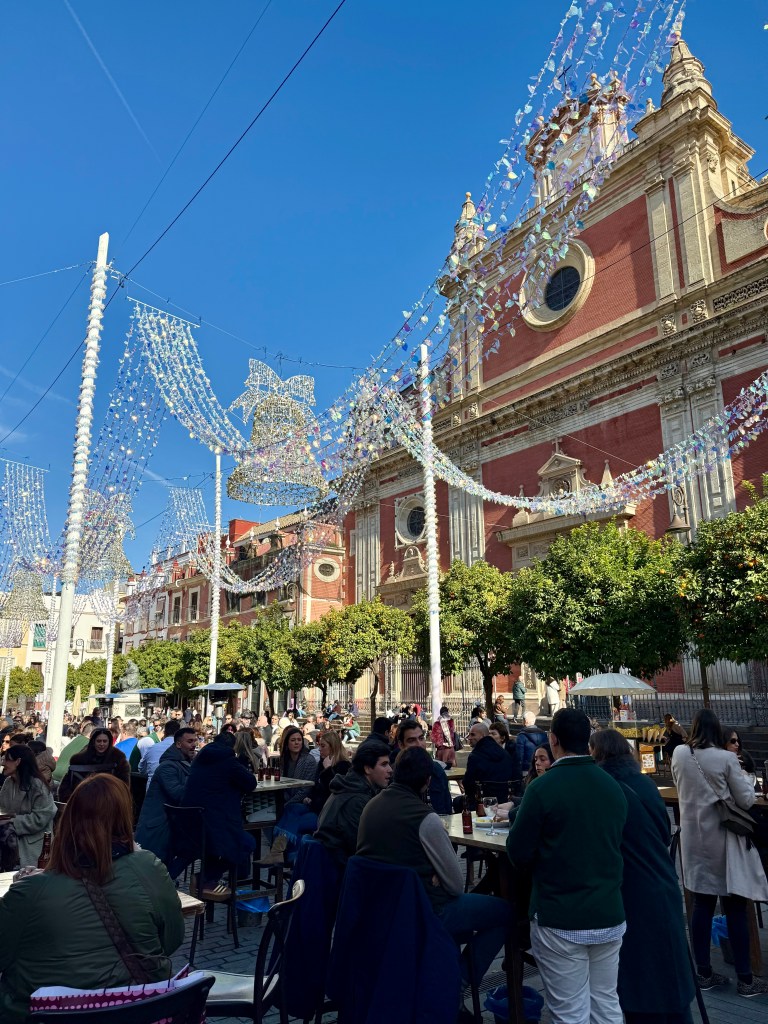
    I was feeling a particularly strong case of church fatigue today while visiting the Church of San Salvador. It’s the second-largest church in Seville and an important one, but after spending hours in the city’s massive cathedral a couple of days earlier, I could have used a longer break from sacred spaces. (I apologize for not being at my best, San Salvador.)

    Like many Catholic churches in Seville, San Salvador was built atop a former mosque after Muslims were expelled from the city in 1248. (One of my favorite history books, The Ornament of the World, by the late scholar María Rosa Menocal, describes how Muslims, Christians, and Jews once created a culture of tolerance on the Iberian Peninsula.)

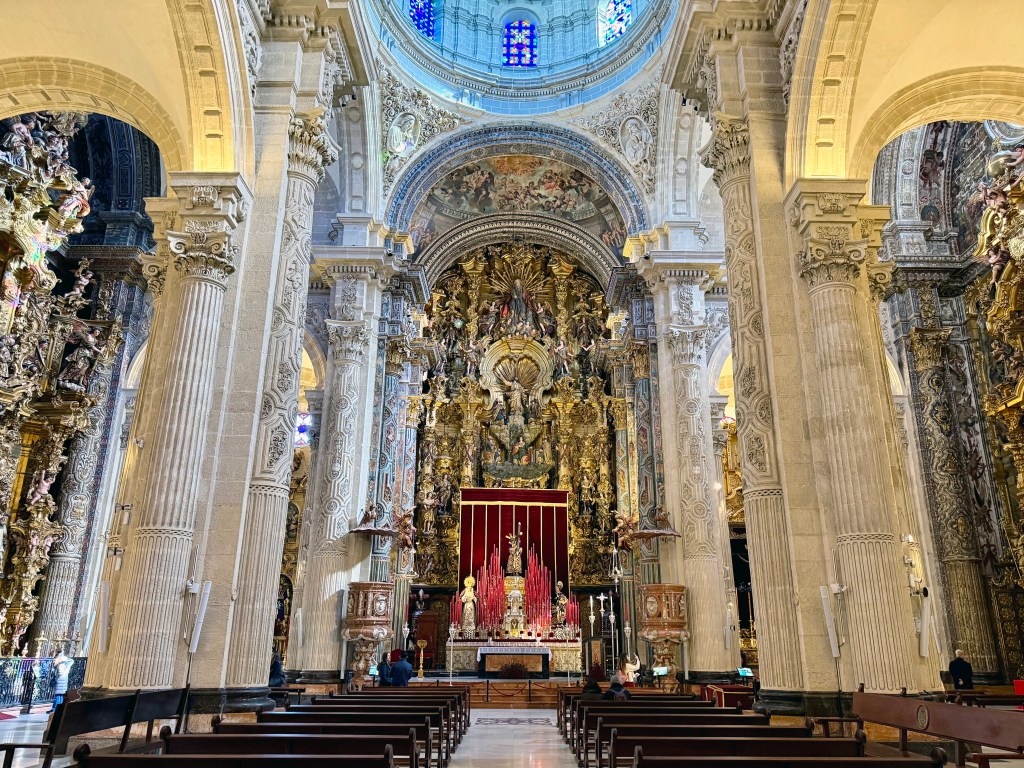
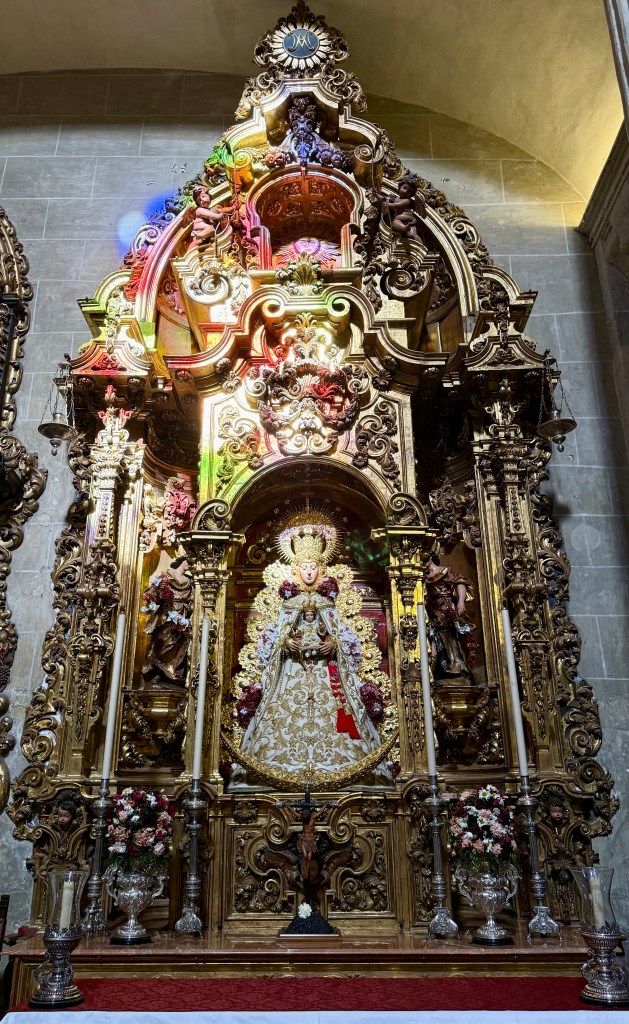
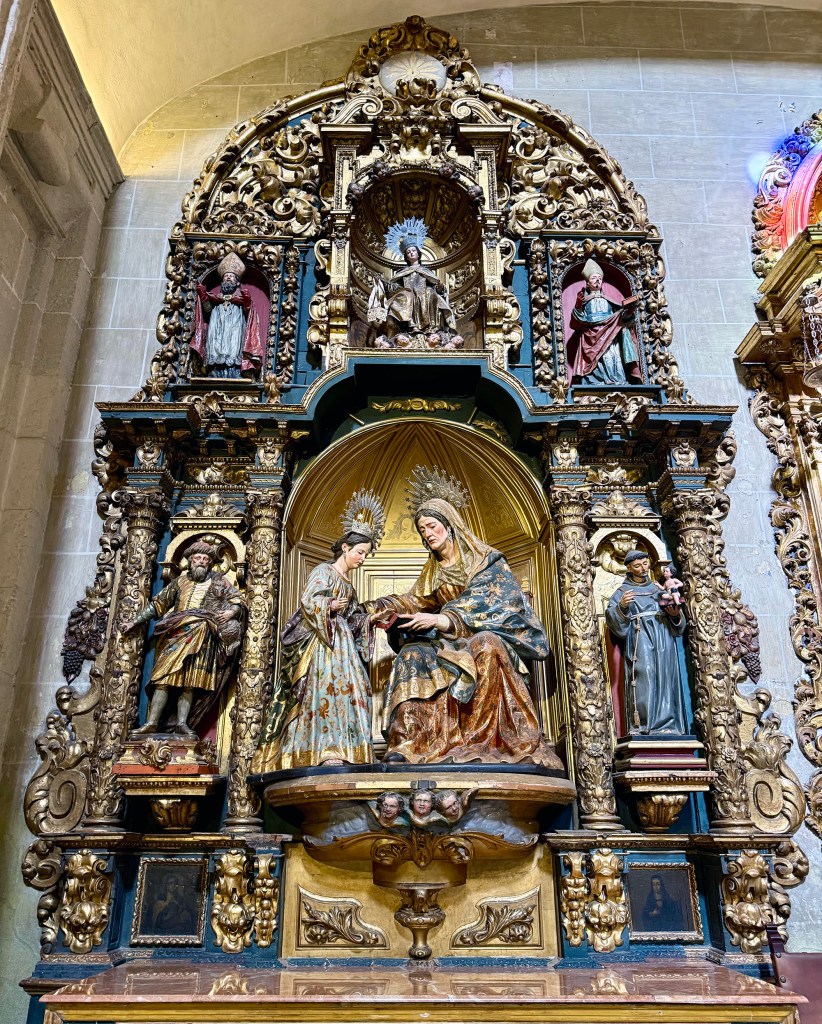
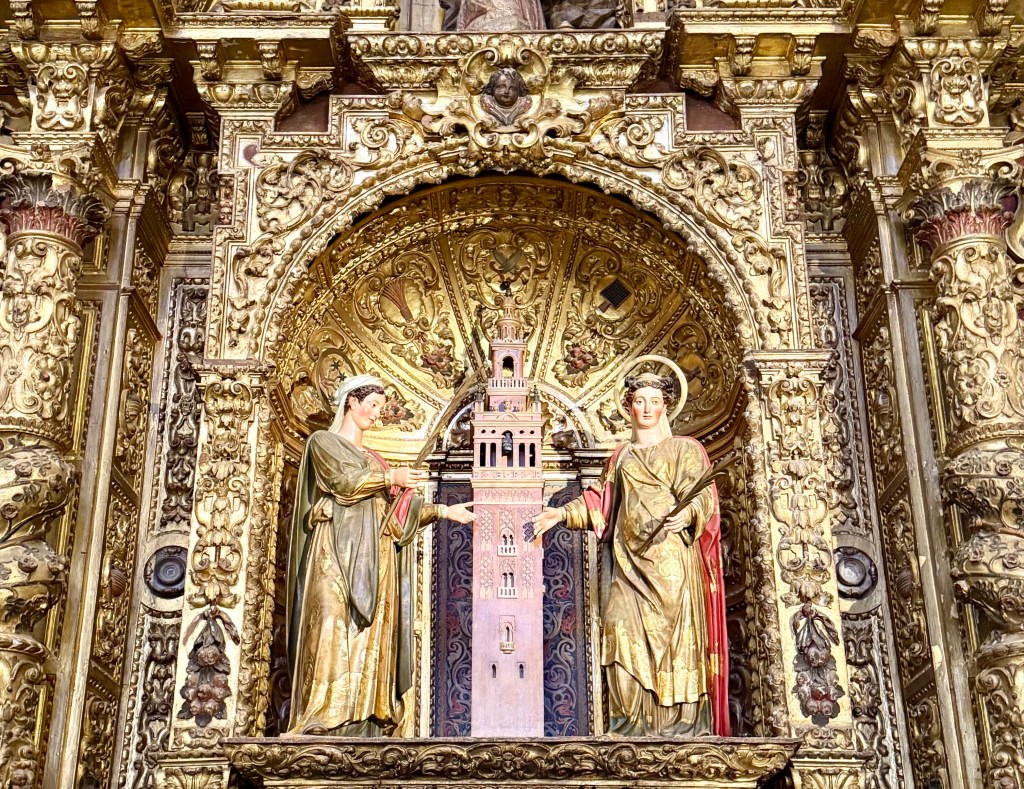
    It’s a church worth seeing, though. The interior is organized around a wide nave with side chapels lined with gilded altarpieces. At one point, light from a high stained-glass window fell across the altarpiece of Our Lady of El Rocío; even church staff paused to take photos. The church also houses important works by Juan Martínez Montañés, one of Spain’s most celebrated Baroque sculptors, including figures that parade through the streets during Seville’s famous Holy Week processions.

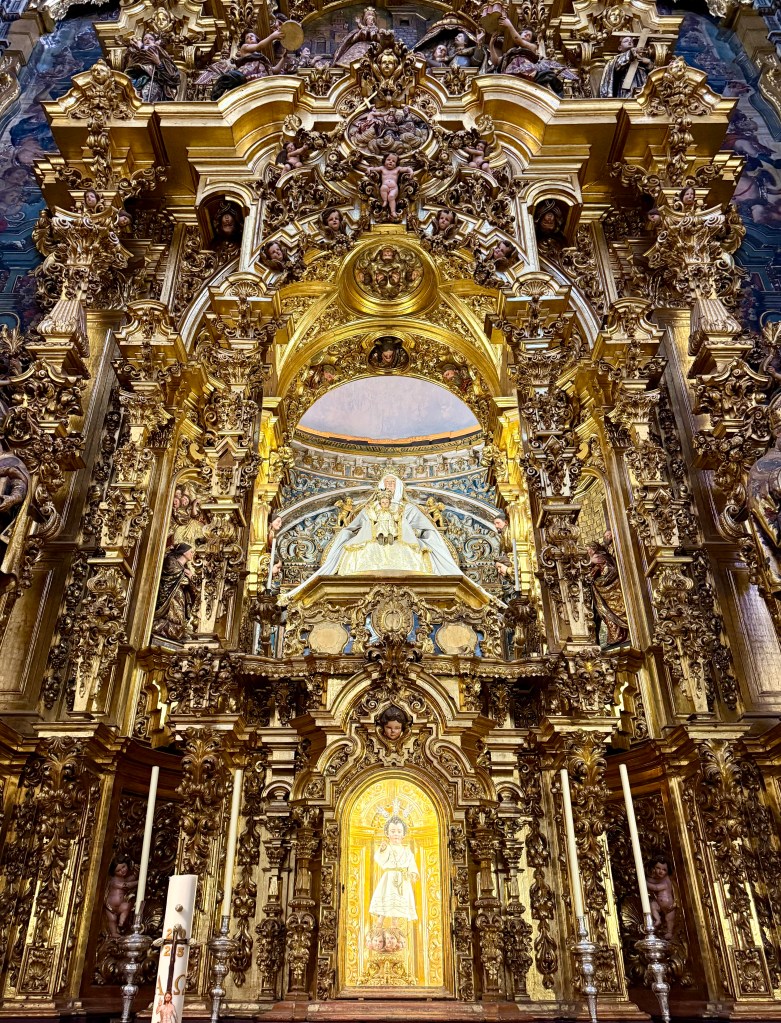
    The main altarpiece, massive and densely packed with sculpted figures, anchors the space. The church claims it as one of the last great Baroque altarpieces.

    Outside this quiet space, the plaza was crowded and noisy, full of people enjoying the weekend. I snapped out of my fatigue and grabbed a quick beer amid the crowd before heading back to my apartment.

  • The Quiet Archives of the Spanish Empire

    The Quiet Archives of the Spanish Empire

    I’ve now learned how to avoid the weekend crowds in Seville—by seeking out the lesser-known places. After grabbing my customary morning coffee at Moin Café, I set out to explore two such sites: the Church of San Salvador (more on that later) and the General Archive of the Indies.

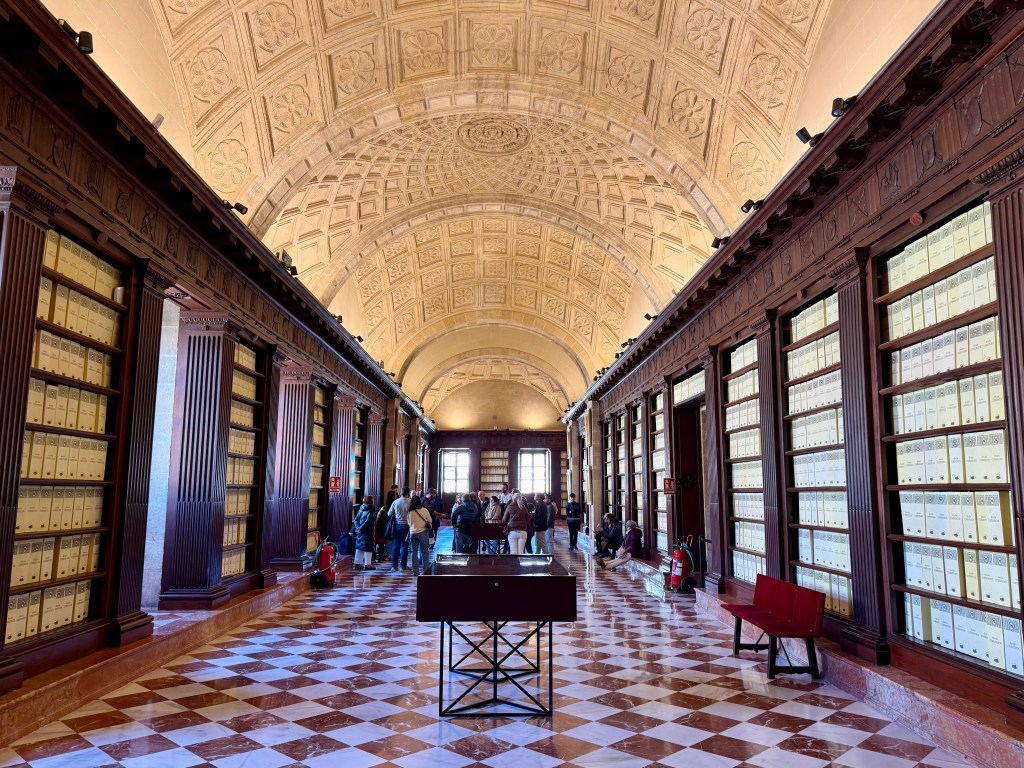
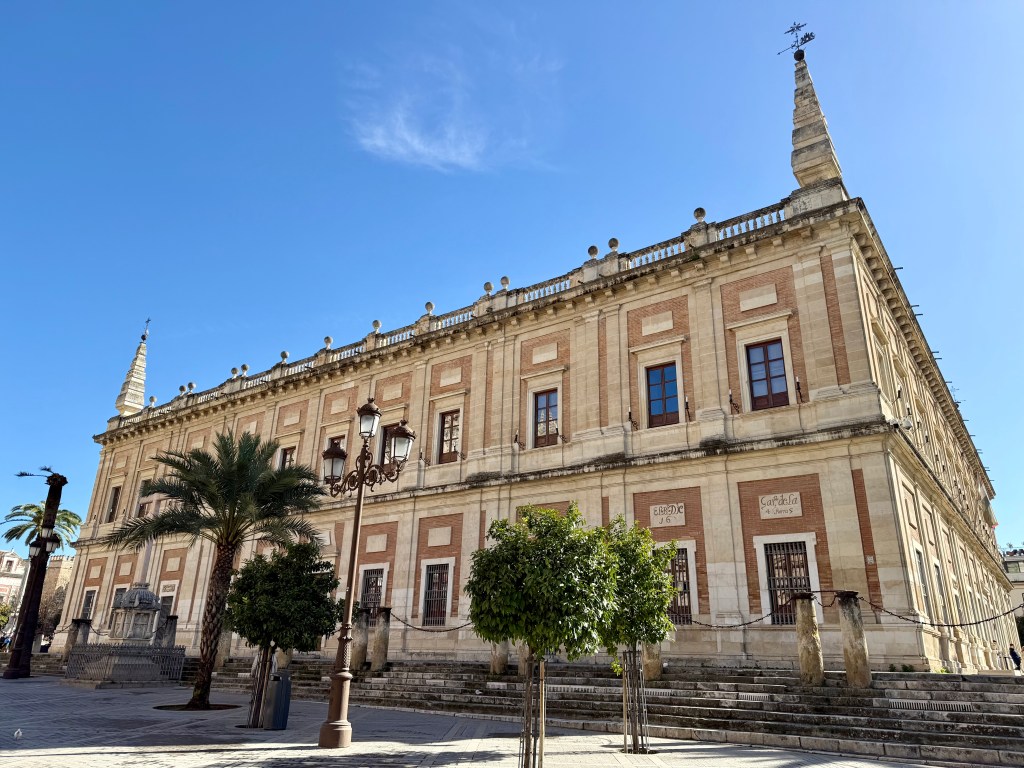
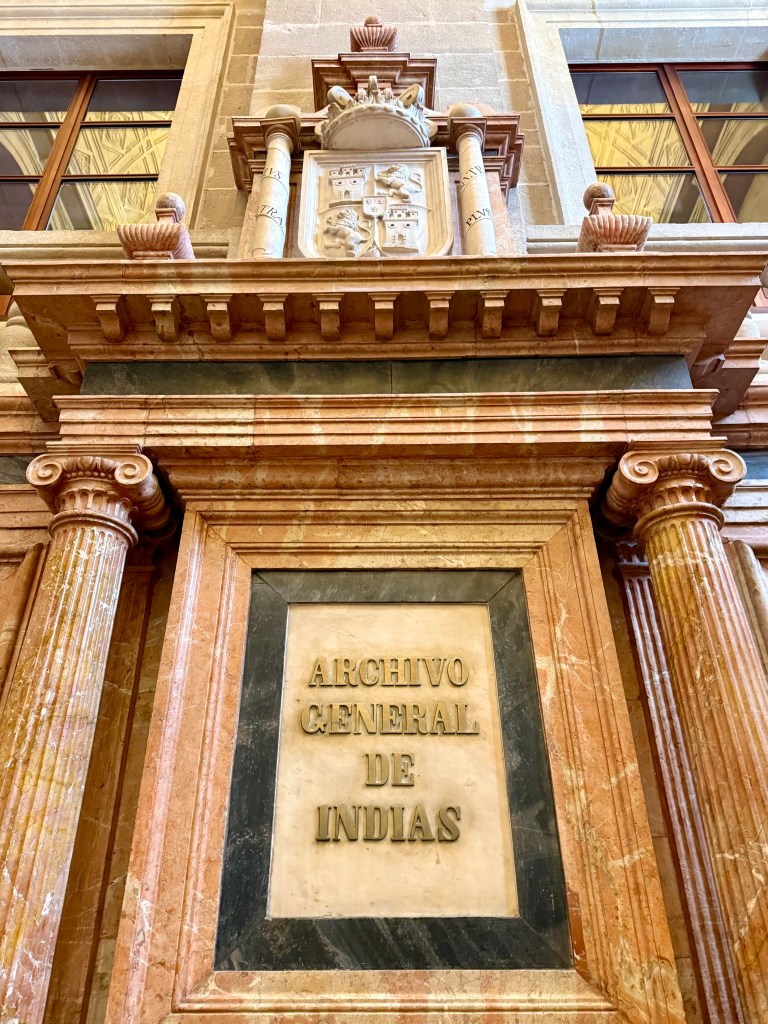
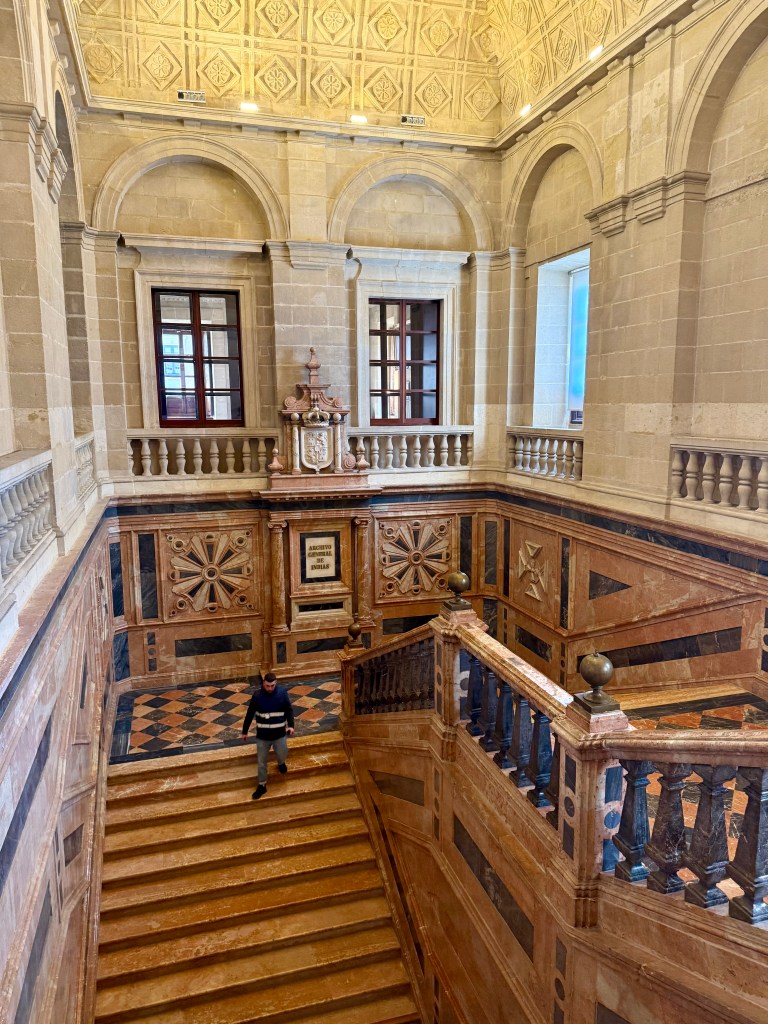
    Though largely off the tourist track, the General Archive of the Indies is one of Seville’s most significant historic institutions—and one of its few UNESCO World Heritage sites. It sits quietly beside the city’s cathedral and preserves the documentary record of Spain’s global empire from the late fifteenth through the nineteenth centuries. That story begins nearby: Spain’s involvement in the so-called “New World” took shape in this region of Andalusia, where Christopher Columbus set sail on his first voyage across the Atlantic, beginning centuries of expansion and extraction.

    Established in 1785 under King Charles III, the archive brought together millions of pages that had previously been scattered across Spain—correspondence, decrees, maps, and financial ledgers that once governed an empire stretching across oceans and continents.

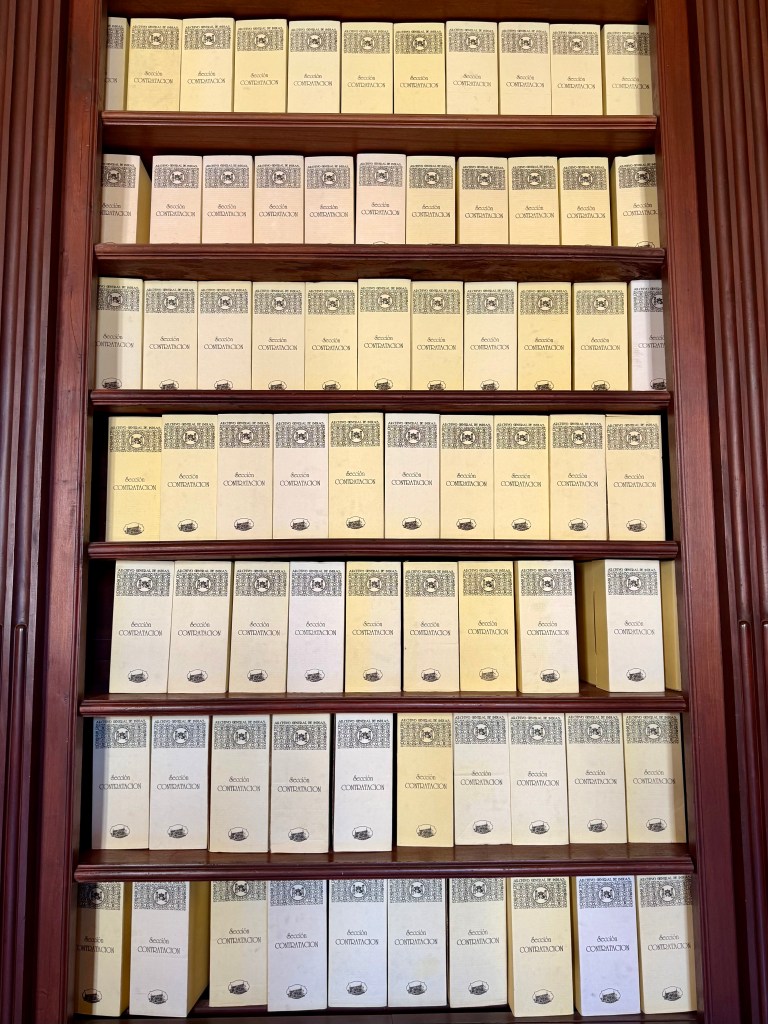
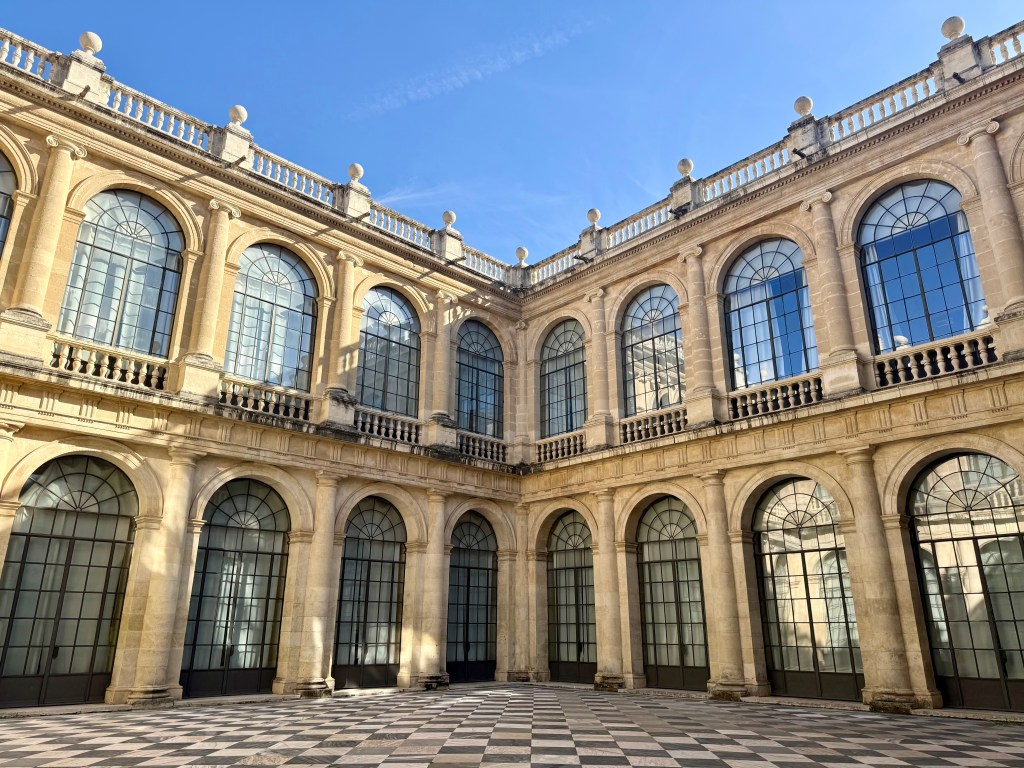
    These documents are housed in what was once the Casa Lonja de Mercaderes, a Renaissance structure designed by Juan de Herrera. The pages, carefully bound, line the walls, their spines indicating categories of trade and administration. The building itself—austere and meticulously maintained—feels more monumental than the artworks and artifacts on display, which include portraits and busts of Columbus, Hernán Cortés, and various other power players associated with the age.

    The real experience lies in taking in the sheer space of the archives—the weight of history on shelves carefully guarded behind glass, and the quiet reminder of how much power Spain once held, now preserved in near silence.

  • Palacio de las Dueñas

    Palacio de las Dueñas

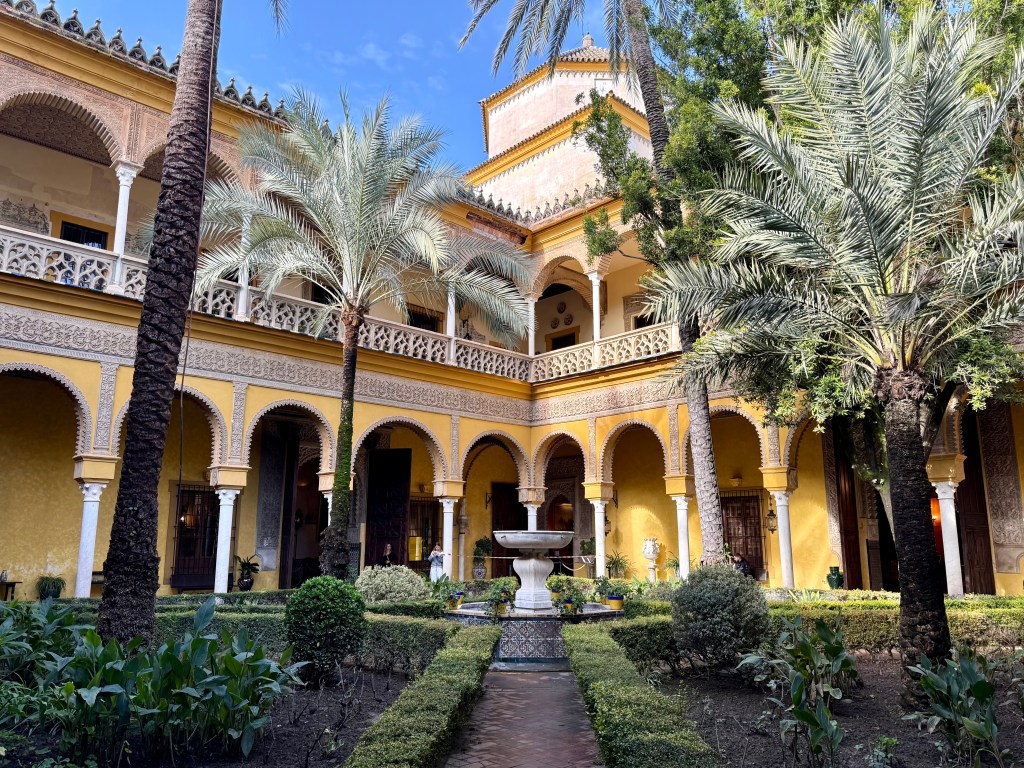
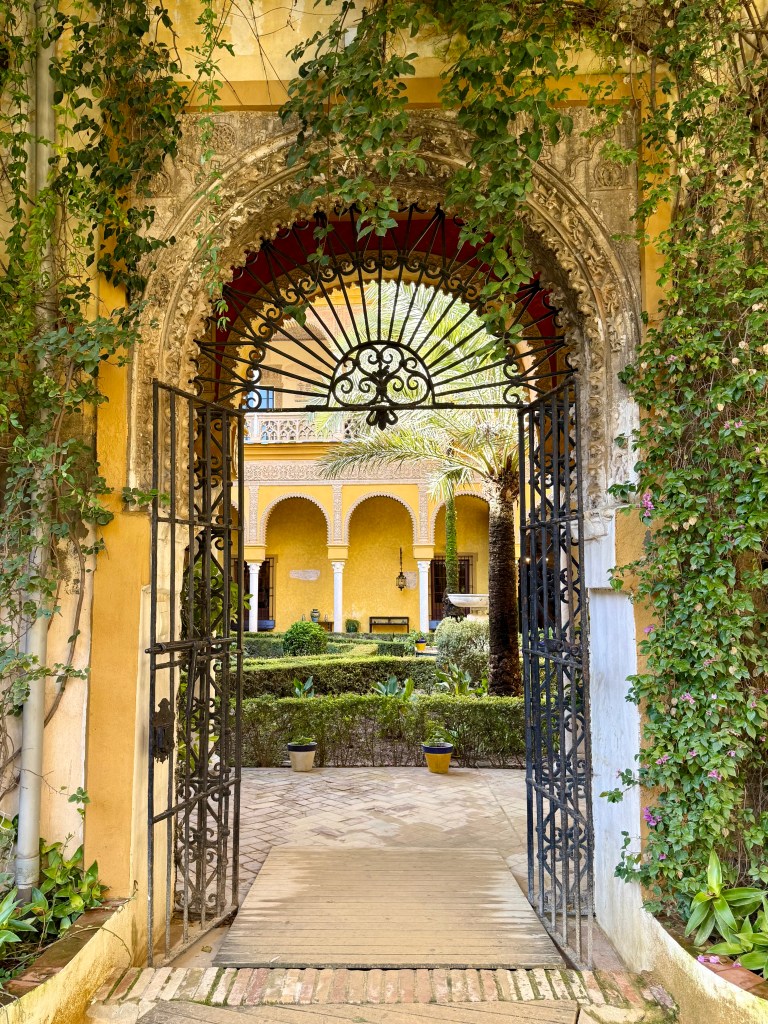
    Even on my fourth visit to Seville, I’m still discovering new and remarkable things. Today I spent a couple of hours somewhere I’d never been: the Palacio de las Dueñas, the Andalusian residence of the House of Alba.

    I’m not sure how this palace, built in the late fifteenth century, escaped my radar, or why it seems to have escaped everyone else’s. On a winter afternoon when Seville otherwise felt crowded, there were only about thirty visitors wandering the grounds.

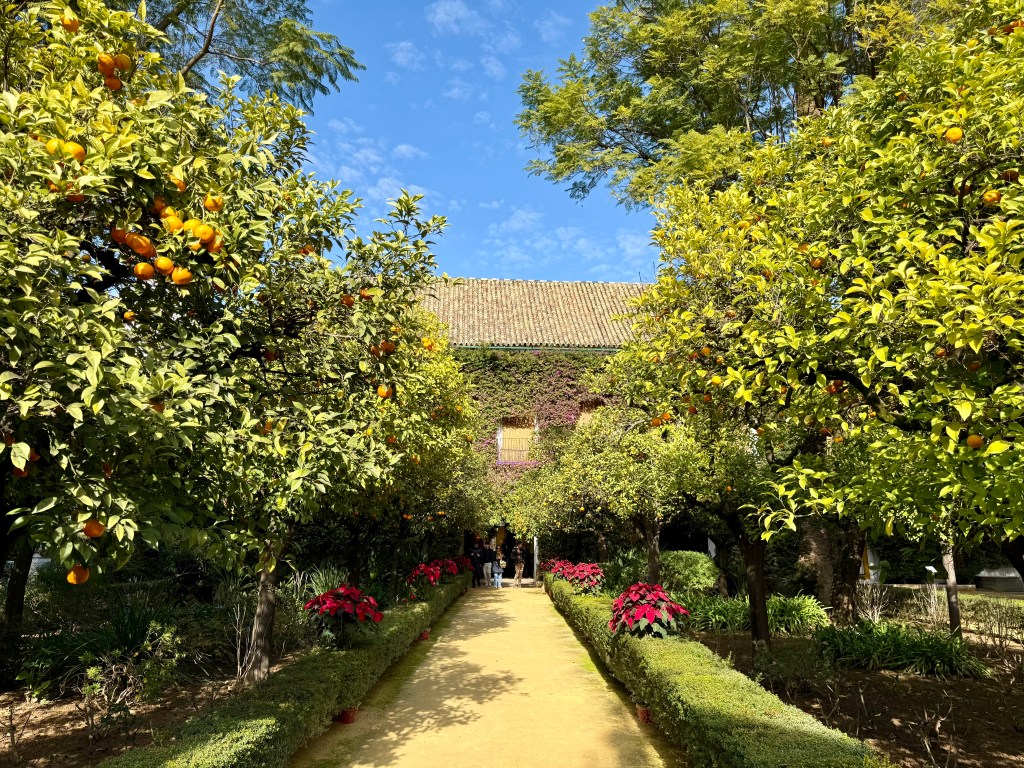
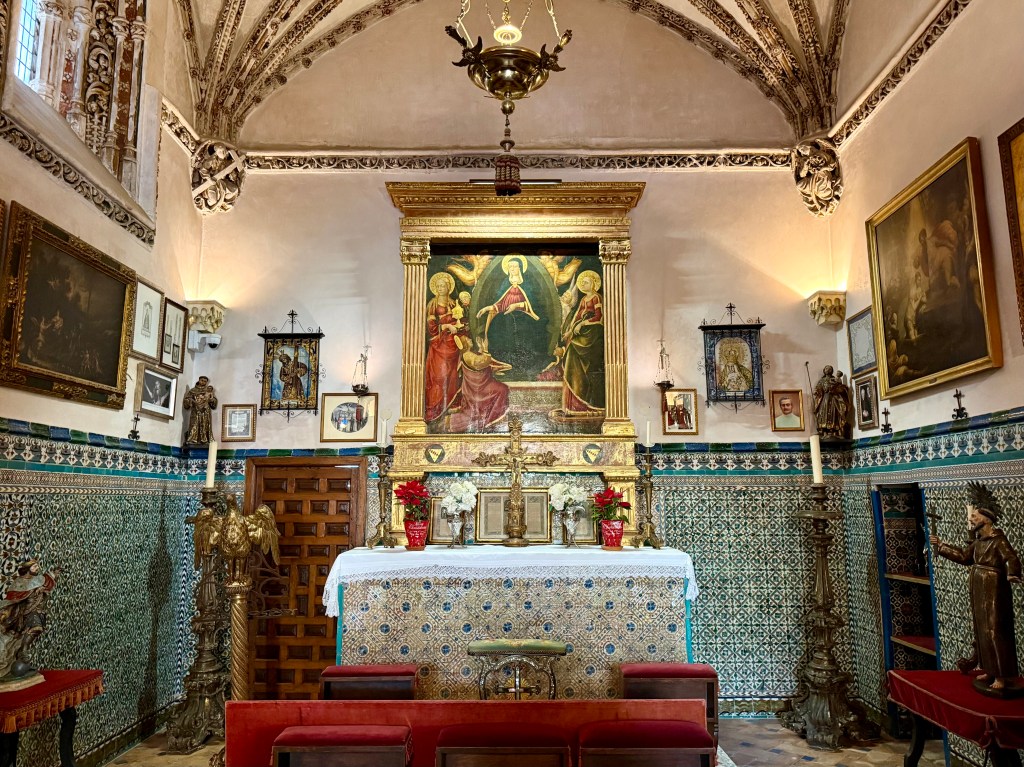
    The gardens are striking, as is the architecture. Elements of Mudéjar—a style developed by Muslim craftsmen working under Christian rule, characterized by patterning and an emphasis on surface rather than imagery—are woven throughout the complex. A geometric wooden ceiling above the main staircase, tilework lining the halls, and a series of spacious courtyards organized around fountains.

    The history of the House of Alba is its own kind of spectacle. The current head of the house, Carlos Fitz-James Stuart, 19th Duke of Alba, lives a relatively private life. His mother, Cayetana Fitz-James Stuart, 18th Duchess of Alba, did not. Described as an “unconventional aristocrat” in her New York Times obituary, she was recognized by Guinness World Records as the noble with the most official titles in the world—more than forty. She was a direct descendant of Mary, Queen of Scots, and a childhood playmate of Queen Elizabeth II. As the Times also notes, she also drew attention for her cosmetic surgery and her fondness for hippie-style hats and brightly flowered dresses—and she held the right to ride on horseback into Seville Cathedral. Good for her.

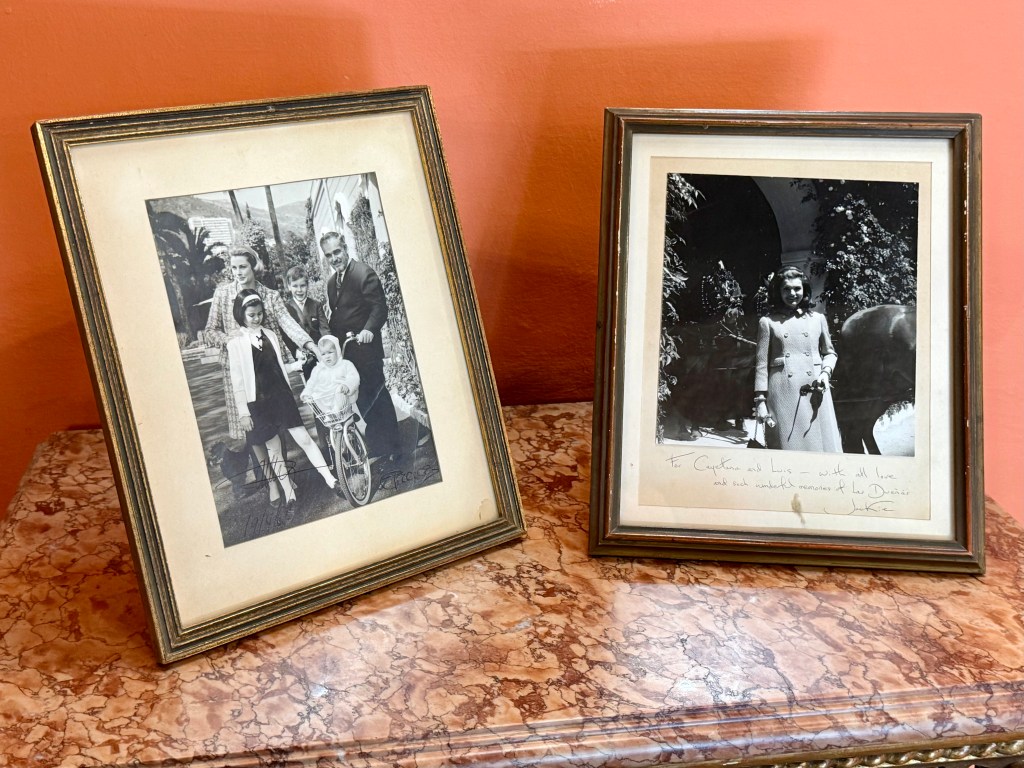
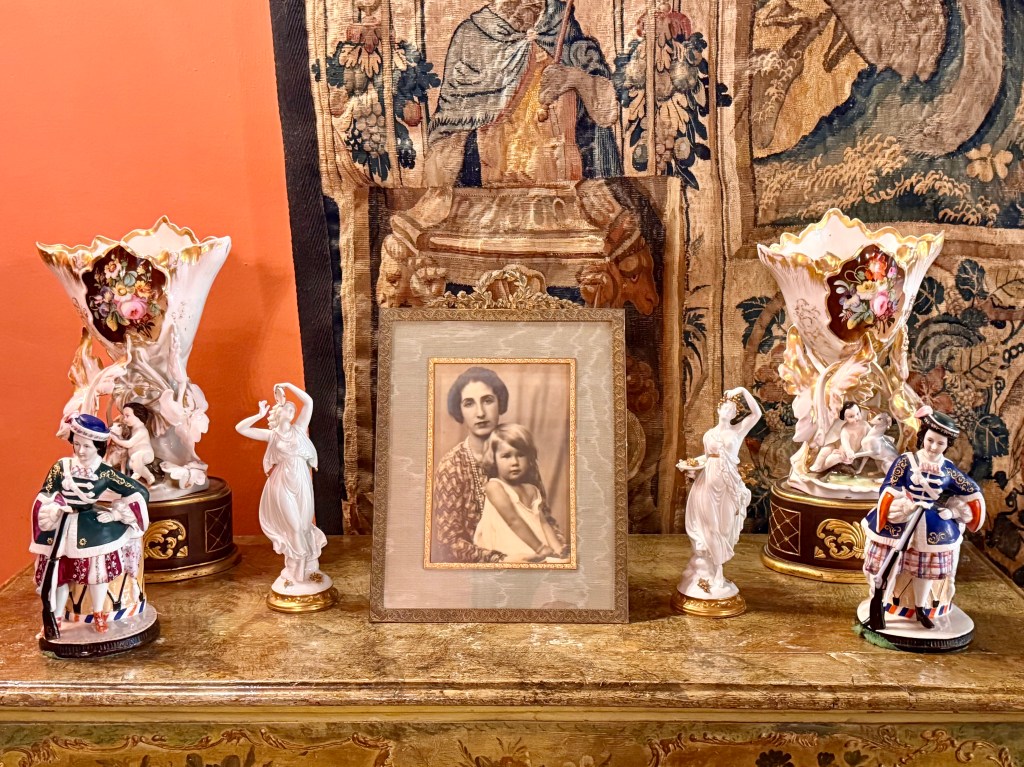
    Touching mementos appear throughout the palace. Family photographs of the House of Alba and their famous visitors—including Jackie O., Prince Rainier, and Grace Kelly—sit casually atop tables.

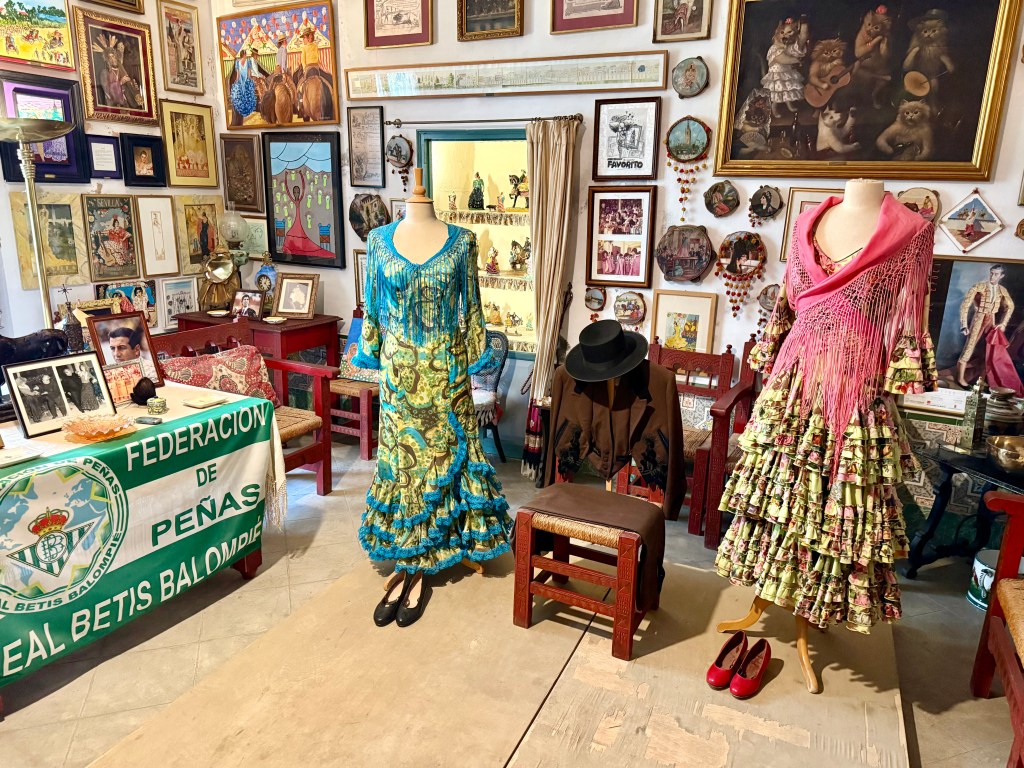
    As a dance lover, I was tickled to learn that the Duchess of Alba enjoyed flamenco and had a small stage built inside the palace for her to practice and perform. The stage, and her flamenco dresses, are on prominent display.

  • An Afternoon with Murillo

    An Afternoon with Murillo

    My first few days in Seville have been gray and rainy—an unfamiliar version of the city for me. I’ve only ever visited in high season, but even under thick clouds and steady drizzle, Seville remains warm, charming, and beautiful.

    I also completely underestimated how many tourists would be here in early January. School holidays may explain some of it. I made the mistake of not booking tickets in advance for some of my favorite sites, like the Cathedral and the Alcázar. Those will have to wait until next week.

    Fortunately, it’s almost always easy to get into Seville’s Museum of Fine Arts. Housed in the former convent of La Merced Calzada, the museum offers airy courtyards, cool stone corridors, and galleries filled with luminous paintings.

    The first galleries trace the beginnings of fine art in the city, spurred by the ambitious construction of Seville’s Cathedral—the largest Gothic cathedral in the world—in the fifteenth century. These rooms are worth lingering in, especially for early paintings by the Seville-born Diego Velázquez, but the curation is modest at best. There’s little context to connect the works on display to broader artistic trends or themes in the development of Spanish art. There’s also a striking—but completely out-of-place—portrait by El Greco of his son, presented without explanation. (El Greco spent most of his career farther north, in Toledo.)

    A visit to the museum eventually leads into what was once the monastery’s high-ceilinged church, where the scale shifts and the most arresting canvases are displayed. The paintings seem to respond to the space they now inhabit. You pass a succession of religious scenes, including one of Francisco de Zurbarán’s iconic depictions of Christ on the cross.

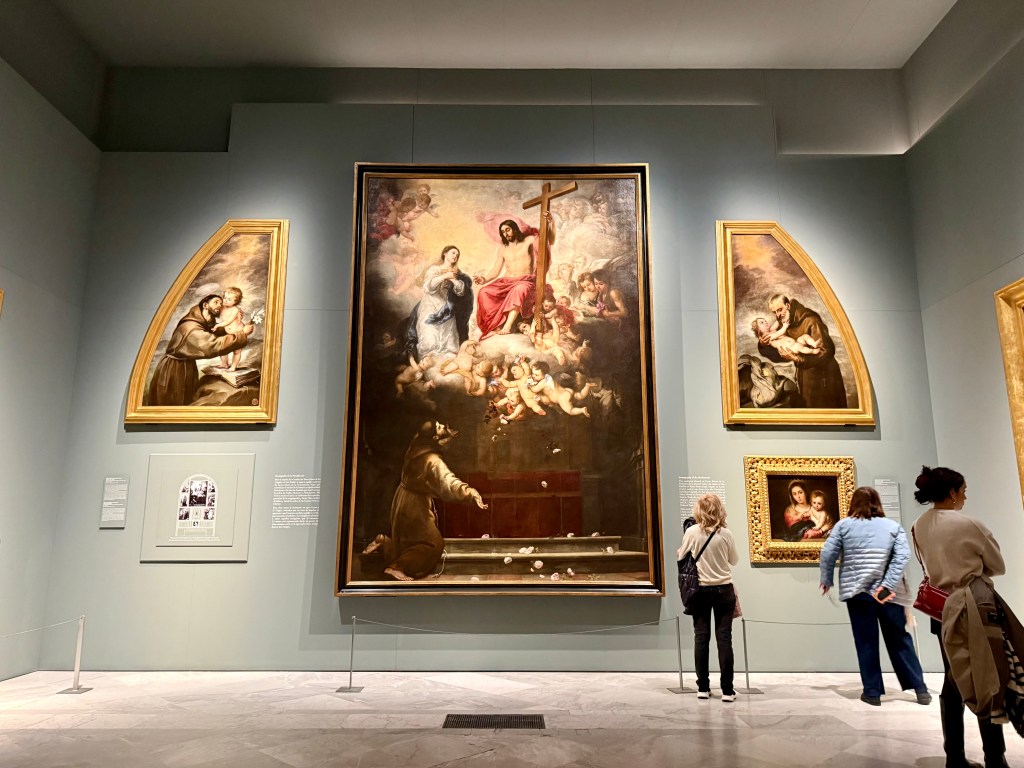
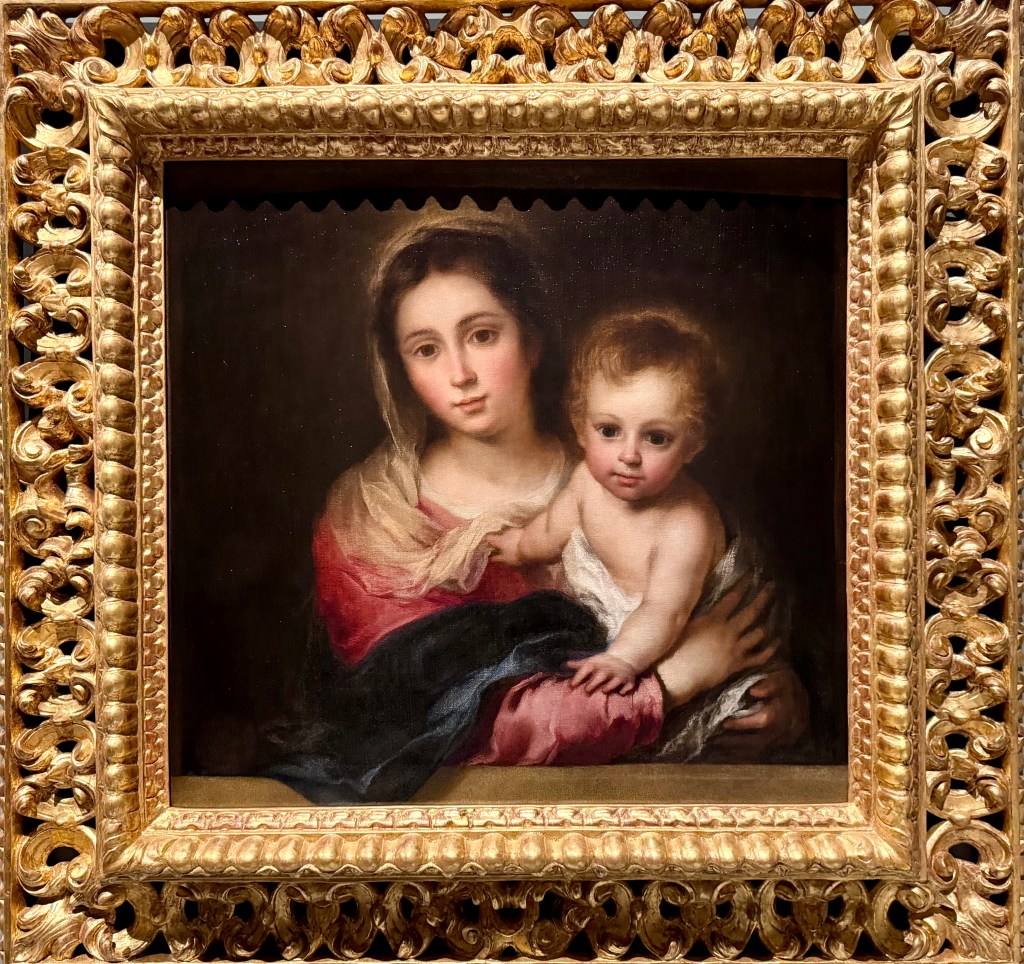
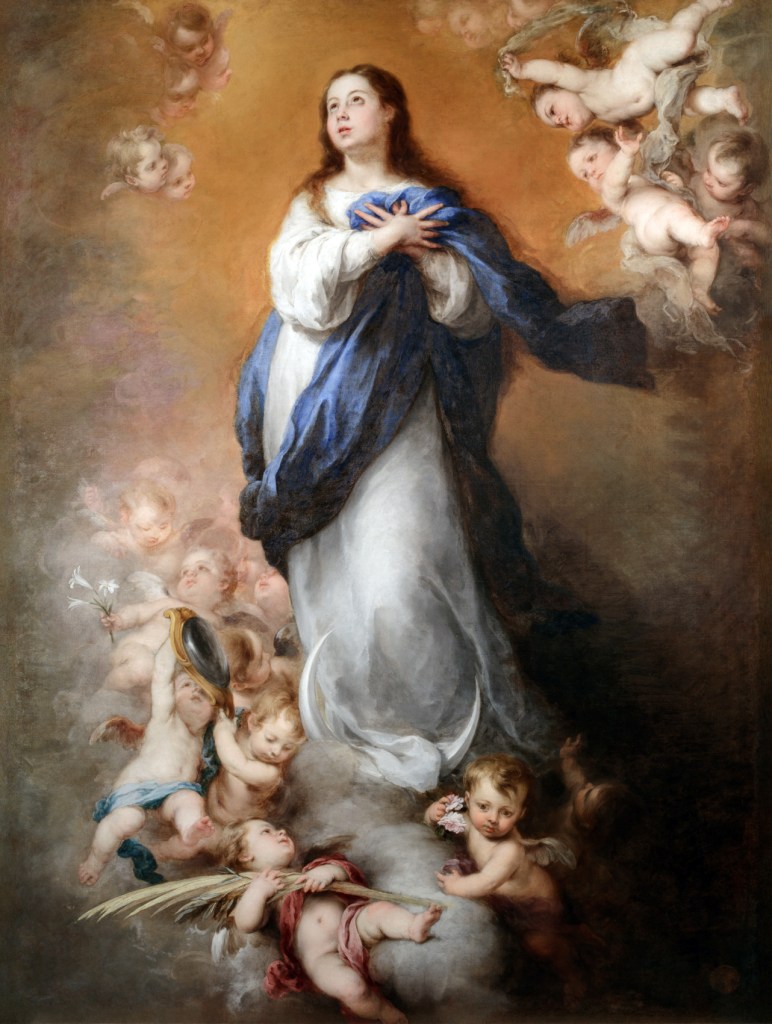
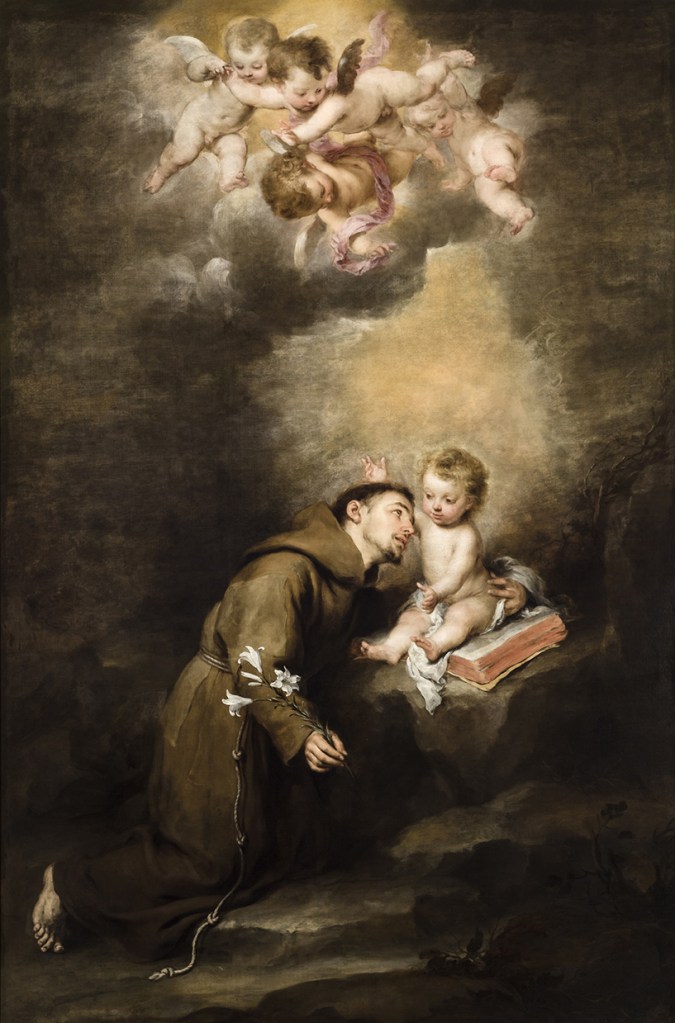
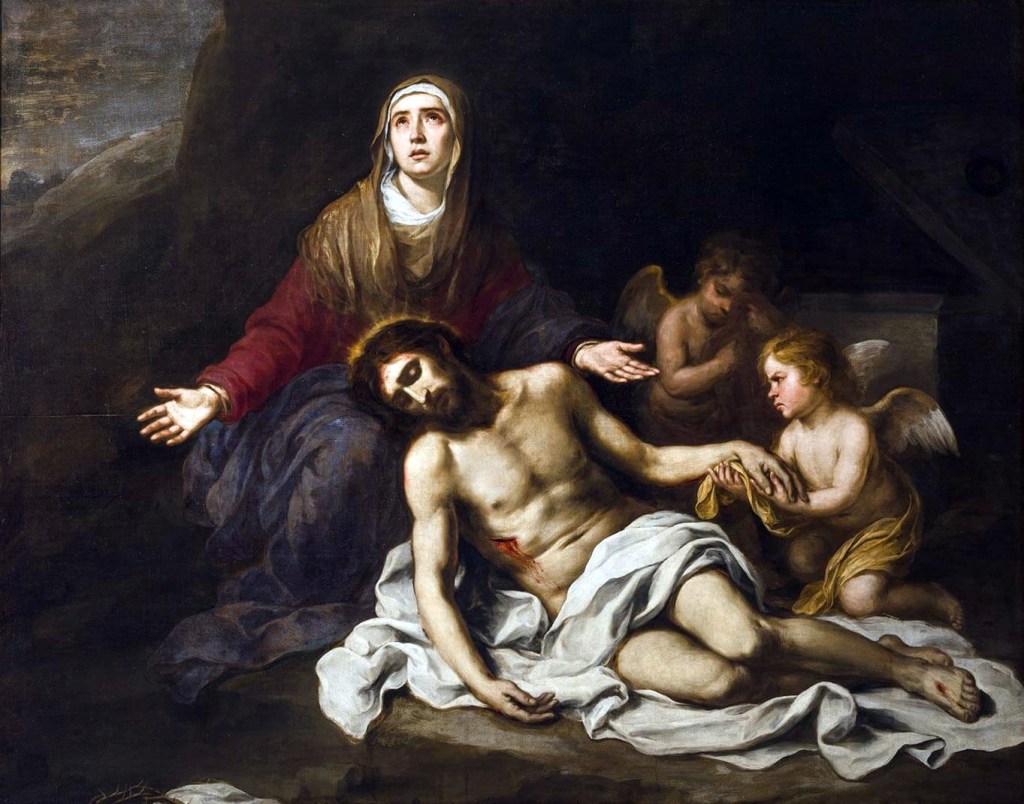
    Finally, as you approach what was once the church’s altar, comes the highlight of the museum: a room dedicated to Bartolomé Esteban Murillo, one of the most underrated painters of any age. I spent more time in this room than in all the others combined. Murillo’s work has a warmth and emotional immediacy that sets it apart from everything else in the museum. His figures feel human rather than monumental, tender rather than severe. Even in religious scenes, there’s a softness in the light and an intimacy in the expressions that make the paintings feel deeply grounded in lived experience.

    Murillo, who was born and died in Seville, was famous for his many renditions of the Immaculate Conception, and there are two marvelous examples here; they also appear in other museums, including the Prado. But in this gallery, you appreciate his full range: the vividness of Madonna and Child of the Napkin, the quiet tenderness of Saint Anthony with the Christ Child, and the grief of his Pietà, one of his darker compositions. Even this lapsed Catholic found himself returning, again and again, to Mary’s upturned eyes—not only for their sadness, but for the sense of compassion and humanity Murillo manages to hold there, suspended between sorrow and grace.