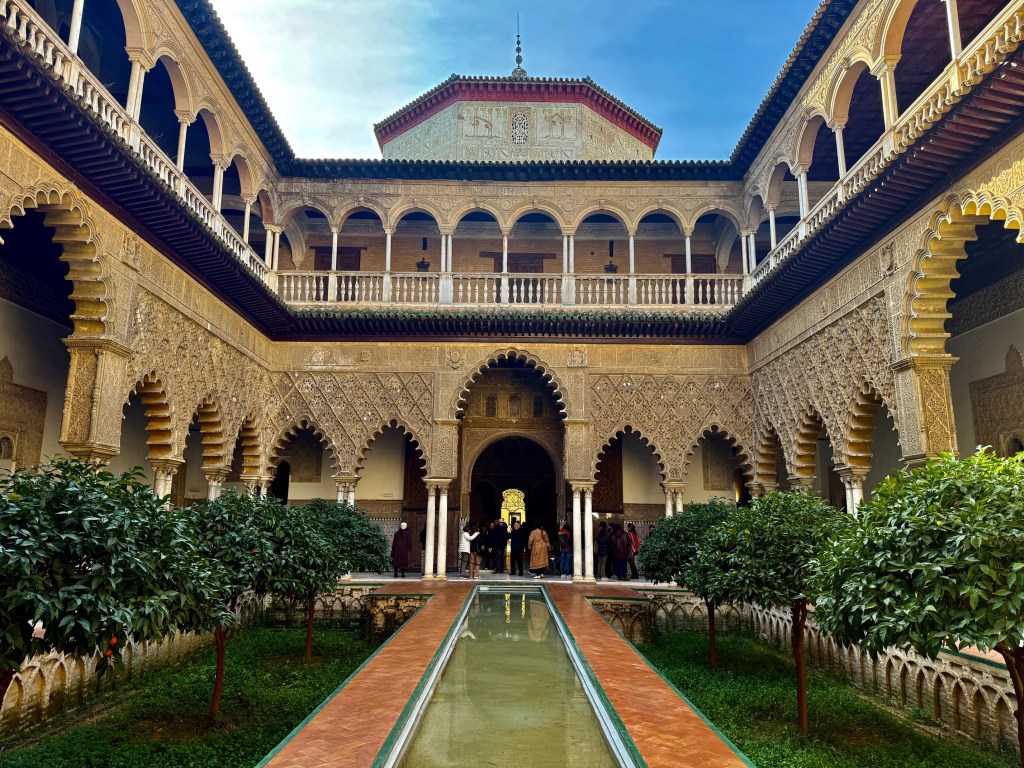
Seville’s Alcázar is easily my favorite place in this city. I finally visited it again yesterday, holding off so I could include a stop at the royal apartments, which required booking a special tour.
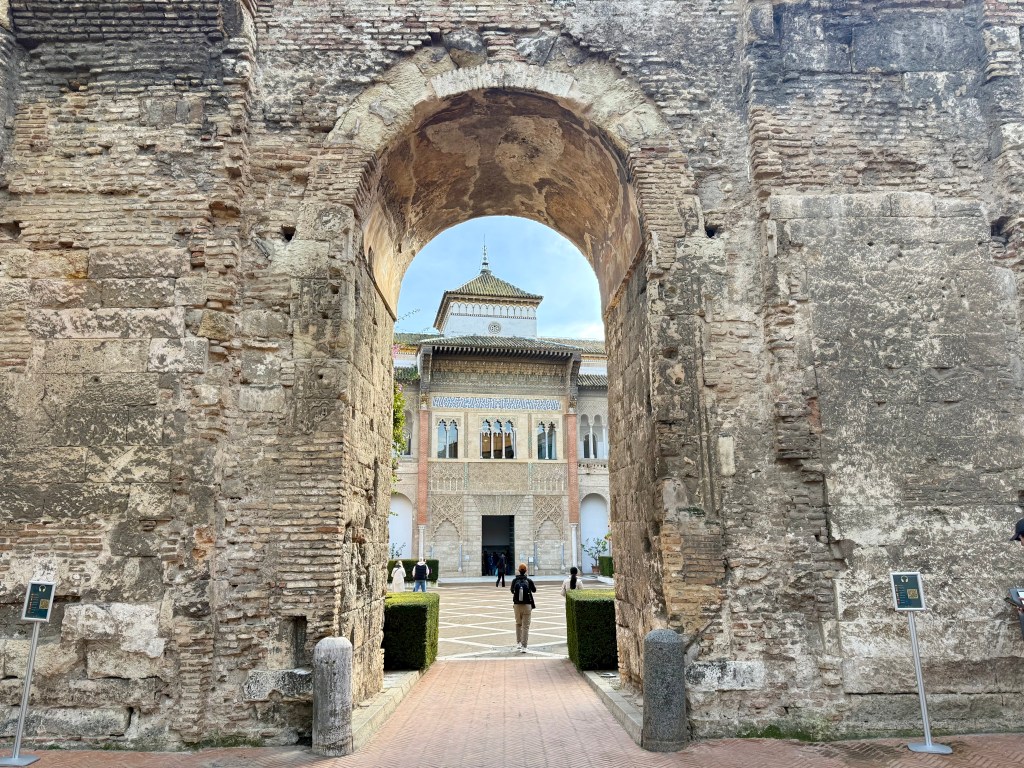
The cathedral may be the city’s most massive monument, but the Alcázar is the site that, in my mind, best captures Seville’s layered history. The building’s origins stretch back to the tenth century, After the Christian reconquest of Seville in 1248, successive rulers chose not to destroy the complex but instead to expand and adapt it, building directly atop earlier Islamic foundations.
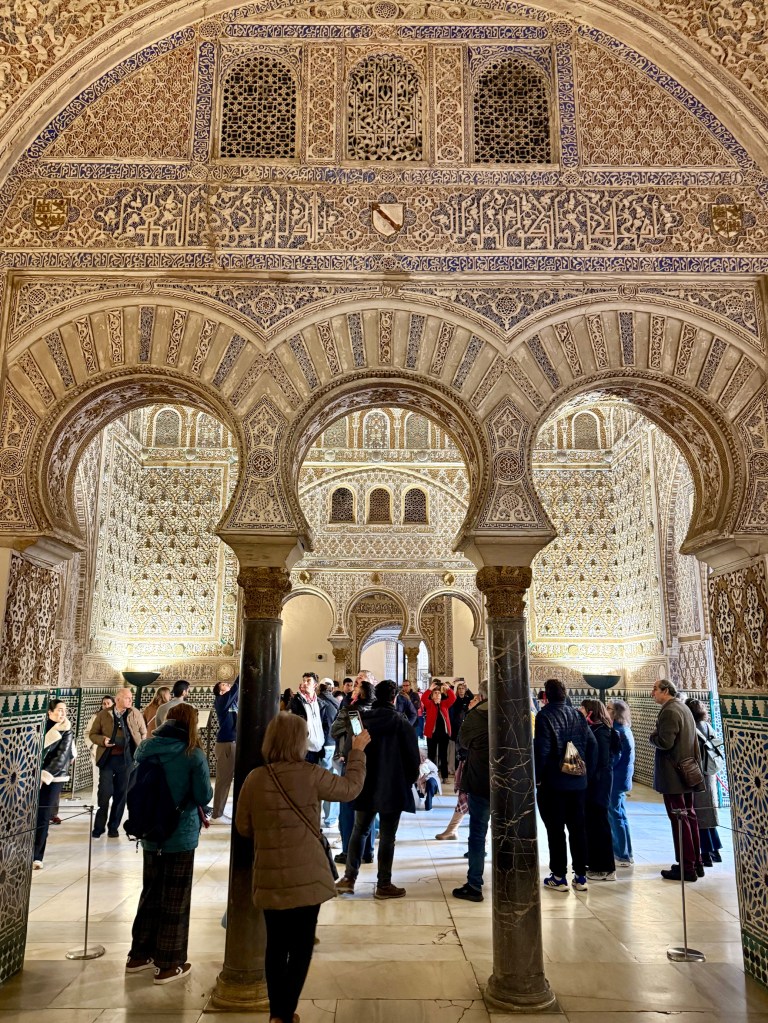
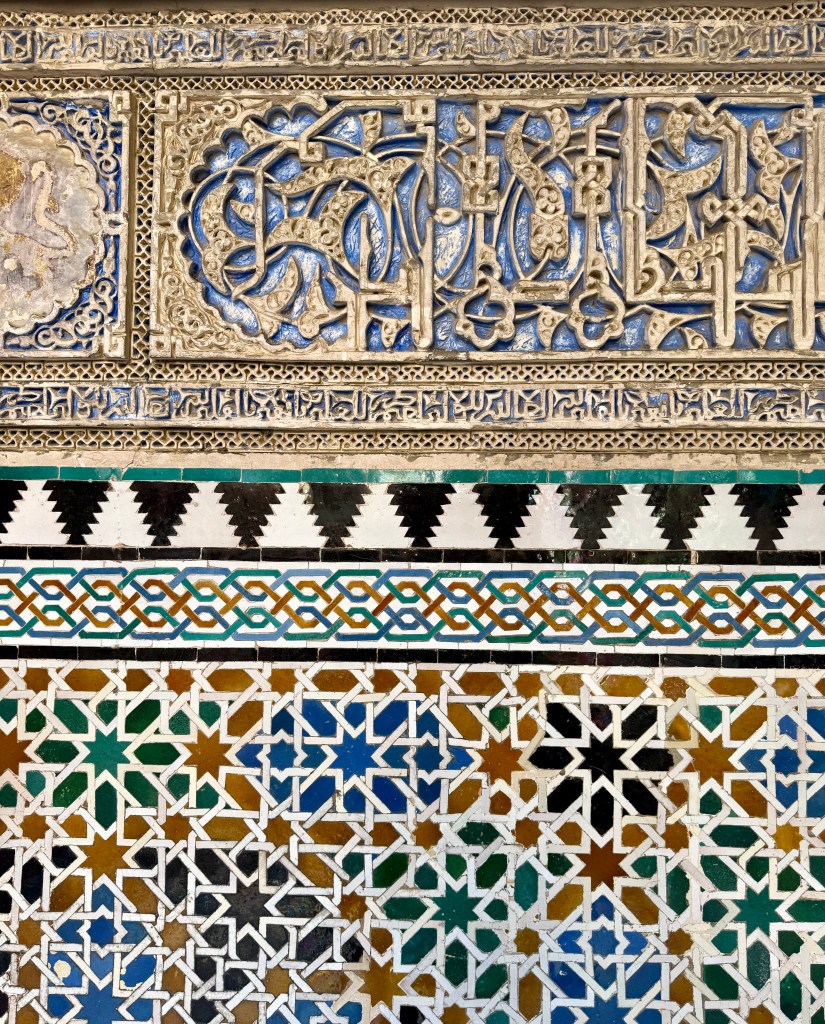
The Alcázar, as it exists today, reflects the Mudéjar style—a Muslim architectural language adapted to Christian tastes. This was less an aesthetic choice than a practical one: Muslim artisans remained in Seville after Christian rule was reestablished, and their techniques, materials, and visual vocabulary continued to shape royal architecture.
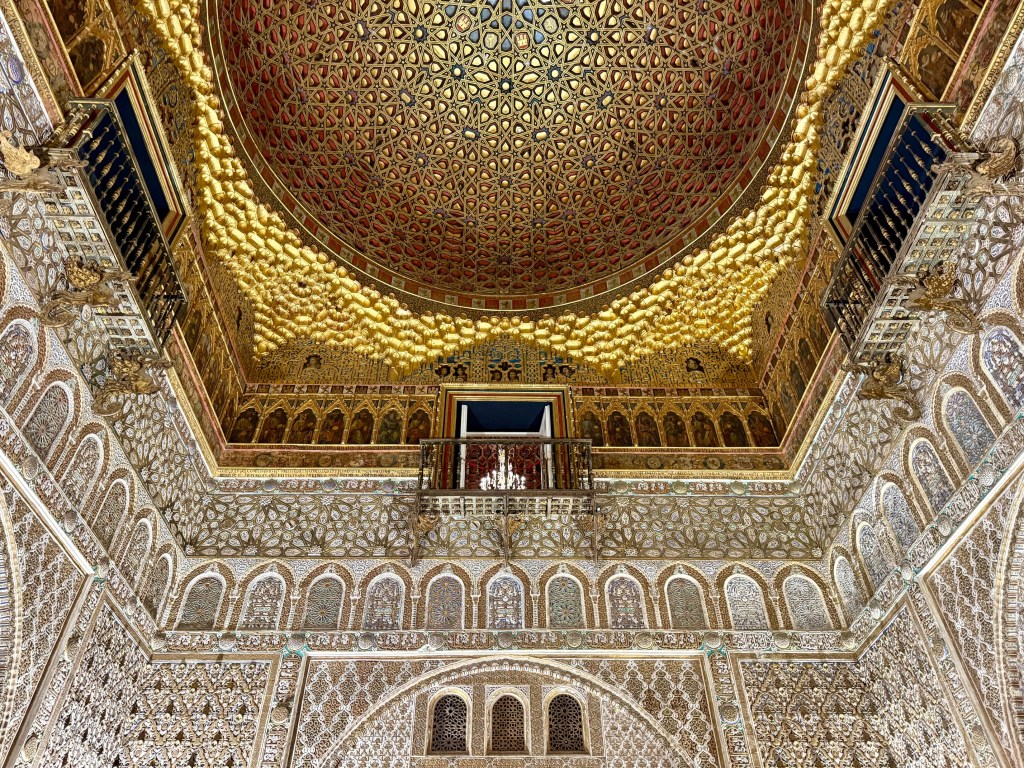
Unlike the cathedral, the Alcázar is best appreciated for its intricacy rather than its scale. Delicate stuccowork, horseshoe arches, glazed tilework, and carved wooden ceilings reward slow looking. Its interwoven indoor and outdoor spaces invite wandering, lingering in the shade, and noticing how light moves across patterned surfaces. I could sit in the Patio de las Doncellas (Courtyard of the Maidens) for hours. The star-patterned, domed wooden ceiling of the Sala de Embajadores (Ambassadors’ Room) remains a marvel.
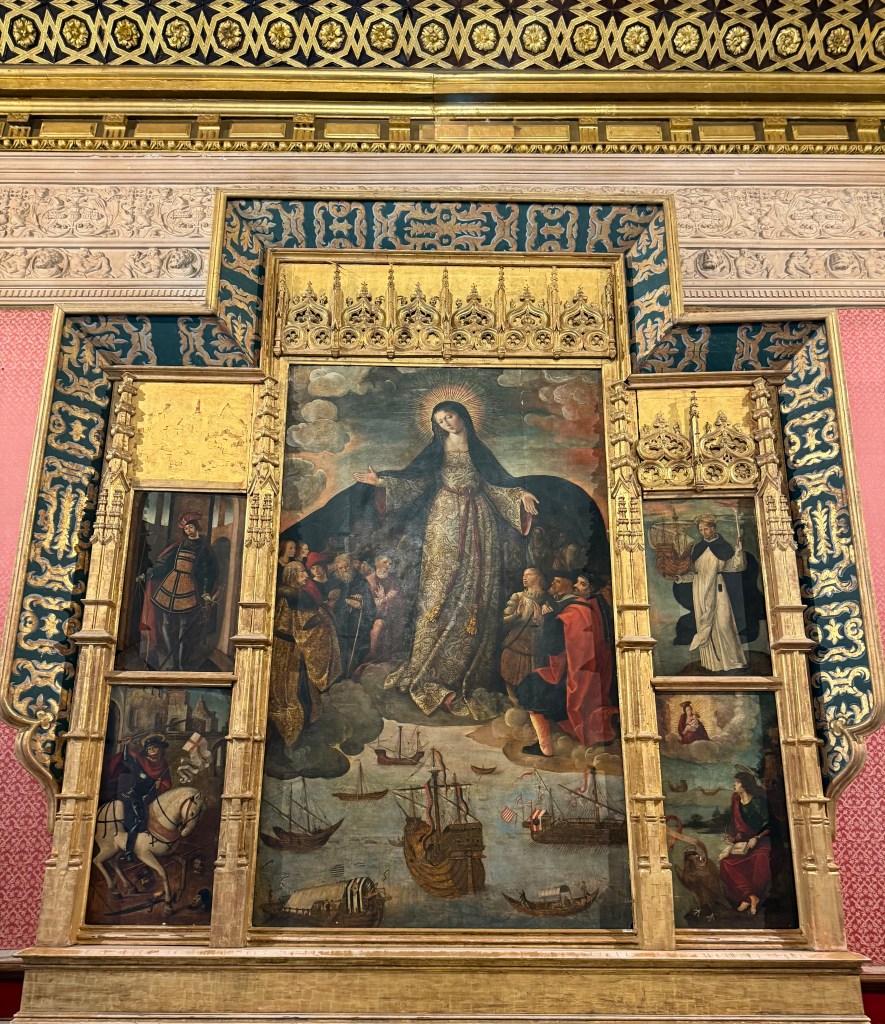
One painting in the opening galleries that I return to again and again is The Virgin of the Navigators, in which Mary extends her protection over Spanish explorers as well as the Indigenous peoples of the Americas. It’s often cited as the earliest European depiction of the Americas in painting, but what that encounter wrought—plague and other forms of devastation—remains hard to stomach.
The Alcázar also remains an active royal residence—the oldest in Europe still in use—and serves as the home of the king and queen of Spain when they are in Seville. Touring the royal apartments was fascinating, though photography was not allowed. Within five minutes of the tour, someone had already sat down in one of the living room chairs. The guard accompanying us was not amused.
 One month in Seville
Leave a comment