Have you heard the term “church fatigue”? No? Maybe it’s a phrase my husband, Donald, and I coined during our travels. In many European cities, there’s a long checklist of churches you’re told you should see—this one for a Caravaggio, that one for an El Greco, and yet another for its groundbreaking architecture.
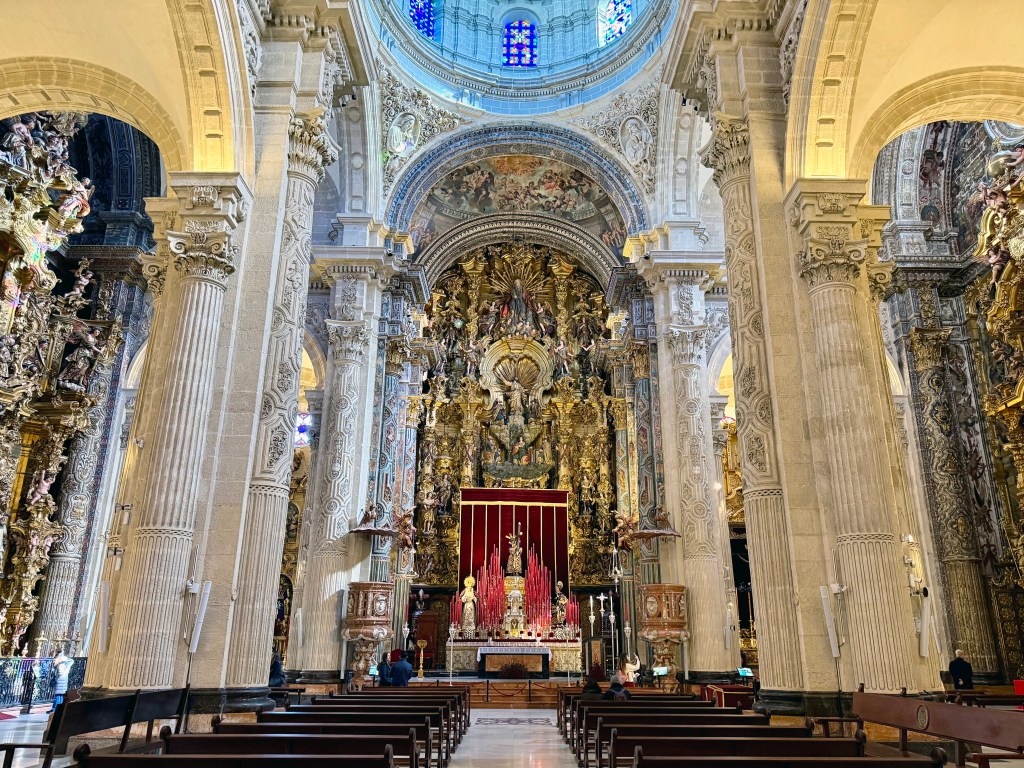
I was feeling a particularly strong case of church fatigue today while visiting the Church of San Salvador. It’s the second-largest church in Seville and an important one, but after spending hours in the city’s massive cathedral a couple of days earlier, I could have used a longer break from sacred spaces. (I apologize for not being at my best, San Salvador.)
Like many Catholic churches in Seville, San Salvador was built atop a former mosque after Muslims were expelled from the city in 1248. (One of my favorite history books, The Ornament of the World, by the late scholar María Rosa Menocal, describes how Muslims, Christians, and Jews once created a culture of tolerance on the Iberian Peninsula.)
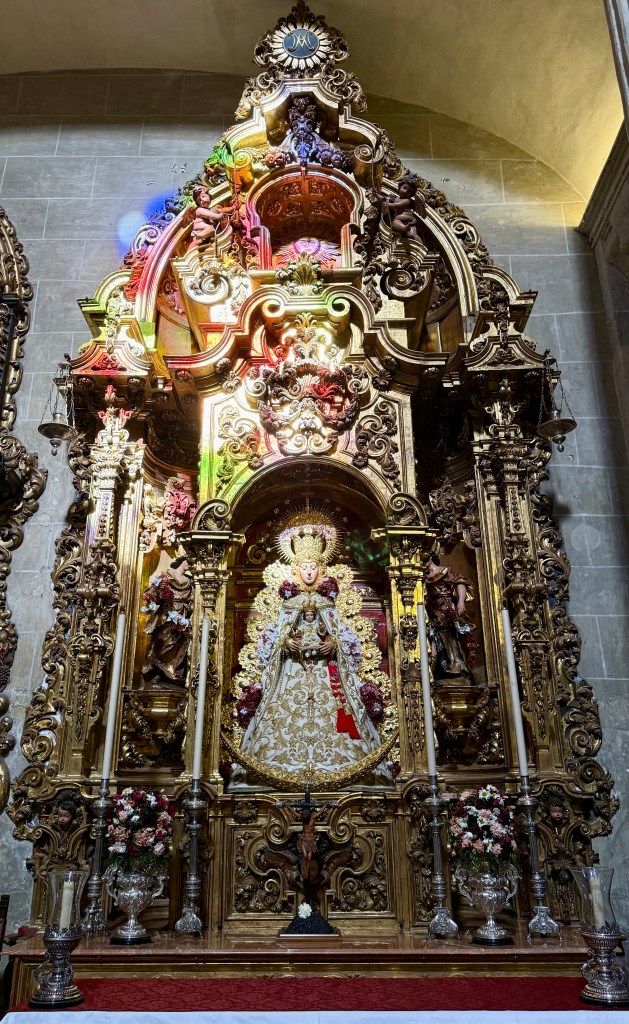
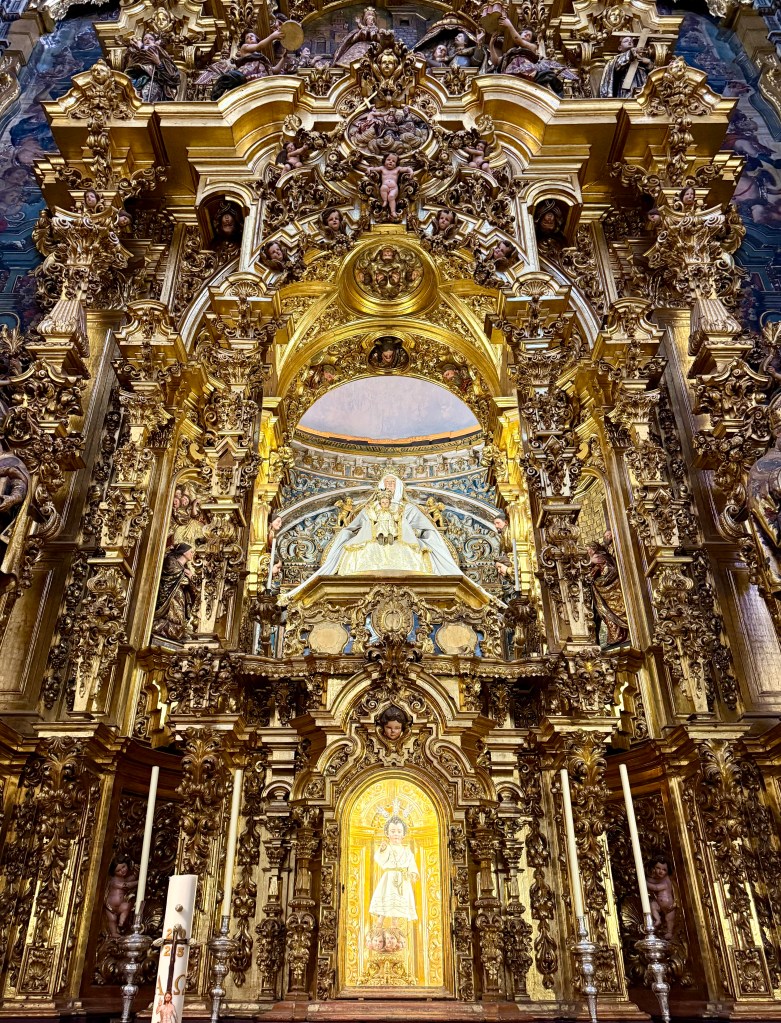
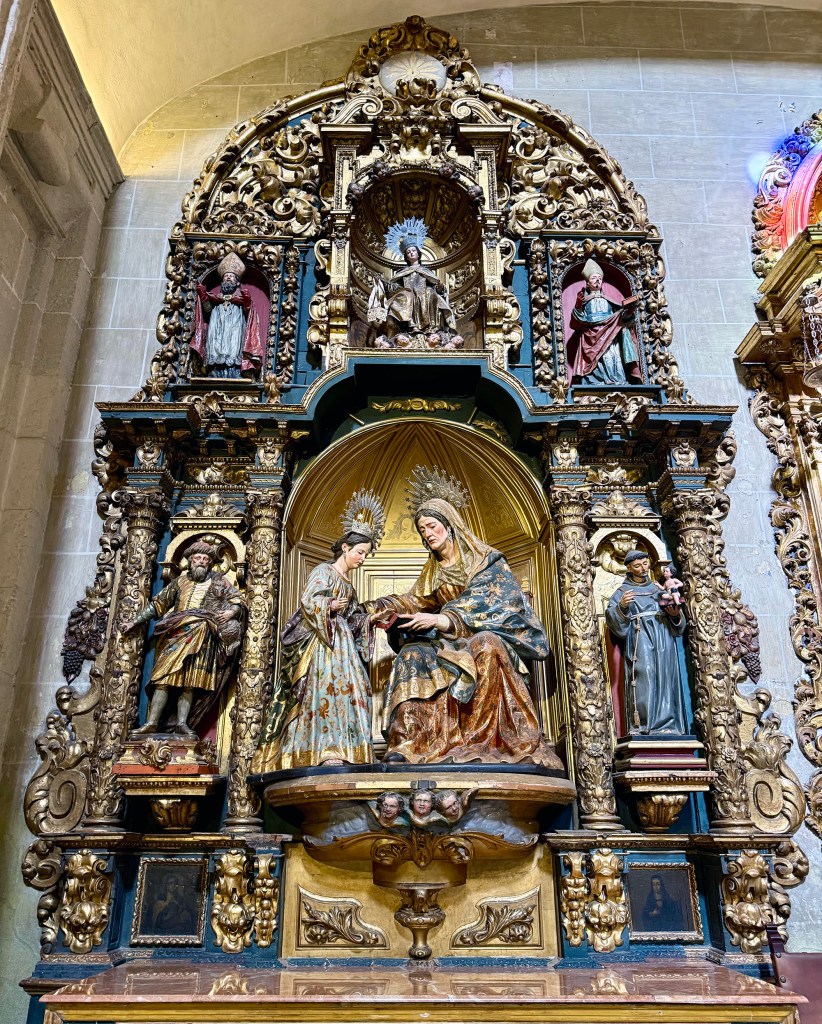
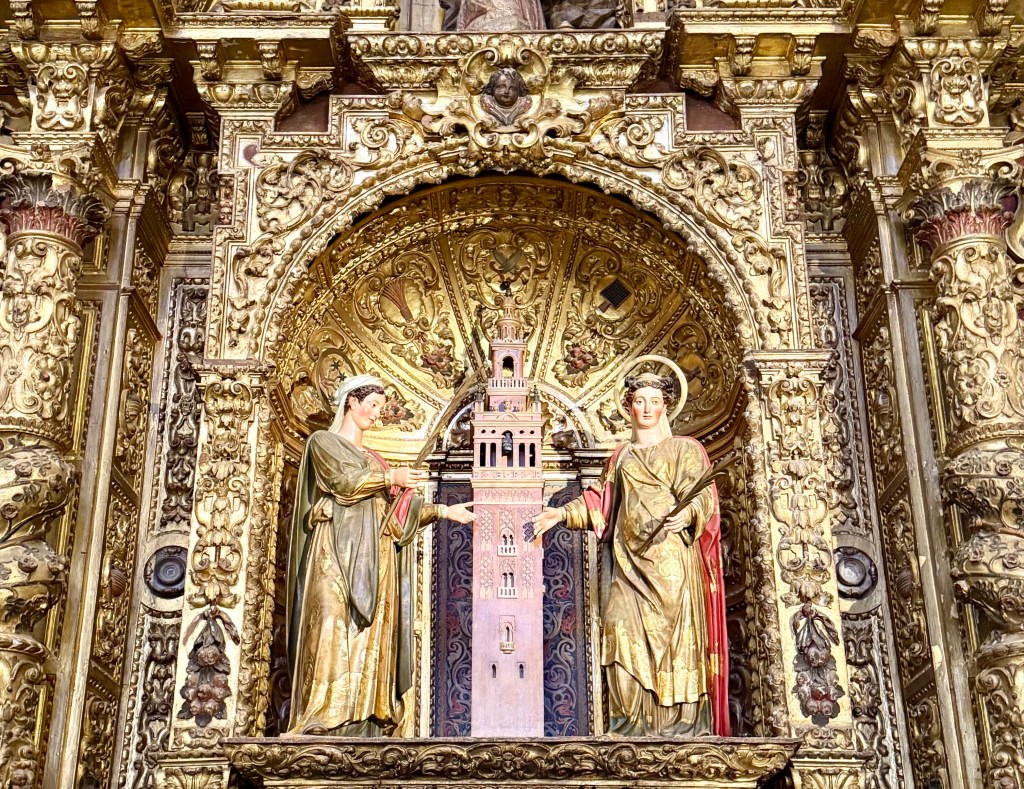
It’s a church worth seeing, though. The interior is organized around a wide nave with side chapels lined with gilded altarpieces. At one point, light from a high stained-glass window fell across the altarpiece of Our Lady of El Rocío; even church staff paused to take photos. The church also houses important works by Juan Martínez Montañés, one of Spain’s most celebrated Baroque sculptors, including figures that parade through the streets during Seville’s famous Holy Week processions.
The main altarpiece, massive and densely packed with sculpted figures, anchors the space. The church claims it as one of the last great Baroque altarpieces.
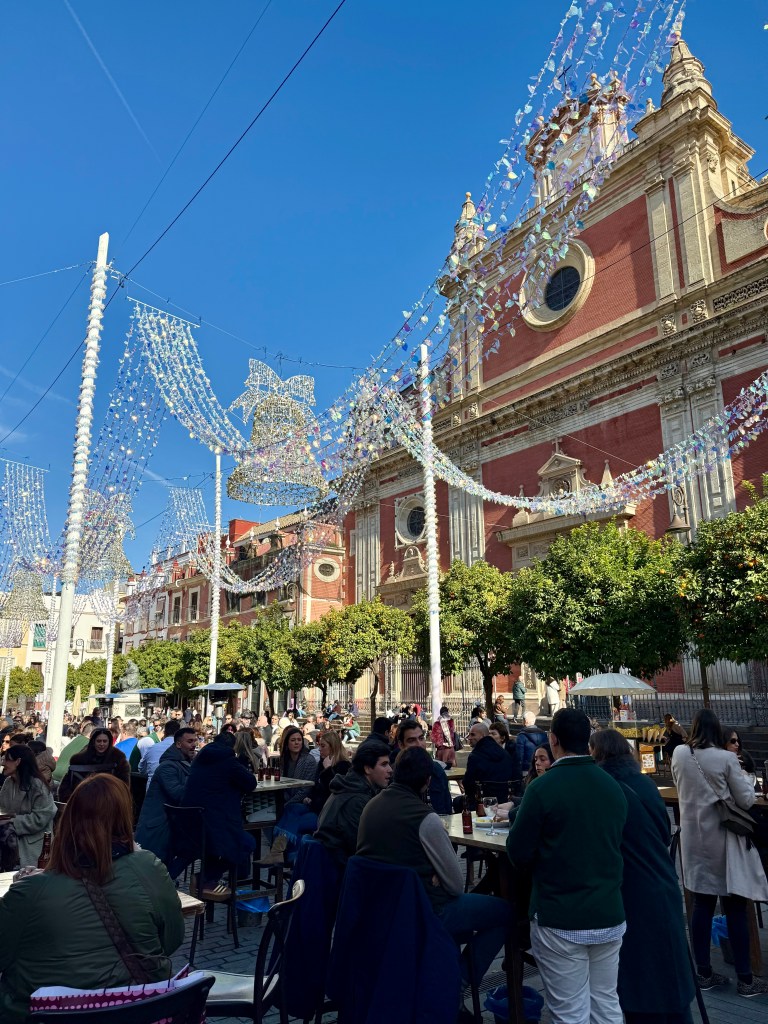
Outside this quiet space, the plaza was crowded and noisy, full of people enjoying the weekend. I snapped out of my fatigue and grabbed a quick beer amid the crowd before heading back to my apartment.
 One month in Seville
Leave a comment