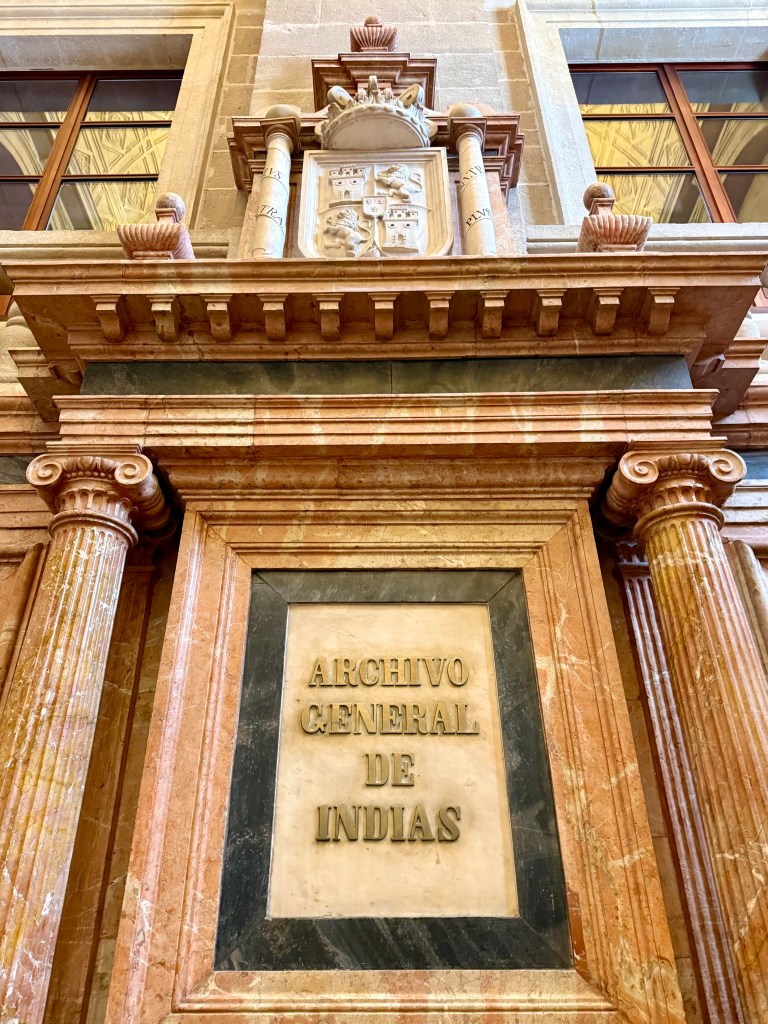
I’ve now learned how to avoid the weekend crowds in Seville—by seeking out the lesser-known places. After grabbing my customary morning coffee at Moin Café, I set out to explore two such sites: the Church of San Salvador (more on that later) and the General Archive of the Indies.
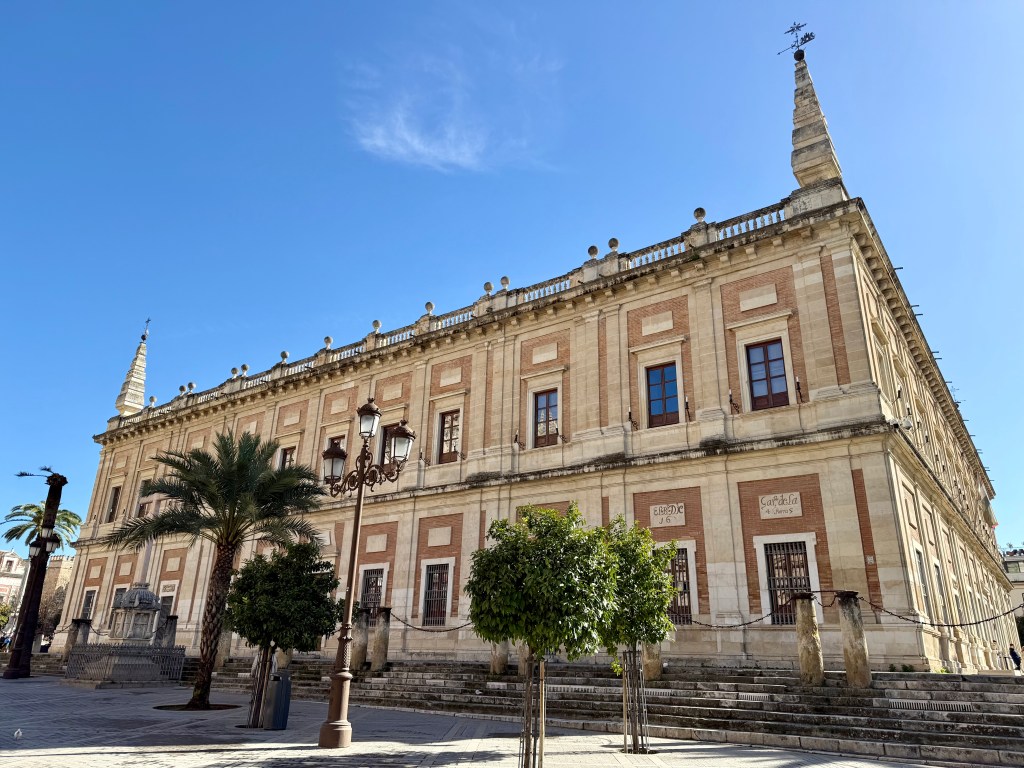
Though largely off the tourist track, the General Archive of the Indies is one of Seville’s most significant historic institutions—and one of its few UNESCO World Heritage sites. It sits quietly beside the city’s cathedral and preserves the documentary record of Spain’s global empire from the late fifteenth through the nineteenth centuries. That story begins nearby: Spain’s involvement in the so-called “New World” took shape in this region of Andalusia, where Christopher Columbus set sail on his first voyage across the Atlantic, beginning centuries of expansion and extraction.
Established in 1785 under King Charles III, the archive brought together millions of pages that had previously been scattered across Spain—correspondence, decrees, maps, and financial ledgers that once governed an empire stretching across oceans and continents.
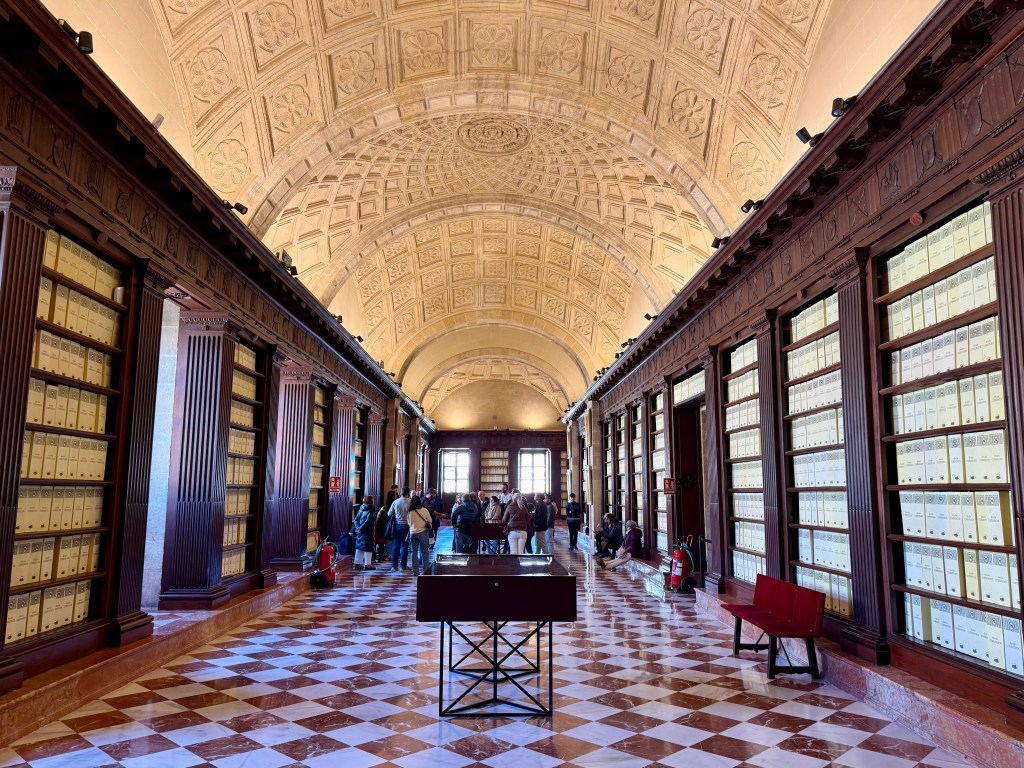
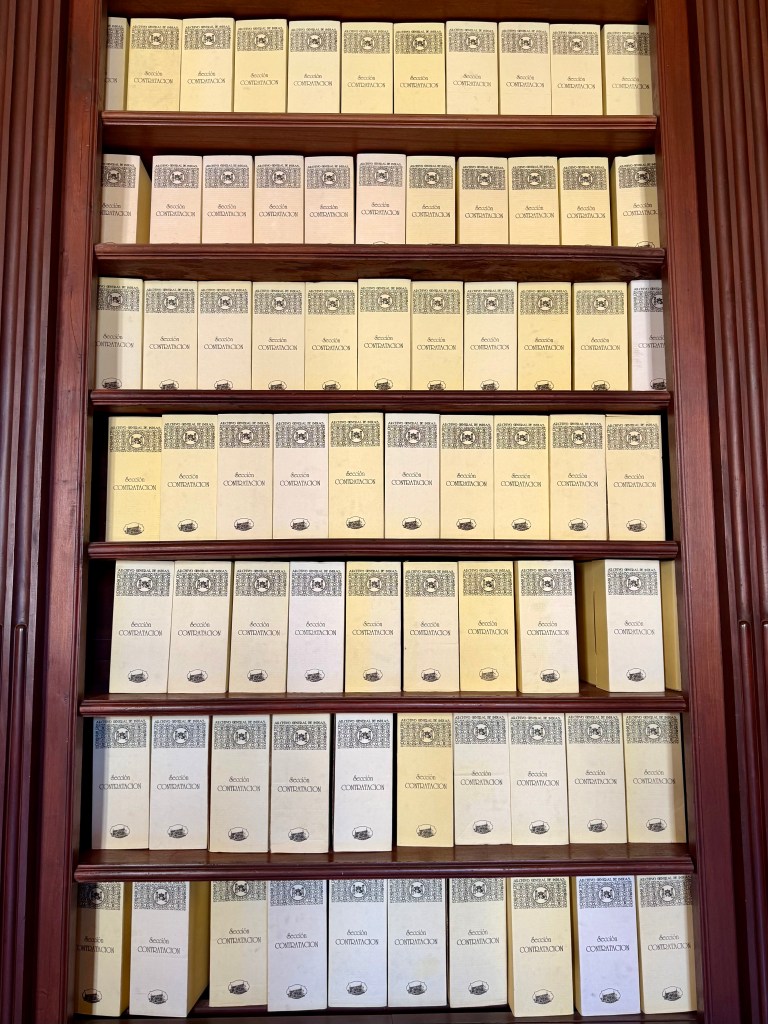
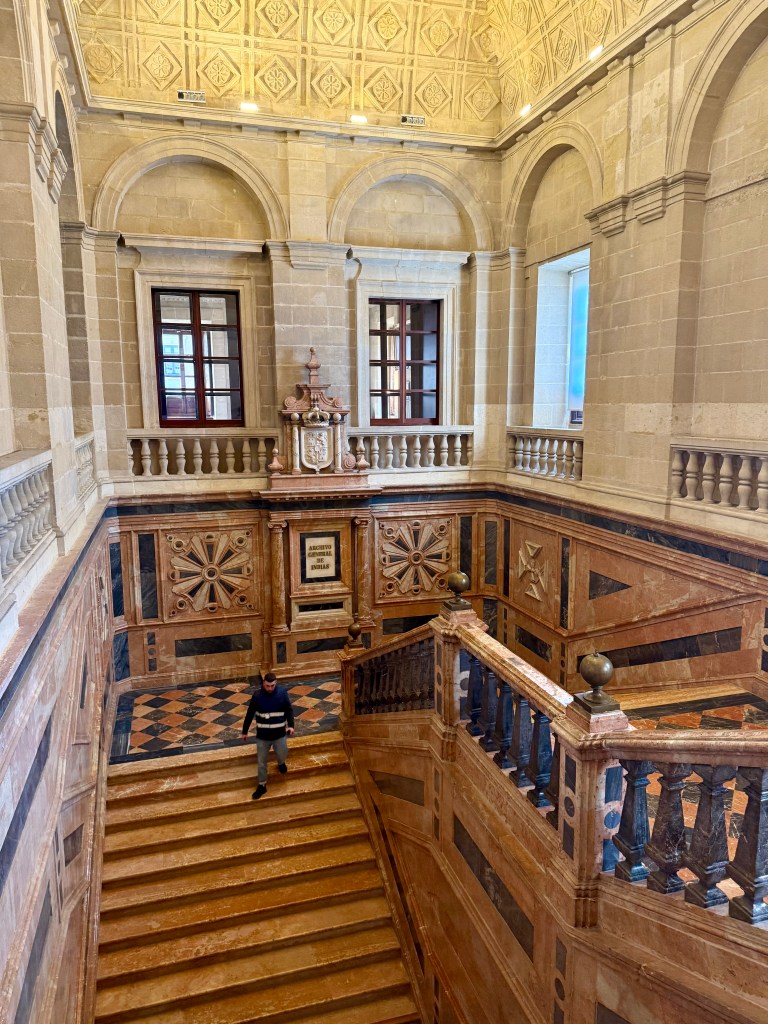
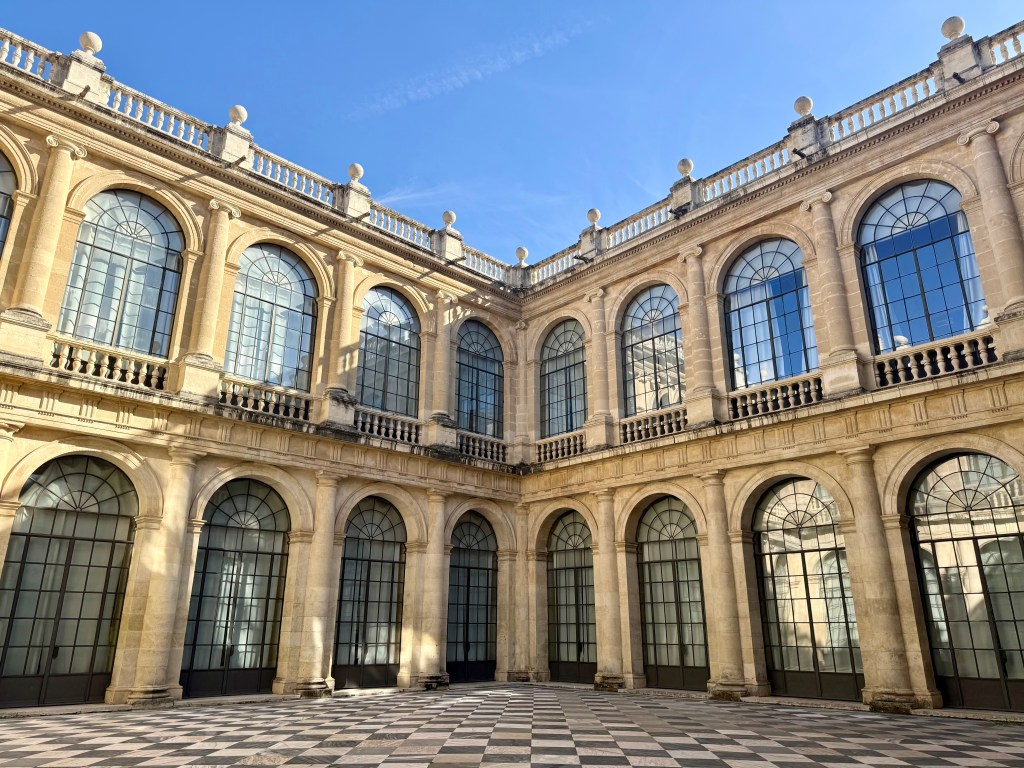
These documents are housed in what was once the Casa Lonja de Mercaderes, a Renaissance structure designed by Juan de Herrera. The pages, carefully bound, line the walls, their spines indicating categories of trade and administration. The building itself—austere and meticulously maintained—feels more monumental than the artworks and artifacts on display, which include portraits and busts of Columbus, Hernán Cortés, and various other power players associated with the age.
The real experience lies in taking in the sheer space of the archives—the weight of history on shelves carefully guarded behind glass, and the quiet reminder of how much power Spain once held, now preserved in near silence.
 One month in Seville
Leave a comment