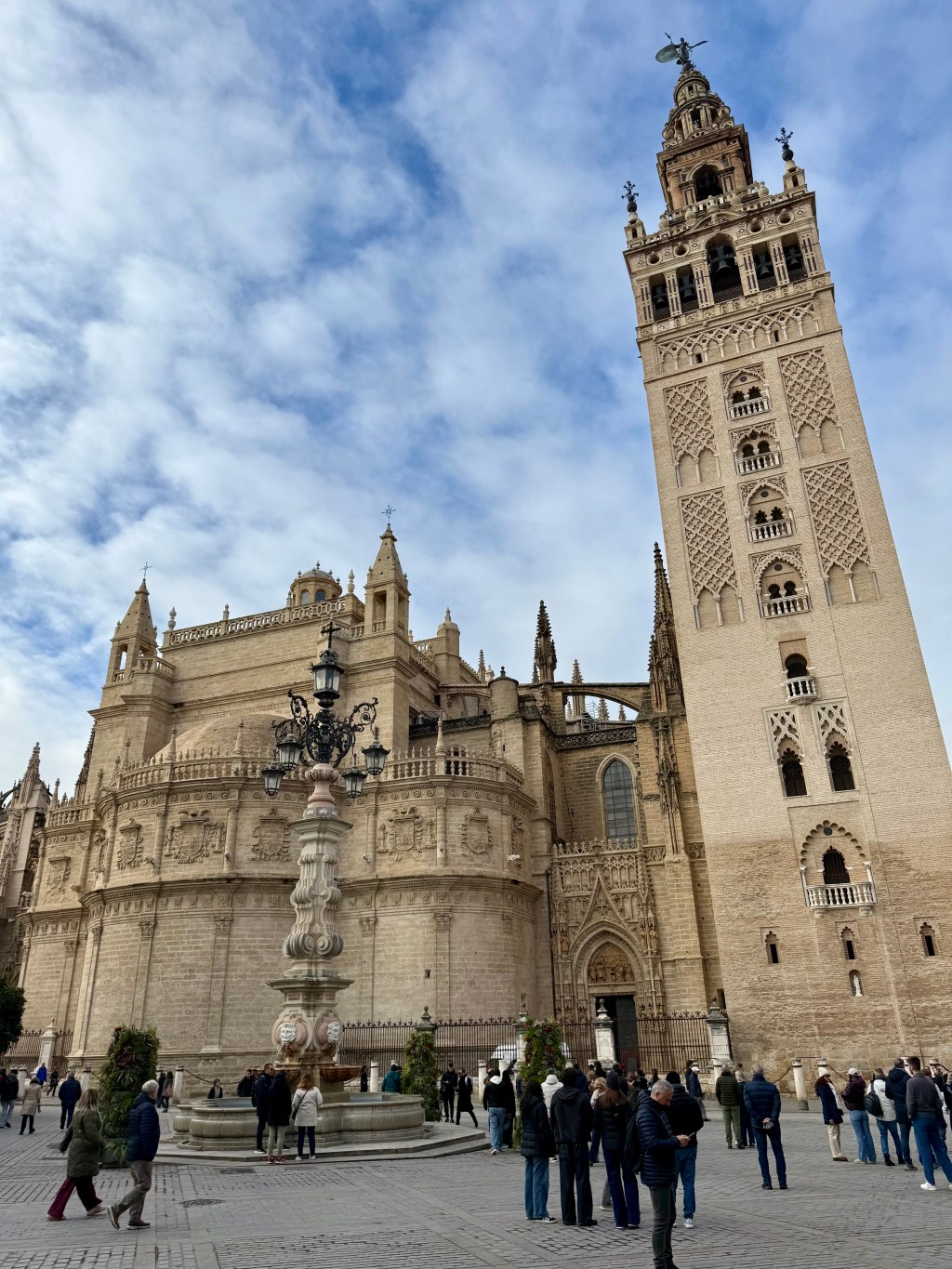
With most of the holiday crowds now dispersed, I made my way today to arguably Seville’s most famous building: the Cathedral of Saint Mary of the See. Before construction began in 1402, the city’s clerics, according to local lore, set an ambitious goal: “Hagamos una iglesia tan hermosa y tan grandiosa que los que la vieren labrada nos tengan por locos” (“Let us build a church so beautiful and so grand that those who see it finished will take us for mad”).
Mission accomplished. By any measure, Seville Cathedral is the most massive Gothic church in the world, and a Guinness World Records plaque displayed proudly inside certifies it as the largest cathedral by volume.
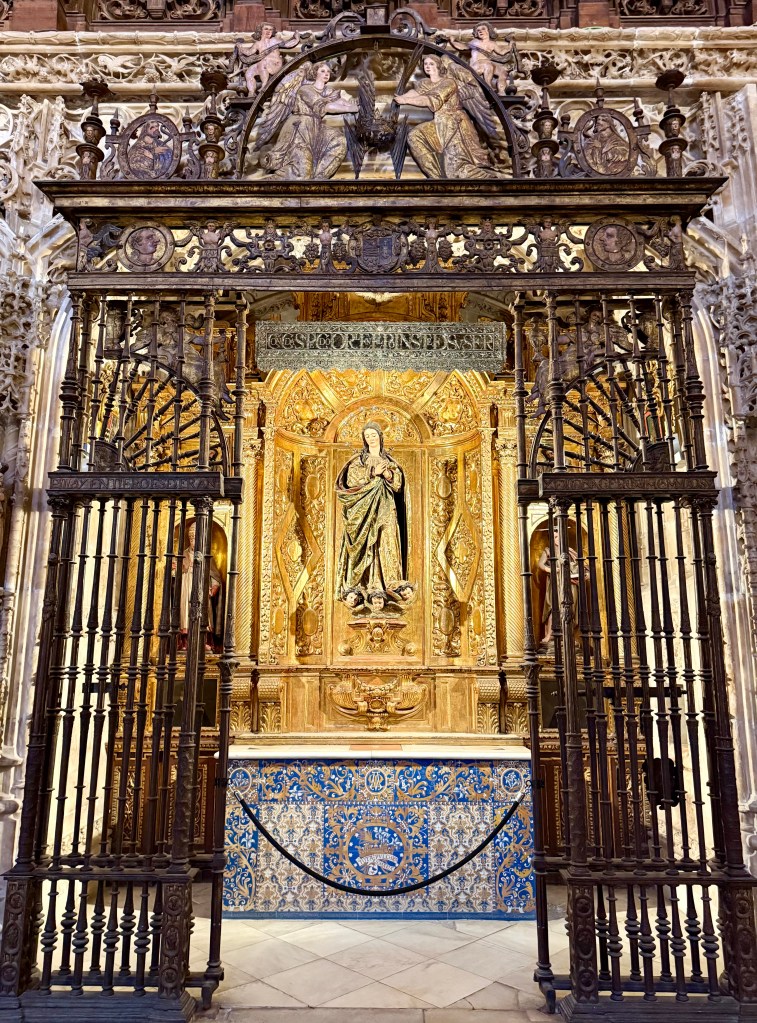
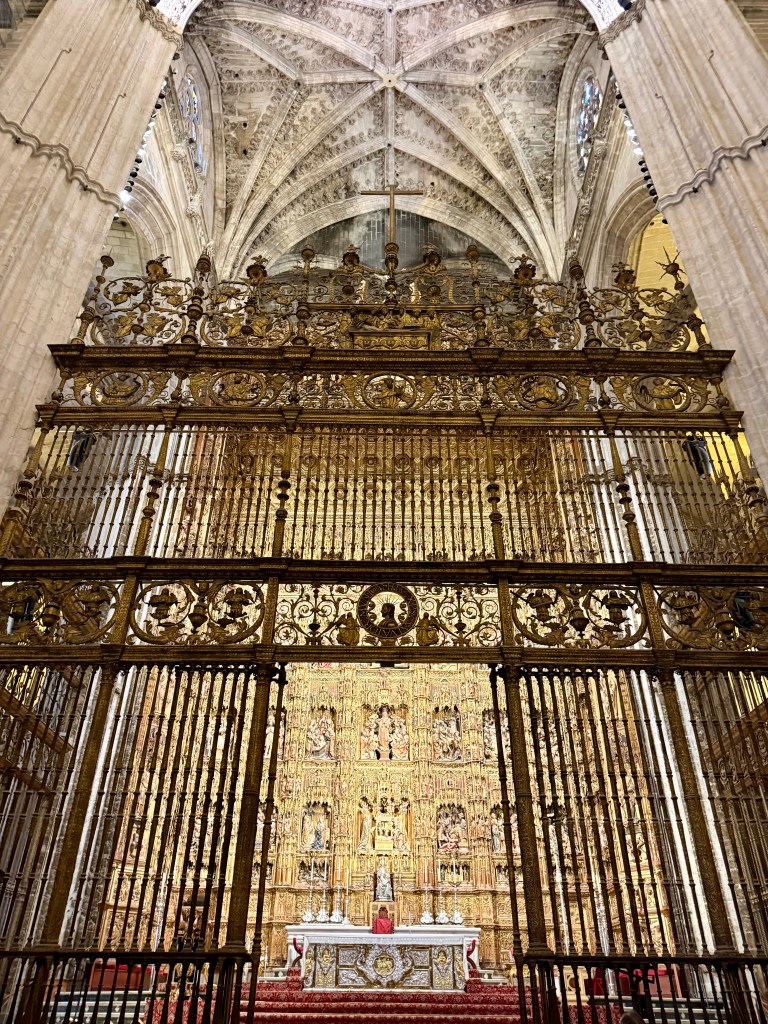
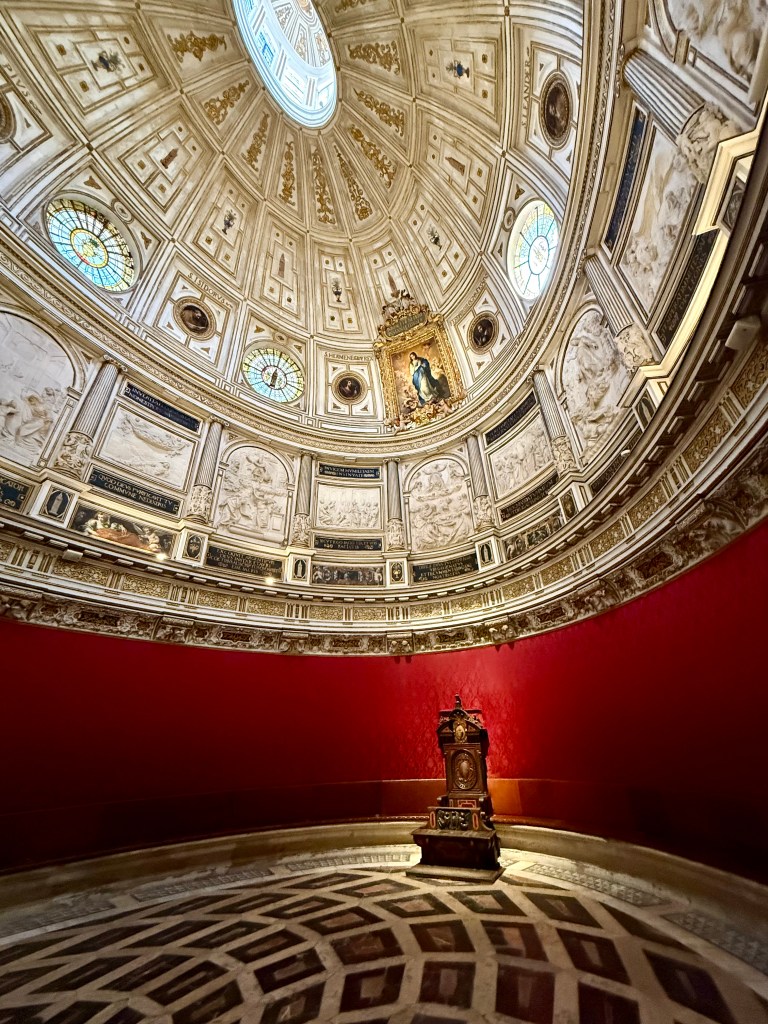
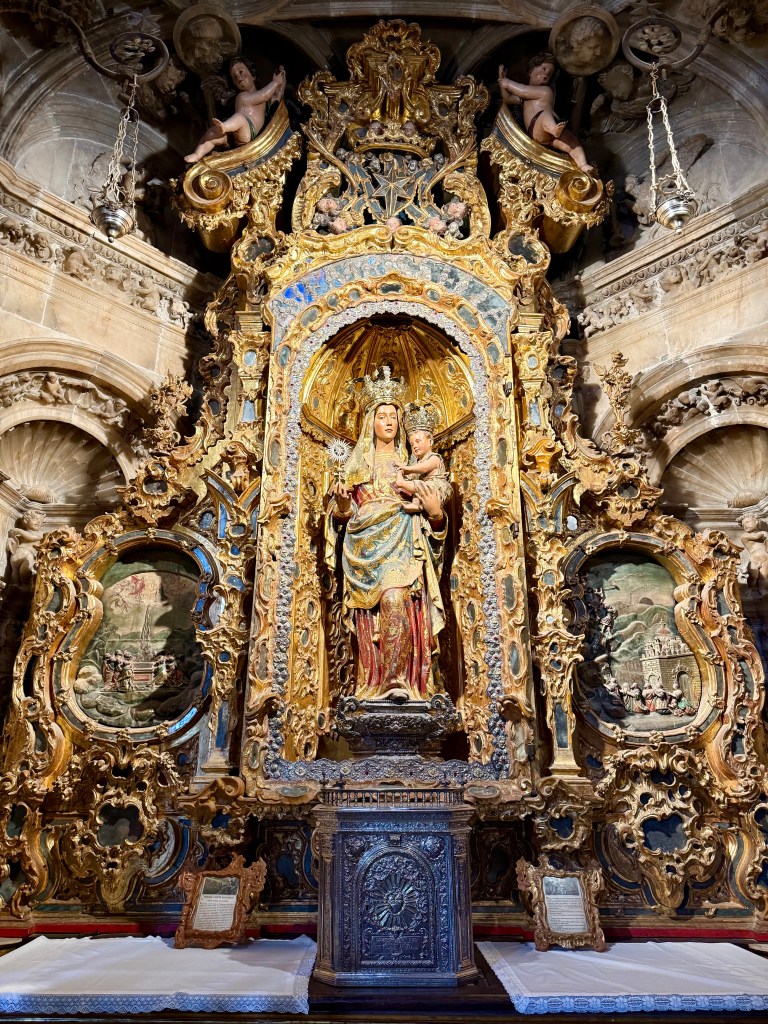
Its scale is matched by the excess of its contents. Spread across roughly 80 chapels is a dense accumulation of art, sculpture, and architecture spanning centuries. The cathedral’s audio guide offers more than forty stops, though locating them can feel like its own form of pilgrimage. Dominating them all is the main altarpiece—the largest ever made—a vast, gilded wall of carved biblical scenes that took a succession of artists more than forty years to complete and functions less as a single artwork than as a visual argument for the power, wealth, and ambition of the Church at its height.
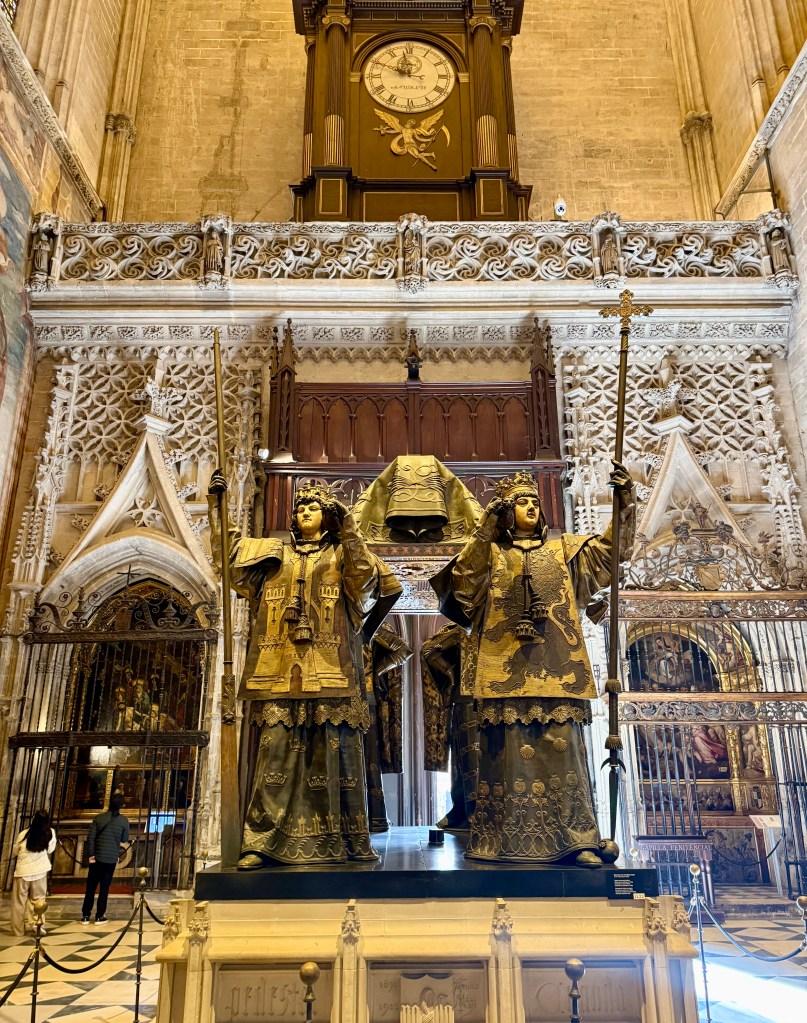
You find the greatest concentration of visitors crowded around the Tomb of Christopher Columbus, whose voyages from this region to the Americas brought Spain enormous wealth and power. In this theatrical monument, the explorer’s coffin is carried by four larger-than-life figures representing the historic Spanish kingdoms of Castile, León, Aragón, and Navarre. (The remains interred there might actually be those of his son. A box of bones labeled “Don Cristóbal Colón” was found in the Dominican Republic in 1877. Whoops.)
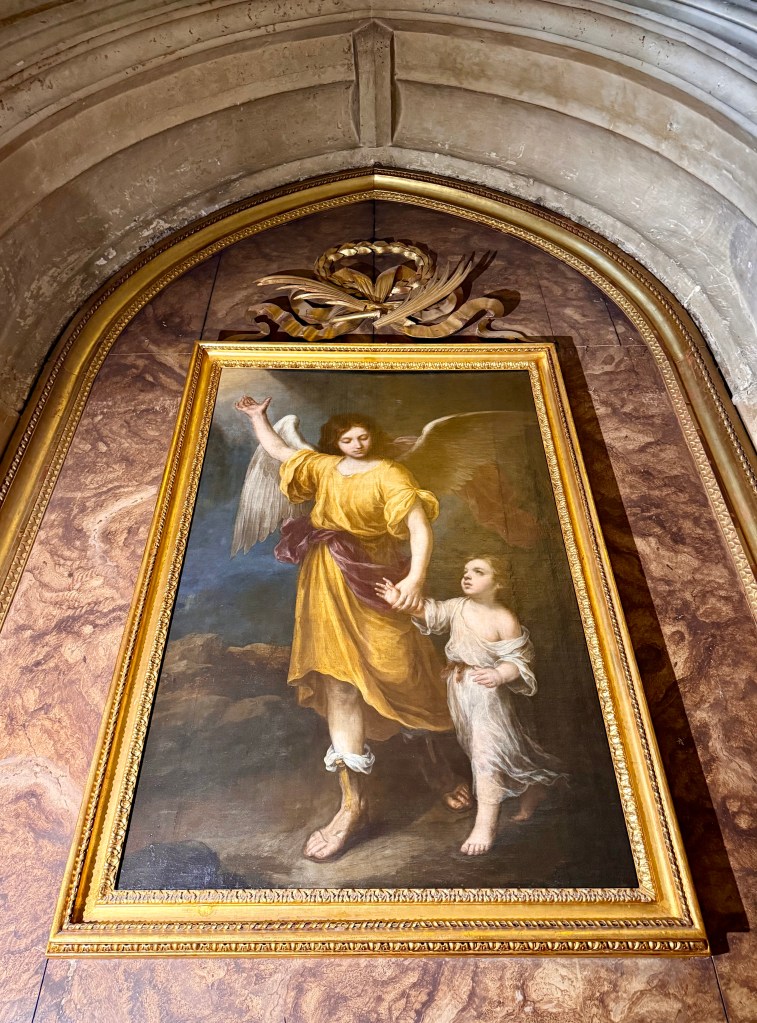
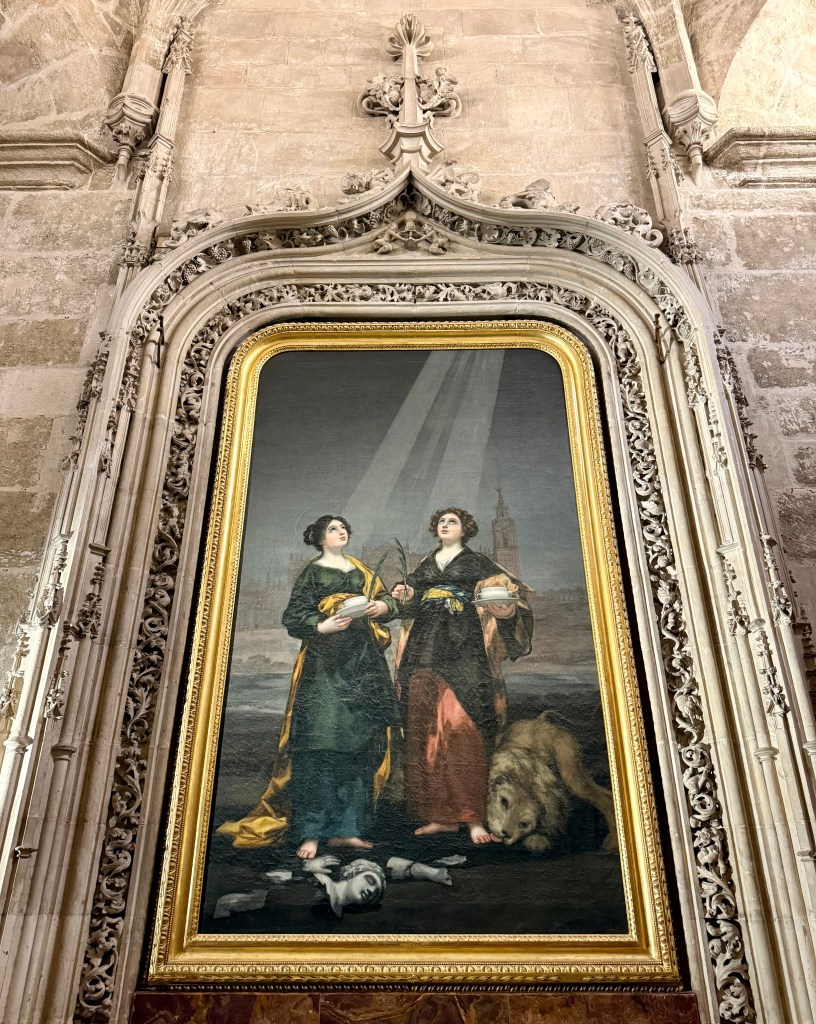
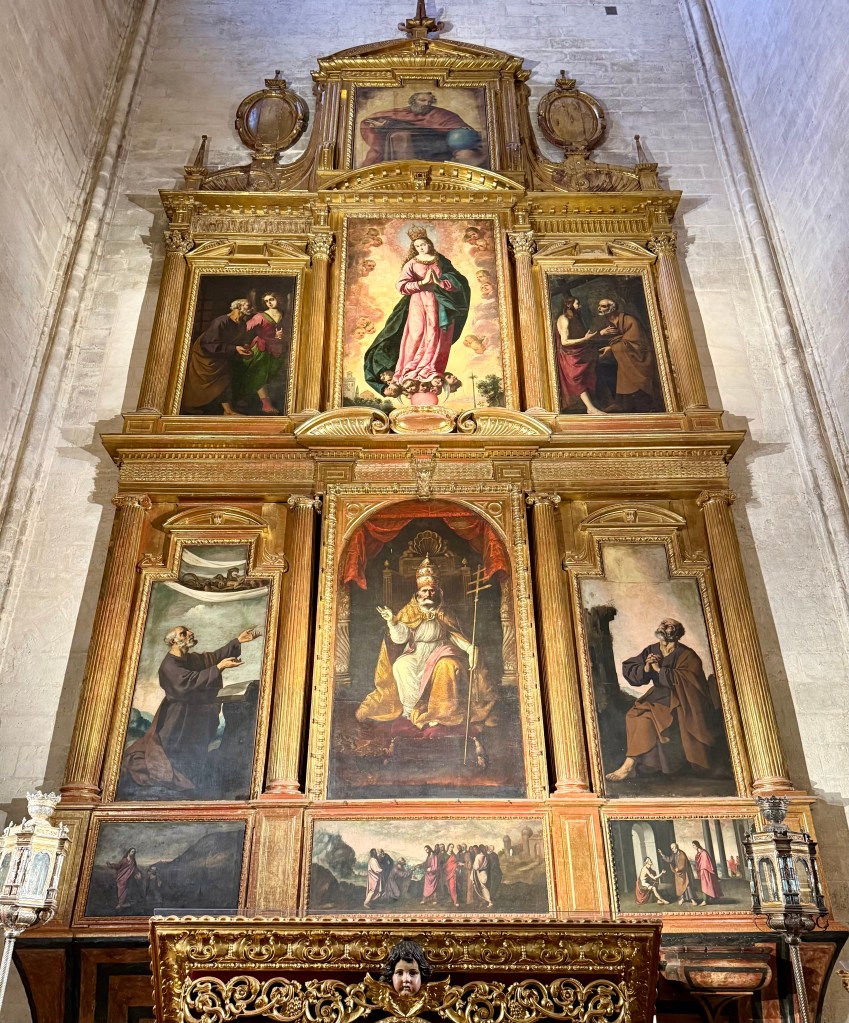
I had forgotten how many remarkable paintings are scattered throughout the cathedral. Goya’s portrait of Justa and Rufina, patron saints of Seville, hangs in the Sacristy of the Chalices, the light from the room’s only window seeming to merge with the light in the painting itself. Numerous scriptural scenes and portraits of saints by Murillo appear throughout; my favorite is The Guardian Angel. And in the Chapel of Saint Peter, you encounter a massive altarpiece containing several paintings by Zurbarán, its central panel a commanding depiction of Peter as pope.
Next to the Cathedral stands its bell tower, the Giralda, one of the only visible reminders that this site once housed a mosque (a fact the audio guide also conveniently glosses over). Built originally as a minaret in the late twelfth century, its lower portion retains its Islamic character—brickwork and geometric patterning—while the Christian additions appear toward the top: a Renaissance belfry crowned with bells, cross motifs, and a towering bronze weather vane representing “The Triumph of the Church.” Given the long wait, I opted not to climb to the top this time, though the view is spectacular.
 One month in Seville
Leave a comment